Tiny Offices on Urban Roots Farm
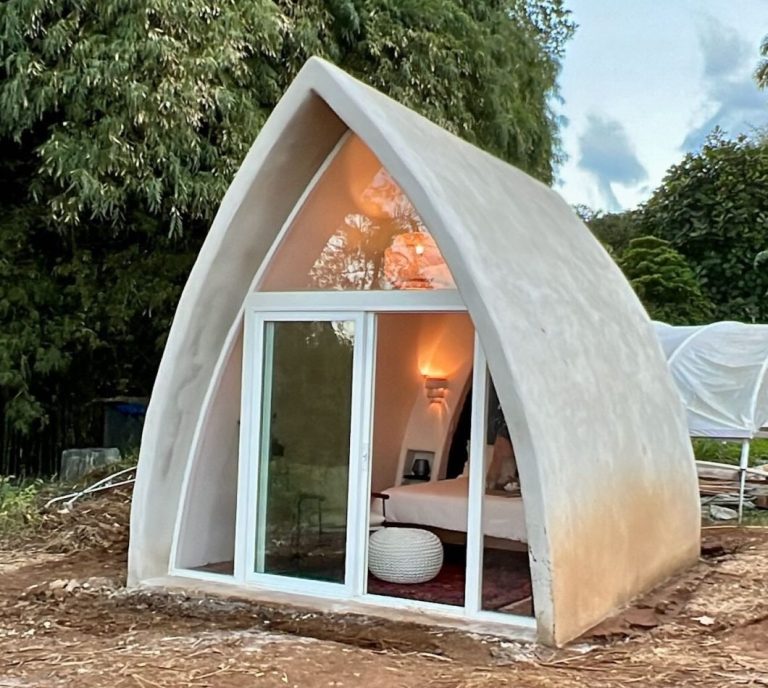
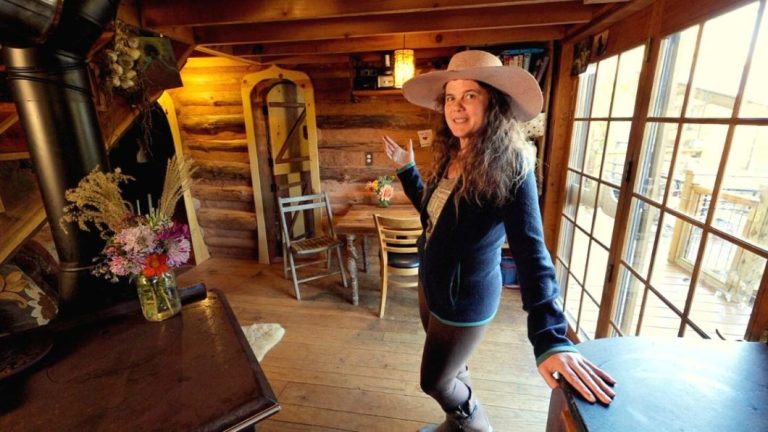
On a lot in back of a former motel, there is a farm. And on that farm there are some tiny offices…okay…I won’t sing “E-I-E-I-O”, but the structures being built on the Urban Roots Farm in Reno, Nev. are worth tooting a few horns about. Urban Roots is currently being created as an educational farm and community center where schools, children and families can learn about gardening, alternative building techniques and the natural areas of the foothills of the Sierra Nevada Range. The farm sits on a 3/4 acre plot that was donated by Kelly Rae and Pam Haberman of HabeRae Homes (which the Tiny House Blog profiled a few years ago). Kelly and Pam also designed two tiny structures to be used as offices for the Urban Roots staff.
Kelly is unofficially calling the two building designs ModPods. She and Pam were inspired by some similar structures they came across while traveling by motorcycle on Orcas Island, Wash.
“I nearly went off the road on my bike when I saw these tiny houses,” Kelly said. Continue Reading »
Living in the Future
According to the Lammas ecovillage in Wales, living in the future means looking to the past. This series of videos shows the baby ecovillage’s plans and struggles to develop a low impact village in the open countryside. The series also profiles several other successful ecovillages around Europe. The village is named after the pagan holiday that celebrates the abundance of the fall months.
Lammas is the United Kingdom’s first planned ecovillage and is sited on 76 acres of mixed pasture and woodland in Pembrokeshire. The houses use low-impact architecture which uses a combination of recycled and natural materials. The village will contain five detached buildings and one terrace of four dwellings. The homes will be built of straw bale, earth, timber frame and cob; they will have turf roofs and wool insulation and will blend into the landscape.
The videos (also available as podcasts) cover everything from searching for land, working with local codes, inspectors and design councils, examples of different types of natural building including straw bale and cob, surviving cold weather, self-sufficiency, growing your own food, and keeping community intact. The ecovillages profiled are Cae Mabon, The Village, Ireland and Findhorn. That Roundhouse by Tony Wrench is also featured. Continue Reading »
Simple Life History
By Dan Price
In 1990, I moved back to my home state of Oregon intent on living in a tipi and getting rid of mortgages or rent. I looked for a suitable piece of property for months and finally located a 2 acre meadow next to the Wallowa River near the town of Joseph. The owners agreed that I could set up a tipi there in exchange for clearing downed trees and repairing the fence lines. A few months later I moved out of a small room up town and into the tipi full time. I spent three seasons in that 16 ft tipi.

In order to simplify, I sold the tipi and built a 9 ft X12ft red willow hut, complete with carpeting and blanket door and proceeded to live in that space for 2 years. Luckily I was able to put in underground electricity early on so was able to have lights and a small heater which helped in the winter months. The came a time when my Moonlight Chronicle zine got a corporate sponsorship from Simple Shoes in California and I spent the next 4 years mostly traveling around drawing and writing. Continue Reading »
Taproot Farm Cob Workshop
Review by Kasey March
About two months ago my boyfriend, Shane, sent me an odd text, “Can you take off from work July 8 – 11?”
“I think so, why?”
“We’re going on vacation.”
And so began the Super Secret Vacation saga. For weeks I guessed where we might be going and worried about what to pack.
“Are we camping?”
“Maybe.”
“Ok, we’re camping. We can’t be going South – it’s too hot. Are we hiking?”
“Maybe”
“Do I need a bathing suit?”
“Yes.”
And on it went until July 8th when we got into the car. All I knew was that we were camping in West Virginia. But what on Earth was in West Virginia?
When we pulled into Taproot Farm (taprootfarm.info) I thought we were lost and asking for directions to a nearby state park. Then I met Beth Reese, a gracious and friendly woman who greeted us as if we were old friends – not strangers who had just pulled down her long drive way, uninvited, to ask for directions. She and Shane were chatting away when I saw Sigi Koko’s green VW bug with Build Naturally scrawled across the back bumper. It clicked.

Querencia
Cae Mabon
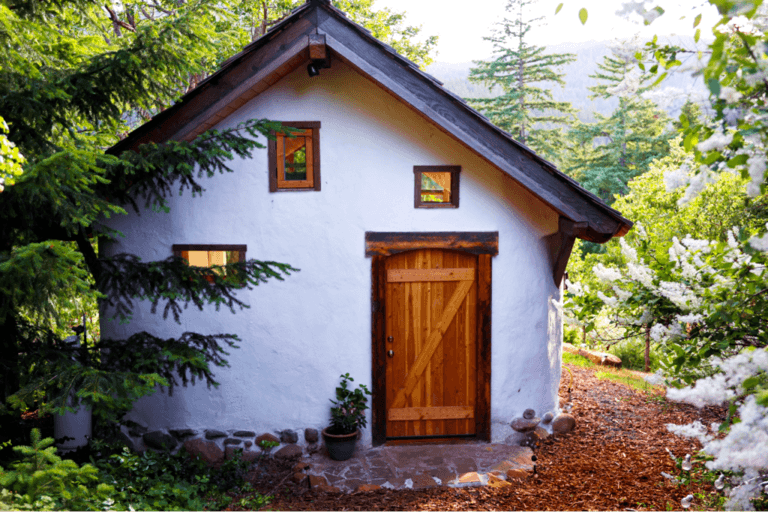
The Cae Mabon Retreat Centre in North Wales has been building small, natural dwellings for their residents and visitors since 1989. This intentional community is located in the best of what nature can offer: in the woods, by a river, near a lake, at the foot of the mountains and within sight of the sea.
Cae Mabon’s principal creator is Eric Maddern, who was inspired to create the community after spending time with the Aboriginal people in Alice Springs, Australia. He wanted to create a place that was not the ostentatious beauty of the wealthy but the humble beauty of the simple and natural. The buildings he created are mostly made from timber, stone, reed, straw, grass, lime and clay and they blend in with their surroundings. Continue Reading »
Cob Building – Off the Treadmill
This movie is entitled “Off The Treadmill” and is about getting out of mortgage debt by using the very ground we stand on to build our own homes. “It’s dirt cheap”, says Ianto Evans, master cob builder and architect at Cob Cottage in Southern Oregon. This film was created by Chris Tilt.
Earth is still the world’s most common building material. The word cob comes from an old English root meaning a lump or rounded mass. Cob building requires the use of hands and feet to form lumps of earth mixed with sand and straw. This is a sensory and aesthetic experience similar to sculpting with clay. Cob construction is easy to learn and is inexpensive to build. Because there are no forms, ramming, cement or rectilinear bricks, cob lends itself to organic shapes: curved walls, arches and niches. Earth homes are cool in summer, warm in winter. Cob’s resistance to rain and cold make it ideally suited to cold climates like the Pacific Northwest, and to desert conditions.