Alek’s Tiny House Project

by Kent Griswold on March 5th, 2013. 45 Comments

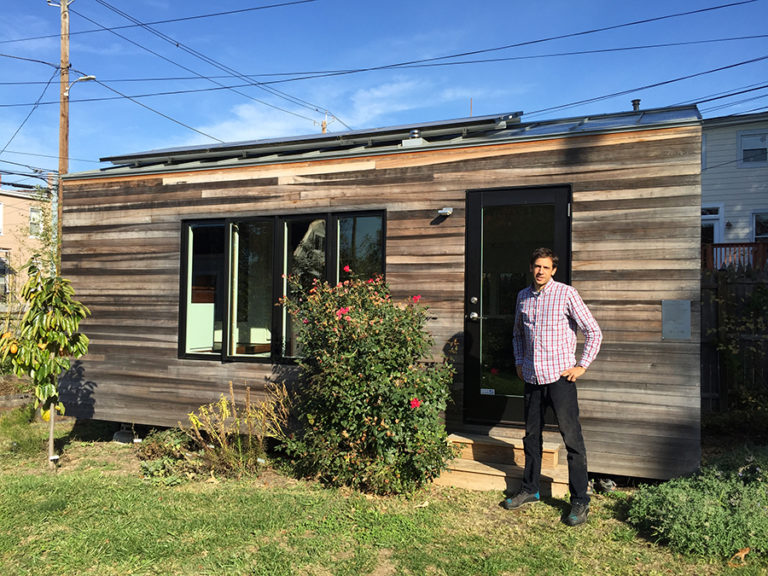
My name is Alek Lisefski. I’ll be starting to build my tiny house within the next month and hope to complete it by this summer. I designed it myself and will do as much of the construction as I can to save money and because I believe it’s an invaluable skill that everyone should have. I’ve set up a blog for my project here: http://tiny-project.com/

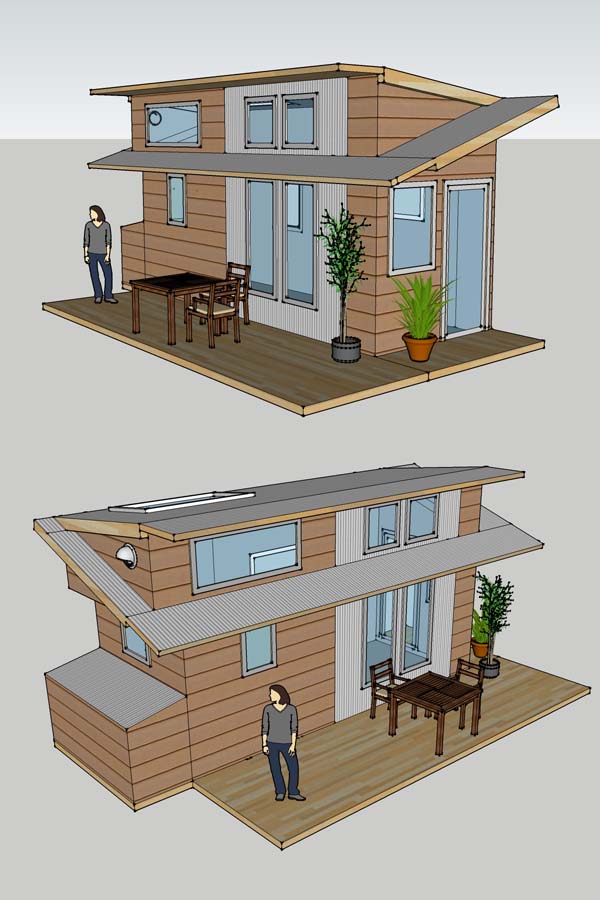
While I haven’t started to build yet, I’ve done a lot of designing and planning. Attached are some of the models I’ve created. A few things have changed, but they are fairly accurate to what I will be building. What looks like glass walls around the bathroom is just so I can see through them in my model. They will not actually be glass.

exterior plan

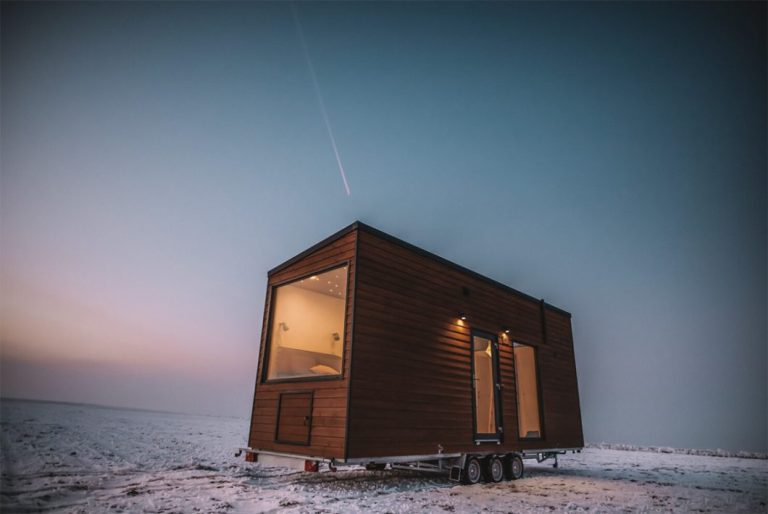
I plan to build on an 8×20 foot trailer. My house will feature many windows (including several large, south-facing windows, for passive solar gain). The house will have fold-down overhangs to shade windows from mid-day summer sun, and will also include a fold-down deck.

I’m currently looking to form connections, get advice, and hopefully convince a few companies to sponsor me to help make this dream a possibility for me. Continue Reading »

Asian Pop-Up Tiny Houses

by Christina Nellemann on January 7th, 2013. 19 Comments

With nearly 130 million people living in Japan alone and over 1.3 billion people in China, many Asian architects have been working on a few unique ways to house their inhabitants. Just like Japanese ramen, even some of their tiny homes have become “instant”. These two designs are a few examples of what are being labeled as pop-up houses:

Tricycle-House-and-Tricycle-Garden-by-PAO-and-PIDO-2-568x410

The Tricycle House

This tiny wheeled house from the People’s Republic of China is beneficial to people who may not be able to afford a city apartment or a home with land. The portable house is towed with a bicycle and can be configured in several ways. It’s constructed of translucent polypropylene plastic using a CNC router, it retains its strength during folding such that it can open up and expand for increased space and connection to other units. This tiny structure contains a kitchen with a sink, a bathroom with a small tub and a water tank, a living/ sleeping area with storage and even an attachable outdoor garden. Continue Reading »

January 7th, 2013and filed in Uncategorized
Tags: asian, cabinets, designs, house, pop-up, portable, rolling, tiny
19 Comments

The Small House Movement: What’s the Big Deal?

by Kent Griswold on October 10th, 2012. 17 Comments

This is a guest provided by YellowBlue Designs where they sell Green house plans and blog about all things sustainable for your home.

Compared to the rest of the world, North America often seems to be the epitome of all things super-sized. We live in houses and apartments that would be considered gigantic in many parts of the world. We fill up our houses with stuff, then we fill up our garages (a true luxury for most in the world) with stuff, and often end up renting self-storage units to handle the overflow! A whole cottage industry has sprung up just around dealing with forgotten and abandoned storage units.

Lakeside Cottage

Lakeside Cottage

Yet there are those who have found that having all that stuff doesn’t necessarily lead to greater happiness. In fact, dealing with all the possessions in our lives can itself become a significant source of stress. Now there’s a new movement afoot that says enough is enough. It’s the small house movement, but it makes a big impact in a number of important ways. Continue Reading »

The Ephemeral Architecture of Burning Man

by Christina Nellemann on August 13th, 2012. 5 Comments

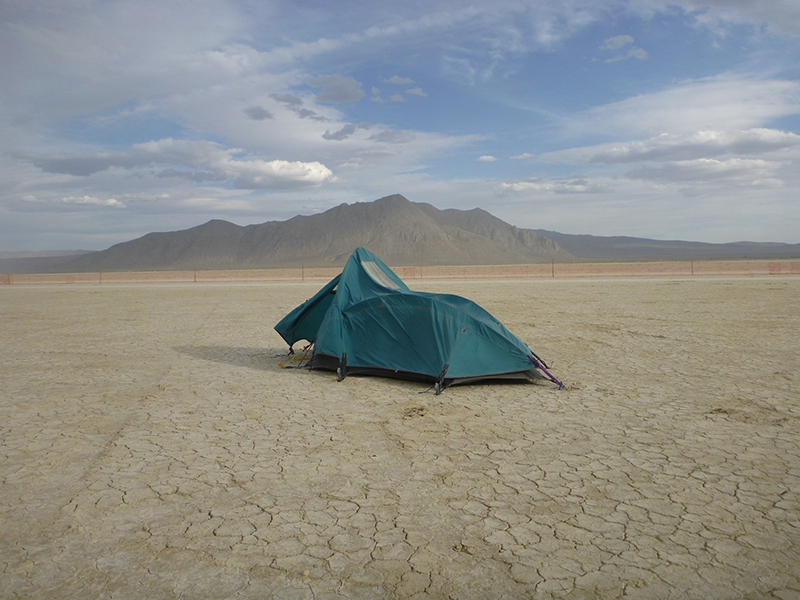
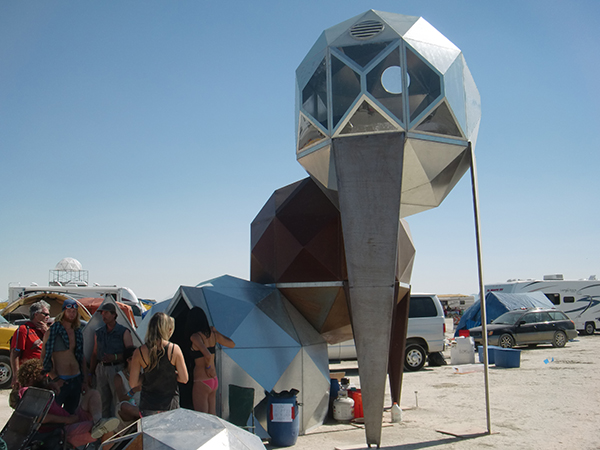
All over the world, participants of Burning Man live the entire year in anticipation of the month of August. In about two weeks, the yearly event in the Black Rock Desert of Nevada (which is expected to host 60,000 people) will begin, and Black Rock City will burst out of the desert floor like a giant flower. During the last week of August until Labor Day, these residents (called Burners) will live in their own shelters that they’ve brought to the event. These shelters take on many forms: from berber tents and Monkey Huts to flamboyant RVs and festooned Costco carports. Black Rock City has it all.

Phillipe Glade has photographed and blogged about most of these structures during his years of attending Burning Man. His beautiful photographs have now been published in his new book, Black Rock City, NV: The Ephemeral Architecture of Burning Man. The book is 112 pages and contains nearly 200 photos of the structures and shelters built by the denizens of Burning Man.

In a way, the dwellings of Burning Man can be described as vernacular. They are created specifically for the harsh, desert conditions and creative atmosphere of the fifth largest city in Nevada. The structures have to be able to withstand the desert’s 50 mile per hour winds, the boiling sun and allow for airflow and enough room for communal living, cooking and sleeping.

Vertical Camp is covered in garden shade material to allow for airflow and shade from the sun. Downstairs is a large kitchen and living space and the compartments on the top floors contain the bedrooms of the camp residents. Some bedrooms even have faux fur-covered beds and bedside dressers. The views from the top deck are incredible. Continue Reading »

Ode to the Outhouse

by Christina Nellemann on July 16th, 2012. 32 Comments

The lowly outhouse may be making a comeback. Some tiny houses being designed these days are not being outfitted with a bathroom or even a space for a composting toilet. While a specific design or structure may be sound and even really beautiful, it may not provide people with one of the most basic of human needs. A simple or more complex outhouse could be a viable solution.

The outhouse originated about 500 years ago in Europe, and was used primarily at inns or in public spaces. During this time, the ubiquitous symbol of the crescent moon on the outhouse door also began to appear. Since most people were illiterate during this time, the male outhouses were marked with the symbol of a sun, indicating masculinity, and the women’s were marked with a symbol of a crescent moon, which represented the feminine (also the Roman goddess Diana who was the protector of women). As time went on and the American frontier opened up, the men’s outhouses were not maintained as well as the women’s (since men tended to just go out in the woods), so the men’s outdoor commodes began to disappear, leaving the women’s (and their crescent moon symbol) behind. Eventually, outhouses became unisex and some even included several different sized holes for men, women and children. Continue Reading »