Tortoise Shell Delivery – Part 2

Posted October 31st, 2008 by Kent Griswold and filed in Tiny House Articles
Tags: , ,
9 Comments

This is Part 2 of 2. If you missed Part 1 go here to read it.

We arrived deep in the heart of the redwoods and Bill immediately displayed his skill as an excellent driver by backing the tiny house down a steep grade, dodging trees and other obstacles, right into the exact position the very first try.

Bill explains a little about the community in the following paragraphs.

Bill moving the Tiny Tortoise Shell Home into position.

I am supplying little houses for a Buddhist compound (also programmers), which might be a model for other communities.

I am guessing they are all making six figure incomes, there are 10 people total, and one of their people admitted none of them could afford real estate in the area between San Jose and San Francisco by themselves. So they bought a piece of property, I am guessing 3 to 5 acres, with a nice size house. Several people were named on the mortgage. Then they purchased 8 mini homes (from Tortoise Shell Homes), which by design gives them a place to retreat to, for mediation, sleep, etc. They share the house as a work space (they in large part program out of their home), they share activities together, but they still have the privacy of getting away to their “tinies” as they have affectionately named them.

These homes have been modified to meet the requirements of this group of people. Usually a kitchen is part of the Tortoise Shell Home, but in this case most cooking and eating is done at the main house.

Two "Tinies"

Two "Tinies"

Oak floors, skylights, and modified exterior roofs to give it the Zen look are additions to the basic home. Each programmer has added his or her own personal touch to each home. Some with built in furniture, like the open closet below. Another, the unique shower and sink arrangement.

Completed "Tiny"

Completed "Tiny"

They have had a contractor raise the tiny houses up so that their disposal tank can fit under a porch and yet still be reached by the pump truck. Propane and electricity are used for the other appliances. This is a modern establishment and Internet connections and cell phones are the source of communication to the outside world.

Shelf Desk

Shelf Desk

These people are very private, but hopefully down the road they will open up and share with us how they moved through all the red tape to make this work for them. I’m sure there are many others out there who would like to start their own small community.

Loft and Skylights

Loft and Skylights

Exterior of Tiny

Exterior of Tiny

Shower and Sink

Shower and Sink

Sink and Bathroom Entrance

Sink and Bathroom Entrance

Open Closet and Ladder

Open Closet and Ladder

Work Desk

Work Desk

If you enjoyed this post, subscribe to our feed

Tortoise Shell Delivery – Part 1

Posted October 30th, 2008 by Kent Griswold and filed in Tiny House Articles
Tags: ,
5 Comments

Yesterday, October 29, 2008 I had the privilege of joining Bill Kastrinos of Tortoise Shell Homes in the delivery of a home in the coastal mountains south of San Francisco. I met Bill at the Tortoise Shell Nursery located in Rohnert Park, California. I took a few pictures of the Nursery to show you what goes on at Tortoise Shell. We than planned to stop at the Golden Gate Bridge to try and get some good pictures of the home with the bridge in the background as well as the bridge crossing.

Tortoise Shell Home ready to be delivered.

I followed Bill in his recycled diesel U-haul truck, which he has restored and is using to deliver homes in this part of California. This is the 7th of 8 homes that he is delivering to a remote area in the Coastal Range south of San Francisco. I’ll explain more about our destination in part two of our journey.

Bill had to maintain a speed of about 55 miles an hour with the load he was pulling. I tagged along behind until we reached the Golden Gate Bridge. Unfortunately, the bridge was covered with a thick blanket of fog, so we were unable to take any pictures of it in the background. I decided however to go ahead and see if I could get a picture of him crossing the bridge. Just maybe the fog would break and we could get a decent shot. As you can see in the picture below the fog did not cooperate.

We than drove through San Francisco via 19th Street and onto Highway 280, and continued on to the Half-moon Bay turnoff. From there we climbed into the mountains. We took a break for lunch at Alice’s Restaurant in Woodside and than continued another hour to our destination.

Be sure and come back for part two as I show you placement of the tiny house and a tour of some of the tiny homes already in place.

Part 2 is now live click here to view.

Box Turtle ready for completion

Box Turtle ready for completion

Galapagos ready to be assembled on a trailer.

Galapagos ready to be assembled on a trailer.

Leaving the Nursery

Leaving the Nursery

Tortoise Shell on 101 Southbound

Tortoise Shell on 101 Southbound

Crossing the Golden Gate Bridge in the fog.

Crossing the Golden Gate Bridge in the fog.

Climbing into the Coastal Range.

Climbing into the Coastal Range.

Driving through the redwoods to destination.

Driving through the redwoods to our final destination.

If you enjoyed this post, subscribe to our feed

Tortoise Shell Homes Poll

Posted October 27th, 2008 by Kent Griswold and filed in Poll
Tags: ,
18 Comments

Bill Kastrinos of Tortoise Shell Homes is thinking of venturing into a little larger home to reach a broader audience of tiny house buyers. He is considering making an 8 x 32 foot home that is a total of 246 square feet. It would be transported via trailer just like his other tiny homes and he is aiming for a price between $25,000 and $30,000. He would like to know if there is interest, so if you would be kind and fill out the poll below it would give him and idea of where to go with this.

Proposed Exterior View

8 x 32 Floor Plan

Thank you.

Would this 246 square foot home interest you?

View Results

Loading ... Loading ...

Vintage Tiny House Kitchen on Ebay

Posted October 27th, 2008 by Kent Griswold and filed in Tiny Furnishings
Tags: , ,
4 Comments

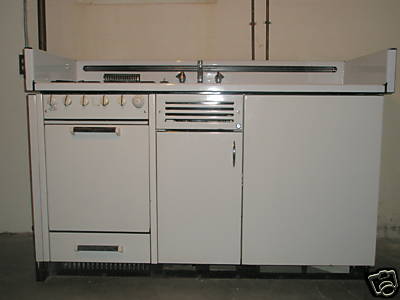
Kim one of our readers noticed today that there’s a great kitchen unit on Ebay that would fit perfectly in a tiny house– it’s made by Dwyer, a US company who’s been building tiny kitchen equipment for decades.

They’re mighty expensive new, but old ones occasionally show up on Ebay for a song. Kim bought one for a mother-in-law’s apartment in their old house a few years ago- it worked perfectly despite being about 40 years old (cute and retro). This one’s much bigger but has a 4-burner gasstove and oven– all you’d need for actual living in a tiny house.

Retro Kitchen Unit

To check it out go to the Ebay listing here. The Ebay item #270277912624.

A Living Home

Posted October 27th, 2008 by Christina and filed in Earth/Cob, Solar
Tags: , , , , , ,
7 Comments


Some days, don’t you feel the world crumbling around you? Financial crises, world hunger, war, poverty. It seems unending. Some people may feel that one way to escape is to have a small, comfortable place to come home to. A home that is like a hug, warm and alive.

Some people have found that feeling in a cob house. A hand sculpted structure that curves and comforts like the earth it is made from. The House Alive! company is offering workshops for 2009 on how to create your own small structure.

House Alive!, which was started in 2001 by Coenraad Rogmans, James Thomson and numerous volunteers, teaches workshops about natural building, natural design and appropriate technology. They also offer consulting services, do presentations and seminars and work to promote natural building as a real alternative to conventional construction methods.

Cob is a building material that is made of a mixture of sand, straw and clay. The materials are mixed wet, by foot or with a tractor or mortar mixer. The word “Cob” comes from an old English word meaning “Lump” or “Loaf.”

The wet cob mixture is used to build thick earth walls; the building technique is very similar to sculpting with modeling clay. Because cob building requires no forms, you can build your walls into any shape you choose. Curves, niches, arched windows and built-in furniture are common features in cob buildings.

Because cob can be labor intensive, it is best if a cob structure be kept on the small side.

House Alive! will be offering a workshop in May of 2009 on how to build a complete shelter. Participants of the workshop will leave confident that they can design and build their own natural home. The building techniques will include:

  • Making cob by foot
  • Rubble trench foundations
  • Stem walls out of recycled concrete, earth bags, and stone
  • Natural sub-floors for earthen floors
  • The materials sand, straw, and clay: How they work, what to look for, where to find them
  • Wall building: tapering, keeping it plumb, trimming, shaping
  • Electricity: How to put in wires, how to build a circuit
  • Plumbing: Water and gray water systems
  • Windows, doors and hanging cabinets and other things on cob walls
  • Hybrid buildings: The interfaces of cob with other materials
  • Earthen floors
  • Earthen finish plasters

Lectures and demonstrations will include

  • The economy of building
  • Passive solar design
  • Natural design
  • Composting toilets
  • Solar hot water
  • Solar electricity
  • Codes, hybrid buildings and natural renovations
  • Straw bale construction
  • Light straw clay, adobe brick and waddle and daub.
  • Roofs and roof insulation
  • Simple living and community

One thing that cob building lends itself to is cohousing. Cohousing communities attempt to be as self-sufficient as possible, by building their own homes from sustainable materials like cob and straw bales and by growing their own food. The Emerald Earth Sanctuary in Mendocino County, Calif. makes decisions by consensus, and they value direct, open communication and conflict resolution. They also offer work parties, natural building workshops, and a work trade program.

If you are interested in learning more about cohousing, the 2009 cohousing conference will be in Seattle, June 24-28, 2009.

By Christina Nellemann

Emerald Earth Sanctuary

Emerald Earth Sanctuary

If you enjoyed this post, subscribe to our feed

Earthquake Shacks

Posted October 26th, 2008 by Kent Griswold and filed in Stick Built, Tiny House Articles
Tags:
9 Comments

Update: I’ve added an interior picture to the bottom of the post.

Earthquake refugee cottages, or “shacks” were built by the Department of Lands and Buildings of the Relief Corporation to house refugees from the 1906 San Francisco earthquake and fire.

5,610 cottages were constructed to house over 16,000 San Franciscans in 11 refugee camps in locations including Dolores Park, Washington Square, Precita Park, Portsmouth Square, and today’s Park-Presidio Boulevard.

Refugee Camp, Franklin Square, 1907. Courtesy of the San Francisco History Center, San Francisco Public Library.

Photo Credits and information from the Western Neighborhood Project.

Union carpenters built three main sizes of cottages between September 1906 and March 1907. Cottages had cedar-shingle roofs, fir floors and redwood walls. All were painted green to better blend into the parks and public squares in which they were erected.

When the camps began closing in August 1907, refugees hauled cottages to private lots, and often cobbled together two or more to form larger residences. Of the 5,343 moved from the camps only a handful are certified to still be standing.

Earthquake cottages came back in the public eye in the early 1980s, when “shack activist” Jane F. Cryan began lobbying for their preservation. Her efforts created City Landmark #171, a complex of four shacks at 1227 – 24th Avenue, and helped rescue two others that are on public display in the Presidio of San Francisco.

Learn more about the 1906 Earthquake Shacks from the Western Neighborhood Projects here.

Restored Back of Shack

Restored Back of Shack

Front of Shack Restoration

Front of Shack Restoration

Shack Floor Restoration

Shack Floor Restoration

March 19, 2006, celebrating the restoration of Shack One.

Shacks on the Presideo

Shacks on the Presidio

Interior Restored Shack

Interior Restored Shack

If you enjoyed this post, subscribe to our feed

A Tiny House in Australia

Posted October 24th, 2008 by Kent Griswold and filed in Stick Built
Tags:
6 Comments

David Bell from Australia has posted his story about his little house over at our Tiny House Forum. I know not everyone gets over to the forum so I ask David to let me share his pictures and story here. I’ll let David tell you “the rest of the story.”

North side (sunny side) view showing solar panel and rainwater tank

Hi from my tiny 100sq ft house in Birchip, Victoria, Australia. My house is L shaped with a total floor area of less than 100 sq ft (10sq meters). Above the main arm of the L shape is a mezzanine floor where I sleep. The smaller arm of the L shape is my little kitchenette and it is open to the ceiling above. I can roll over in my bed and see what is cooking down below.

I started off with the idea of an L shaped building because I like having a little space off the side. I limited the size of the building to less than 100 sq ft because anything larger would have required a council building permit.

Through careful planning of my building I find that I can fit all my treasures (books, DVDs, and works of art) and still have room to relax.
The secret of living comfortably in such a small space is to have a recliner chair where I can lie back and dream, or sleep, or watch my movies.

The house has a single 85 watt solar panel, which powers my lights and radio, and charges up my mobile phone.

View of wind driven fan which cools my sleeping area in the roof.

View of wind driven fan which cools my sleeping area in the roof.

I live in a very hot part of a very hot country so I was extremely conscious of heating and cooling issues (cooling moreso than heating.) I designed a series of vents that encourage drafts to flow through the house on hot days. One of these vents is just above my bed and includes a wind driven roof fan. I also invested in double glazed windows to maintain heat retention.

I live on a half acre of land which cost me $7500 Australian (This when a block of land in Melbourne or any other big city is at least $100,000.) I built the tiny house myself, including the plastering and tiling, the electrical installation and the plumbing and all up it cost me about $10,000. So my total investment in a truly lovely little home is less than $20,000. Yet the people who think the city is great are paying at least $300,000 for a home and spending their whole lives attempting to pay for it.

Eastern view showing even tinier shed near house, colour coordinated of course.

Eastern view showing even tinier shed near house, colour coordinated of course.

The credit crunch matters little to me. I live like a free man in a tiny house which I built with my own hands and which costs nothing in terms of bills (electricity, water etc).

My inspiration for this way of life was Henry David Thoreau who in his classic book “Walden” pointed out how senseless is the life that is burdened by large houses, and large debts, and has little time to appreciate the natural world that is all around us.

A tiny house is the first step to escaping the charge that “The mass of men lead lives of quiet desperation”.

Ladder leading to my bedroom is near the door.

Ladder leading to my bedroom is near the door.

Yes, the inside is brightly coloured. My inspiration for this was the movie “Frida” about the life of the Mexican artist (and wife of Diego Rivera) Frida Kalo. I loved the fact that her house and garden were so vivid. I intend to create a similar palette of celebration here in the sunburnt country. I love vivid colours and hope to turn my whole property into an explosion of colour which is a celebration of life.

Living Area

Living Area

Note the electrical nerve centre near the kitchenette (which is yet to be painted)

Note the electrical nerve centre near the kitchenette (which is yet to be painted)

If you enjoyed this post, subscribe to our feed

Adirondack Cabin

Posted October 23rd, 2008 by Kent Griswold and filed in Log Construction
Tags: , ,
Add a Comment

One of the neat things about keeping things small is the beauty of simplicity. I came across this neat Adirondack cabin and just love the basic style of the lean-to converted into a small cabin, simply by adding a log front, windows, and a door. The hand scribed logs are chiseled for a perfect fit and the craftsmanship is outstanding. The inside dimensions of this lean-to are 12 feet by 8 feet.

adirondack_cabin

A lean-to can be a refuge, a retreat, a shelter, a lunch spot, an inspiration point, and a home away from home. To learn more visit the Adirondack Lean-to Company.

Downsizing to 100 square feet of bliss – CNN Report

Posted October 22nd, 2008 by Kent Griswold and filed in Tiny House Articles
Tags:
4 Comments

Watch this CNN special on Tortoise Shell Homes and Tumbleweed Tiny Houses. Read the article at CNN.com.

Our Little Cabin Up the Lake

Posted October 21st, 2008 by Kent Griswold and filed in Floating Homes, Your Story
Tags: , , ,
20 Comments

by Margy Lutz, Powell River, BC

My husband Wayne and I were vacationing in Coastal British Columbia when we discovered something unique and intriguing on Powell Lake, float cabins.  It was love at first sight.  We had been looking for a place to retire and knew this was it. We laughingly say, when we bought our cabin, it came with John.  This was very important. In the beginning we could only visit on holidays.  John (the previous owner and cabin builder) agreed to check on our place and help out with odd jobs.

Lutz's Floating Cabin

Lutz's Floating Cabin

Float cabins are a big part of Coastal BC history.  During the heyday of logging and fishing, they were used as support camps that could be moved from place to place.  On Powell Lake, float cabins were inexpensive hunting and fishing getaways for paper mill workers.  Today things are a little more regulated.  Cabins have registered water leases and we pay property taxes.

Cabin construction begins with the float.  John lashed huge cedar logs together with ¾ inch steel cable.  A winch and hydraulic jack tighten the cables and large railroad spikes hold them in place. Next the deck is added and finally the cabin is built on top.  John is typical of many people who live in Coastal BC.  He is self-reliant and a “Jack of all trades.”  And he has been very patient about teaching us “city-folk” along the way.

Float Construction

Float Construction

Cabin Foundation

Cabin Foundation

Our cabin is small (20×21 feet) but complete.  The downstairs has two bedrooms, one of which we use for storage and a bathtub.  The main downstairs area is a great room design including kitchen, dining and living areas.  The large upstairs loft is our bedroom.  It’s plenty of space, especially since we have the whole outdoors at our doorstep.  The main float is 40X40 and we have additional floats for a variety of purposes: a dock, a floating woodshed and my floating vegetable garden.  The garden is on a pulley.  I bring it in to tend my plants and then send it out to our log boom breakwater to protect it from hungry critters.  When Wayne wants privacy for writing, he heads out to the Gemini, a renovated boat that is his author’s retreat.

Cabin Walls

Cabin Walls

We live up the lake about 25 minutes from the marina.  Our power sources are solar and wind, with propane for cooking, refrigeration and additional lights. In winter we use a small generator to give our batteries an occasional boost.  Our wood stove keeps the cabin warm so we can live there in all seasons. An outhouse on shore may soon be replaced with a composting toilet.  Four flights of stairs up the cliff in stormy weather isn’t always fun.

Living Area and Stove

Living Area and Stove

Now that we have retired, we spend about 75% of the year living in our float cabin.  Our lives follow the seasons with wood gathering, gardening, swimming, fishing and enjoying our surroundings.  There’s nothing better than getting up early and having a cup of coffee on the deck watching the sun rise over Goat Island to herald in a new day.

July Garden

July Garden

In 2001 we purchased our cabin for $35,000 CAD which at the time was about $25,000 USD.  We figured we couldn’t go wrong with that.  Actually, because there is a moratorium on new cabins the values have risen quite rapidly.  John sold another cabin this year (a little larger than ours) for $100,000 and some are going for even more than that.  Even so, it is still within the range of many people.  Of course, that is because there is no land involved.  But we feel comfortable with our 20 year lease that is renewable from the BC government.  The lease payment is $500 a year and the taxes the same amount.

You can find more information about float cabin and off the grid living at http://PowellRiverBooks.blogspot.com.  For information about Wayne’s Coastal BC Stories, come to www.PowellRiverBooks.com.   Up the Lake and Farther Up the Lake have lots of information about our cabin life on Powell Lake.

Float Cabin Floorplan

Float Cabin Floorplan

Float Cabin Loft Plan

Float Cabin Loft Plan

View of Float Cabin

View of Float Cabin

View From Cabin

View From Cabin

If you enjoyed this post, subscribe to our feed