Straw bale Workshop Day 2

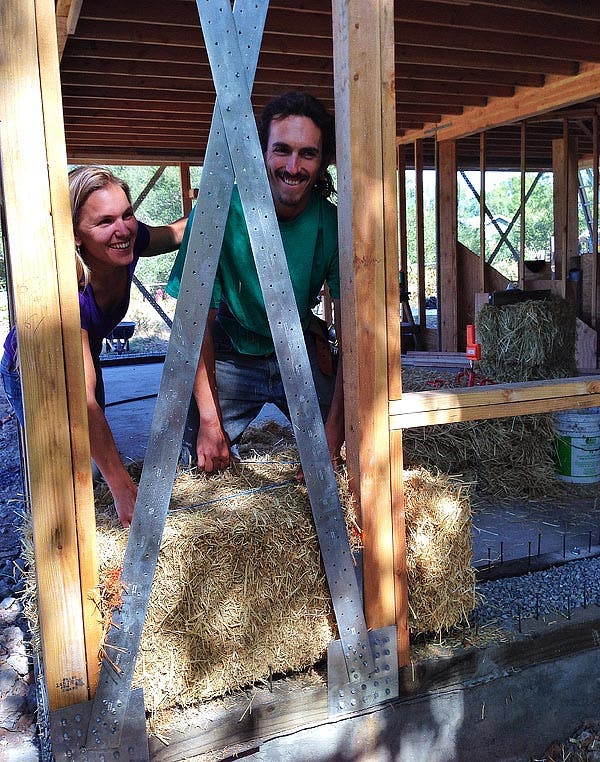
hosts first bale

Day two of the workshop at the Common Kettle Farm started early for me so I took a walk around the farm. We have been having perfect weather though by afternoon it can start feeling quite warm. The bulk of our food that we are eating is grown right here on … Read more

Straw bale Workshop Day 1

andrew

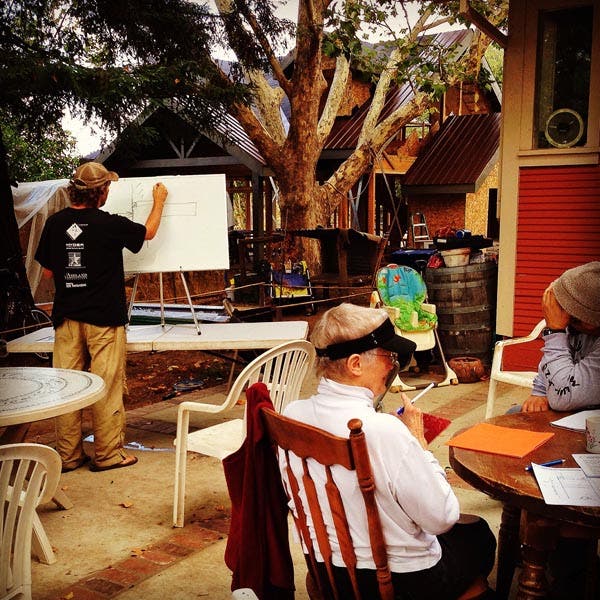
This week I am with Andrew Morrison of Strawbale.com in Orangevale, California at a week long straw bale workshop at Common Kettle Farm. I will be giving you daily updates of our progress as we learn and progress on this timber frame straw bale barn. Though not tiny this “barn” … Read more

The Truffle

While this strange, tiny house is far from a cozy Hobbit home, it is intriguing. The experimental Truffle, by the Spanish architecture firm, Ensamble Studio, was built on the Costa da Morte over the course of several years using an interesting mix of local soil, hay bales, concrete and a … Read more

Free Tiny House/Straw Bale Framing Report

by Gabriella Morrison Straw bale construction is a wonderful building technique. It yields walls that are 3 times more fire resistant than standard construction, 3 times the energy efficiency of conventional construction, uses a waste material that otherwise gets burned in the field and creates huge levels of pollution, is … Read more

Straw Bale and Tiny Homes

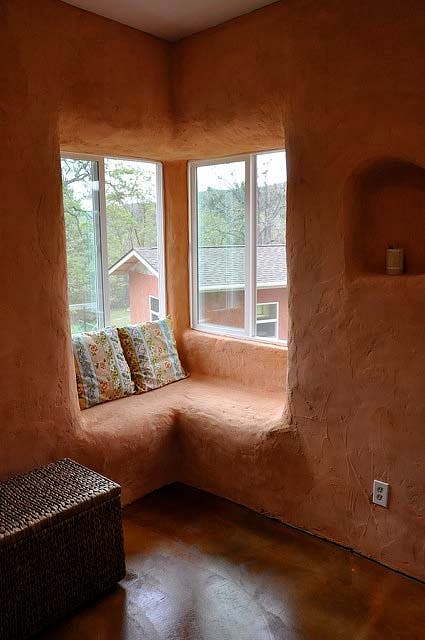
straw bale window seat

Guest Post by Andrew Morrison

As you may know, my wife, 12 year old daughter, and I recently sold more than half of our worldly belongings to fund our adventure, let go of our large rental house, and spent the next 6 months in a quest to reconnect with each other and with what really matters in life. Most of that time was spent in a 150 sq ft pop up tent trailer in Baja, Mexico where we were able to live off grid and to essentially unplug ourselves from our “normal” day-to-day lives. What we learned was that in living with the least, we gained the most and that in finding the stillness that comes in not busying ourselves, we reclaimed our joy and inner calm (to read more about this journey, please visit www.SmallHouseRevolution.com).

One of our favorite topics of conversation since embarking on this adventure has become housing. What defines a home, what are the things that are essential in making a home a wonderful space, what do we want in our own dream house, etc… Being that the professional focus for most of our adult lives has been straw bale construction and green housing, we naturally have been exploring the merits of this mode of building as a solution for those of us that are wanting to build affordably, to tread lightly on the planet, and to be involved with our own home’s creation. We now see, more than ever, that straw bale construction is an amazing building technology fully able to fill those needs.
straw bale window seat


The idea of stacking straw bales to create a super insulated and natural shelter first appeared on the Nebraska plains over 100 years ago and some of these original homes are still in use. The technology has advanced significantly since those early builds and today, two major styles of straw bale construction have been developed: Load Bearing and Post and Beam. Load bearing construction uses no structural frame (such as framed 2×6 walls) to support the roof. Instead, the bales carry the load. Post and beam construction, on the other hand, uses a structural frame to support the roof while the bales act as insulation within that frame. Whichever system is implemented, the benefits of building with bales include: 3 times the insulation value of a conventional wall; 3 times more fire proof than a conventional home (yes, you read that right!); lessens pollution by using a waste material that normally contributes significantly to the pollution cycle; ideal building system for the owner builder; incredibly sound proof; able to withstand natural disasters (earthquakes, high wind/tornado) significantly better than a conventional home; aesthetically beautiful.

Read more

Living in the Future

According to the Lammas ecovillage in Wales, living in the future means looking to the past. This series of videos shows the baby ecovillage’s plans and struggles to develop a low impact village in the open countryside. The series also profiles several other successful ecovillages around Europe. The village is named after the pagan holiday that celebrates the abundance of the fall months.

Lammas is the United Kingdom’s first planned ecovillage and is sited on 76 acres of mixed pasture and woodland in Pembrokeshire. The houses use low-impact architecture which uses a combination of recycled and natural materials. The village will contain five detached buildings and one terrace of four dwellings. The homes will be built of straw bale, earth, timber frame and cob; they will have turf roofs and wool insulation and will blend into the landscape.

The videos (also available as podcasts) cover everything from searching for land, working with local codes, inspectors and design councils, examples of different types of natural building including straw bale and cob, surviving cold weather, self-sufficiency, growing your own food, and keeping community intact. The ecovillages profiled are Cae Mabon, The Village, Ireland and Findhorn. That Roundhouse by Tony Wrench is also featured.

Read more