Tiny House Challenge – Domain Studio

by Kent Griswold on January 31st, 2012. 32 Comments

Guest Post by Frank Dobrucki

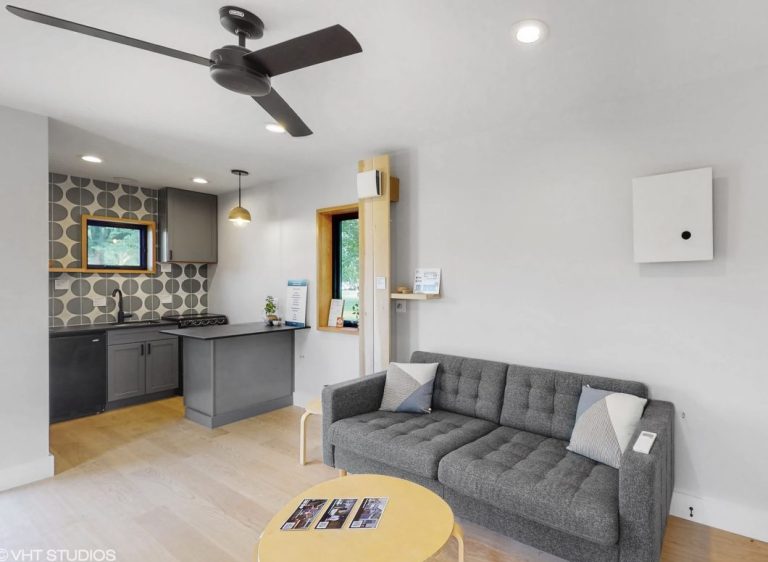
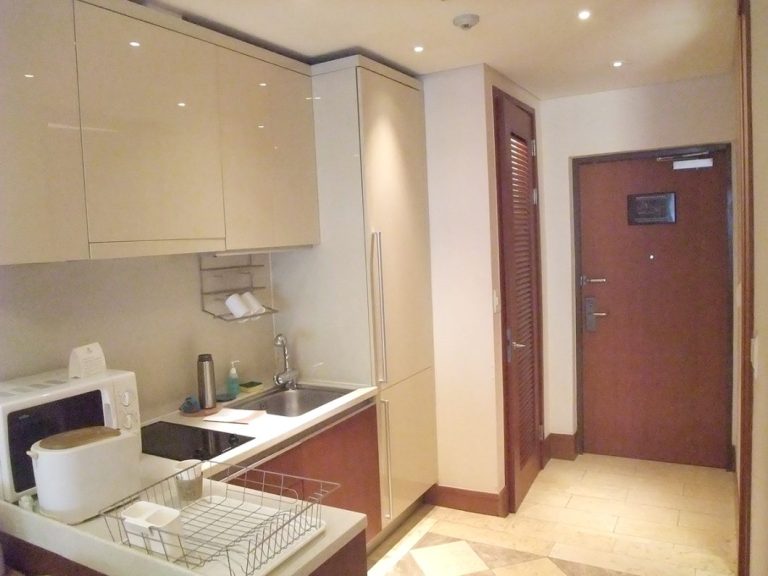
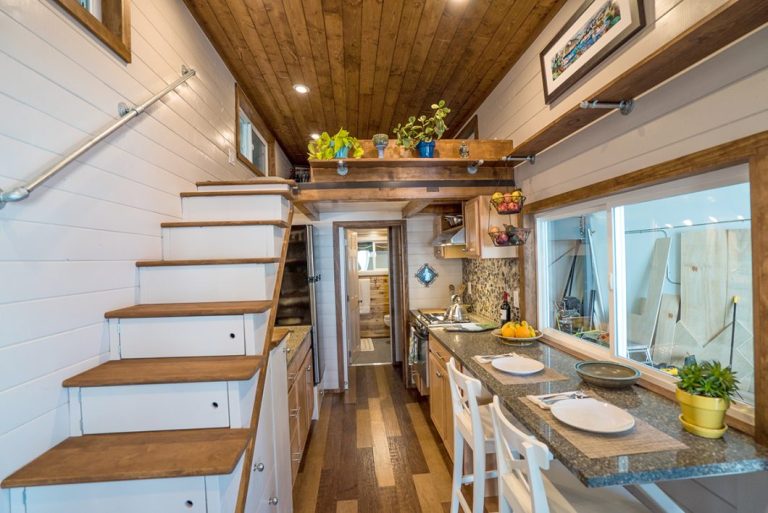
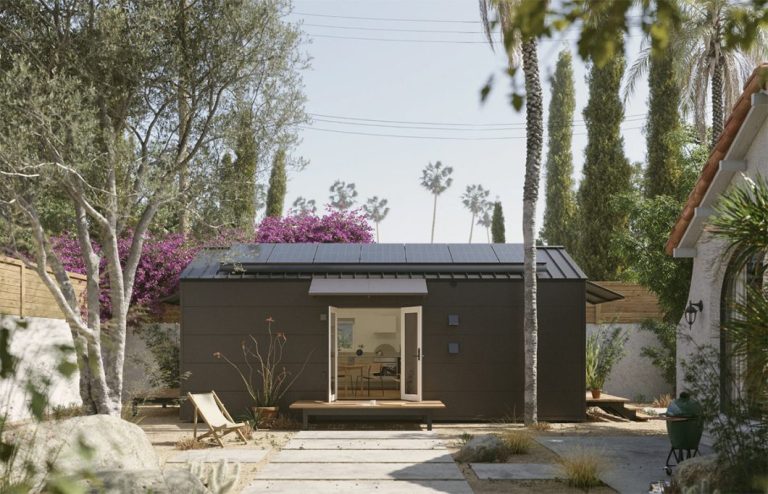
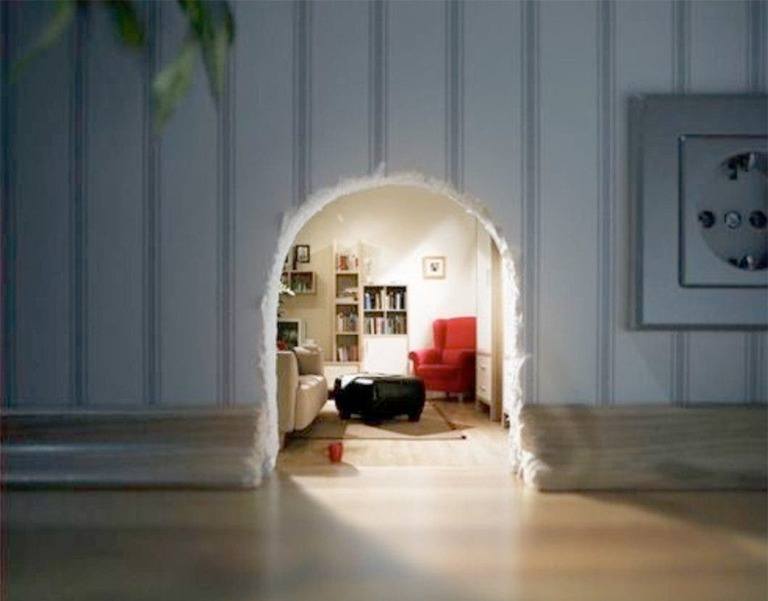
My Tiny House Dilemma/Challenge. Years ago, as I was watching the Las Vegas housing market crumble, the local TV News was reporting that Las Vegas did not have to worry about the national trend in housing, because Las Vegas was going vertical! Yes, we had well over 100 huge high-rise projects on the horizon! I thought that the newscasters were out of their mind. There is no way that you can insulate one type of housing project, specially when it is an outrageously overpriced concept and believe that this will save us from economic catastrophe. Fast-forward, Las Vegas is truly ground zero when it comes to the national housing market disaster. All of the high-rise projects included, even though most were never built!

Photo Credits: Frank Dobrucki

When I looked at the floor plans of many of the projects, several entry-level models were less than 800 square feet and had starting prices of $600,000 and monthly homeowner fees of approximately $800 to $1,000. I knew that I could do a better job of coming up with the kind of housing that people really need and something that people could afford.

Continue Reading »

Posted January 31st, 2012 by Kent Griswold and filed in Stick Built
Tags: , , , , ,
32 Comments

Bringing a Surveyor On-Board Your Tiny House Project

by Kent Griswold on January 30th, 2012. 21 Comments

Guest post by David from David Moor Chartered Surveyors

(This information is for the UK not the United States)

Getting a surveyor on-board for your tiny house project can seem like a relatively daunting step. It can be the moment where your tiny house makes its first real steps into becoming a reality. That said, it can also bump up the expense of the project, so it is not a decision that will be taken lightly by those with grandeur objectives for their tiny home.

It should go without saying that it won’t be necessary to bring the technical expertise of surveyors into smaller micro-house projects. There are circumstances, however, where you will bring in the expertise of builders, architects, and indeed, surveyors.

With this in mind we’ll look at the value a surveyor will bring to your project and the circumstances that would predicate this decision.

This article will provide an overview of the role a surveyor plays in the construction of buildings and look at why they may add value to your projects.

There are three factors that will determine whether you will consider using a surveyor:

  • The size and complexity of your project
  • The budget for the project
  • Your prior experience building

Of these three factors, the size and complexity of the project is ultimately the most important. (These however, are often defined by the project’s budget.)

In any new building project, the design is likely to chop and change as the structure begins to take shape. Let’s have a look the responsibilities of a surveyor in a construction project.

Cost Management
The role of a surveyor from your point of view boils down to two words: cost management. On smaller projects, this task can straight forward to manage yourself, but with any job of a significant cost, it’s not recommended you go it alone.

Why?

At the start of any project, you’ll have an approximate idea as to what it is going to cost. There are always (always) unforeseen changes to the project that can cause its costs to escalate.

Whilst this deviation may not be a major problem in small projects, in larger ones they can add up and jeopardize the projects chance of completion.

An architect may have an idea about cost, but they are not qualified to account for the management of building costs as they change over time. The surveyor’s cost management role continues throughout the project,
particularly in accounting for the value of a builder’s work on a month-by-month (or week-by-week) basis.

This isn’t to imply your builders will pull the wool over your eyes, it’s simply a means of giving you confidence that the project is being completed on-time, on-cost, and to sufficient quality.

For example…
As the home begins to take shape, you decide to make a change to the home’s design; for the sake of argument, adding a window, which the builder quotes at $3,000.

A surveyor will audit this quote to ensure the cost is right. You may be adding a window, but you’ll be losing cladding, so money could be saved here.

Your surveyor will be involved in material procurement as well as the negotiation of the builder’s contract, ensuring a fair price as well as the completion of the work to a high standard.

By employing the services of a surveyor for help with the construction of your tiny home, you will introduce a series of checks and balances to the project, helping to fix the cost.

Anyway, that’s my overview of the value a surveyor could bring to your tiny house build. If you’ve any questions, leave them as a comment and I’ll do my best to try answer them.

Posted January 30th, 2012 by Kent Griswold and filed in Tiny House Articles
Tags: , , , , , , ,
21 Comments

Tiny House Video

by Kent Griswold on June 29th, 2011. 25 Comments

Kim a reader of the Tiny House Blog discovered this video and I think it is a perfect example of what can be done with a little hard work and enginutity. I am not familiar with the language in the video, but I’m sure it is European.

This person took an old run down caravan or trailer and used it for the base, he then rebuilt it using his design and creating a simple structure for himself. It has all the basics, a place to sleep, cook and stay warm. Maybe this video is just the inspiration you need to start your own project.


Posted June 29th, 2011 by Kent Griswold and filed in Tiny House Video
Tags: , , , ,
25 Comments

Sri Lanka Shipping Container Retreat

by Christina Nellemann on June 27th, 2011. 29 Comments

A friend and fellow tiny house lover recently sent me this link from Container Home on this shipping container cabin retreat in Sri Lanka. The house was constructed with local reclaimed material in about a month by architect Damith Premathilake. The tiny house is located on an Army base and was built for a lieutenant colonel.

The 700 square foot retreat is constructed of two shipping containers, timber strips from old bunkers and weapons boxes and used railway sleepers. It is designed to embrace the views and climate of the surrounding environment, and create a place of relaxation and beauty while using already available resources. Continue Reading »

Posted June 27th, 2011 by Christina Nellemann and filed in Humanitarian, Tiny House Concept
Tags: , , , , , , , ,
29 Comments

Cabin Fever Shelter Series

by Christina Nellemann on May 9th, 2011. 7 Comments

The modern prefab cabin company, Cabin Fever, in partnership with award-winning architect, Ed Binkley, has designed a new series of homes called the Shelter Series. The basis of these homes begins with the question: “We don’t buy cars by the pound, so why should we buy homes by the square footage?”

This series of homes meets all of the fundamental criteria in a house. The space is sized to be functional while also allowing flexibility. The uses for these homes include high density small lot urban and suburban infill, relief housing, student housing, auxiliary dwelling units, and specifically, affordable housing.

The Shelter Series homes range in size from 340 square feet to around 1,400 square feet and are also designed to meet a variety of green certification programs with the real emphasis being on energy and water savings along with a superior exterior shell.

Available now is the Shelter 640. This small home features 2 bedrooms, a full bath, generous kitchen, and ample storage/closet space. The interior is filled with light from the standard and clerestory windows. The lot for this design may be as small as 30 feet by 60 feet, and the 640 can be built on a concrete foundation or a raised floor system. The Shelter 640 is priced at $47,300. Continue Reading »

Posted May 9th, 2011 by Christina Nellemann and filed in Pre-fab
Tags: , , , ,
7 Comments

Bend me, shape me: Space saving furniture

by Christina Nellemann on April 18th, 2011. 16 Comments

Tiny houses usually necessitate thinking out of the box when it comes to furniture. Standard furniture for “regular” homes may not fit into a tiny house, so several designers have come up with some interesting and innovative designs for space saving furniture. Interestingly enough, while most of these designers think out of the box, their designs fold up into boxes!

Trick

Trick is the name of this multifunctional furniture that can be used as a bookshelf, a chair, and a dining set. The minimalist multifunction furniture is made from Milan based industrial designer Sakura Adachi.

Continue Reading »

Posted April 18th, 2011 by Christina Nellemann and filed in Tiny Furnishings
Tags: , , , , , , , , , ,
16 Comments

LEAP Adaptive Hummingbird

by Christina Nellemann on April 4th, 2011. 8 Comments

LEAP Adaptive sells modern, green home plans online and they have recently designed their smallest home plan and are making it available to owners, contractors and architects. The Hummingbird is a 480-square-foot home that is energy efficient and utilizes a passive photovoltaic framework, low-VOC materials and the latest in green technology.


The Hummingbird has a living and kitchen area with a fire-ribbon fireplace (which requires no venting) and a large, covered deck which LEAP calls a “chill” space. A small bedroom and bathroom suite are also included. Plans for the hummingbird are priced at $995, the building kit is around $55,000 and an on-site built Hummingbird is about $80,000 which does not include the general contractor fee, building or permit fees.

Other green options included in the Hummingbird are:

  • Cement board or teak siding
  • Trex recycled content-engineered deck planking
  • Low-mass Structural Insulated Panels
  • Multi-unit sliding glass doors with dual-pane Low-E glass
  • Simpson “Strong-Wall” seismic resisting brace-frames
  • Low-flow plumbing fixtures
  • EnergyStar rated Heat-pump HVAC system, lighting and on-demand water heater

LEAP Adaptive is a home design group in San Diego, California. Design director Brian Darnell has spent the last 22 years designing multi-million-dollar residential estates, but realized that “the lust for size and granduer has given way to the realization that the economics and ecology of our flattening world can no longer support such extravagance.” LEAP seeks to create environmental designs that are easier on the owner’s wallet as well as on the earth.

Image Courtesy of LEAP Adaptive

By Christina Nellemann for the [Tiny House Blog]

Posted April 4th, 2011 by Christina Nellemann and filed in SIPs, Solar, Tiny House Concept
Tags: , , , , , ,
8 Comments