Tiny House in a Landscape

The Dome Home

This week’s Tiny House in a Landscape is a unique dome home. Built from from sandwich section glass fibre reinforced concrete. It is 3.5 meters high, and 6 meters in diameter. Big enough for a tiny home, studio, or getaway. The builder of this unique dome resides in the UK … Read more

Beach Huts in the UK

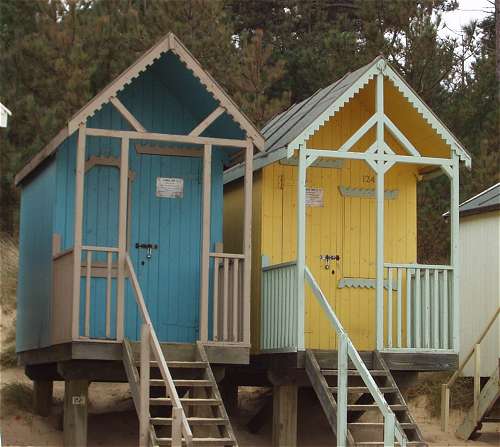
Even though the Northern Hemisphere is experiencing winter weather, I thought it would be fun to interject a bit of summer before the holidays really heat up. These colorful beach huts are custom made by James Ward in the United Kingdom and with a little foresight can be made into a tiny house.
The huts are made with 2×2 Red Swedish Pine frames for durability and the 8×8 pressure treated legs and subframe hold up the structure. The decks are pressure treated to resist moisture. Pine boards are used for the interior and the roofs instead of plywood and each hut is finished with galvanized hinges and locks. Each hut is also painted with an environmentally friendly water-based paint.

Read more

The Stable Company

The Stable Company designs, manufactures and installs high quality, timber frame buildings and serves customers throughout the UK and Ireland. They specialize in small garden rooms, equestrian buildings and other outbuildings. The Stable Company’s insulated Garden Rooms would be the best option for a tiny house. The Company offers three: the Mono, the Duo and the Eco. The Mono has a single pitched roof and a choice of three different depths and unlimited widths. The Duo has a traditional pitched roof and a choice of 12 sizes. The Eco has a single pitched roof that features sedum plants and rocks.

The company also offers a pad foundation, Thermowood® siding, cedar roof shingles or insulated metal roofs, French doors, skylights, exterior lighting and decking. Interior options include laminate flooring, electrical and lighting, heating units and blinds.

Read more

Cae Mabon

The Cae Mabon Retreat Centre in North Wales has been building small, natural dwellings for their residents and visitors since 1989. This intentional community is located in the best of what nature can offer: in the woods, by a river, near a lake, at the foot of the mountains and within sight of the sea.

Cae Mabon’s principal creator is Eric Maddern, who was inspired to create the community after spending time with the Aboriginal people in Alice Springs, Australia. He wanted to create a place that was not the ostentatious beauty of the wealthy but the humble beauty of the simple and natural. The buildings he created are mostly made from timber, stone, reed, straw, grass, lime and clay and they blend in with their surroundings.

Read more

The E-den and the Hut

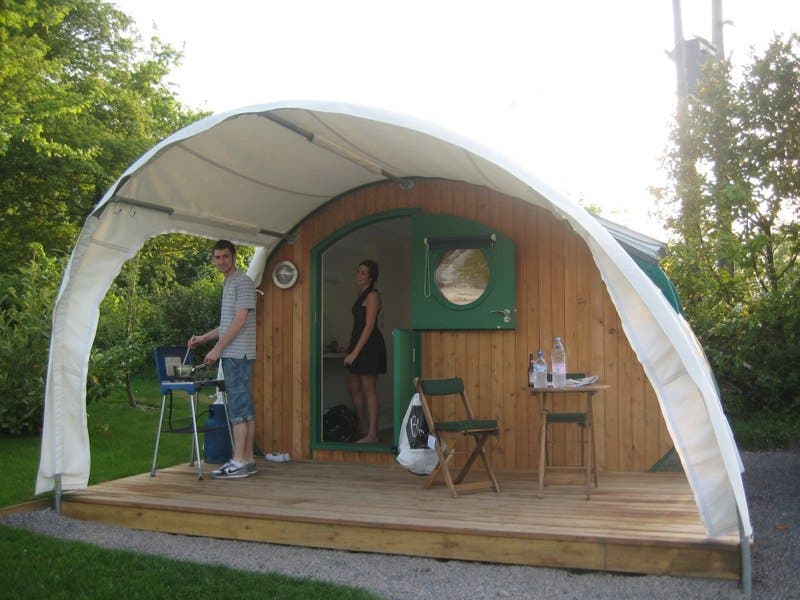
The E-den and the Hut are two new outdoor living/tiny house designs by the UK company Timber Tradesmen. Timber Tradesmen are selling these tiny buildings as alternative options to camping in a tent or trailer, or as a tiny office, but I think they would each make a great tiny house. Both of these buildings have a unique, organic design that fit comfortably in any surrounding, while providing an uncluttered, spacious interior – complete with a large bunk bed, full insulation and storage space. They also include an optional deck and and a canvas canopy for additional luxury and privacy.

The E-den is hand built by skilled craftsmen in Somerset using a combination of timber and steel framework, locally sourced materials and incorporating modern timber frame construction techniques. They each include a wide door for people with mobility problems, a large roof window for natural light, and electricity can be added into each E-den. They are each constructed in a workshop and delivered as a complete unit on a trailer. To launch the project the company has decided to sell the first 10 E-dens at cost to establish them in the marketplace, therefore the prices below are a genuine special offer and will be offered on a first come first served basis.

Read more

That Roundhouse

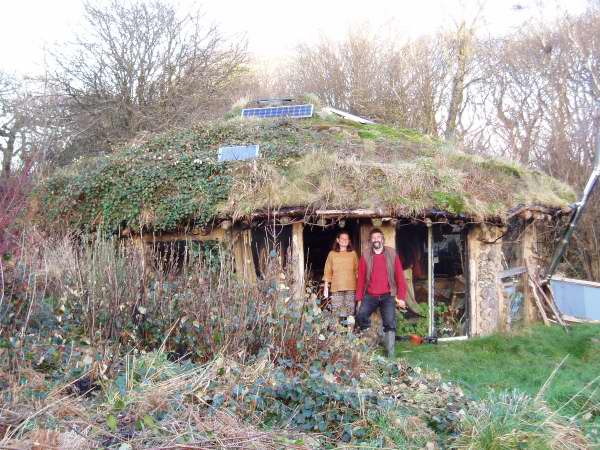
This roundhouse, built of cordwood, cob, straw and recycled windows, is located in southwest Wales and owned by Tony Wrench. It’s not only a low impact, natural dwelling built with what was on hand, but it’s become a symbol for the rights of natural builders within the United Kingdom.

The house was built in 1997 by Tony and featured solar power, a wind turbine, composting toilet and reed beds for gray water. Tony based this house on American Indian designs he had seen in history books. In the past, he had had experience building “wacky structures” and wanted to live as close to the land as possible. Even though he built it inside Pembrokeshire Coast National Park, with agreement from the owners of the land, he never got permission for the structure from the local planning board. After several court appearances, he and his partner, Jane, decided to demolish it in 2004, but changed their minds after public demonstrations persuaded them not to. The Pembrokeshire Coast National Park Authority attempted to get a court injunction to force Tony to demolish it, but were persuaded to allow it to stay up until July 2006, when they could re-apply under the new Low Impact Policy. In 2008, the committee voted to give Tony a conditional for three years. So – the roundhouse still stands.

Read more