Keeping Cool in the Caribbean

Peter and I spend the majority of our days at anchor. We sail from one place to another and settle in after finding an anchorage that is relatively protected from the wind and waves. When the wind dies down, our tiny floating home heats up like an oven in the … Read more

Using Quilts For Historical Heat

One of the advantages of building a tiny house or small house is there is seemingly more time and more interest in building such a house with as little heat/air loss as possible. Through photos we have seen far more fuss and concern over insulation, joint tightness, ceiling framing and … Read more

Fijian Bure

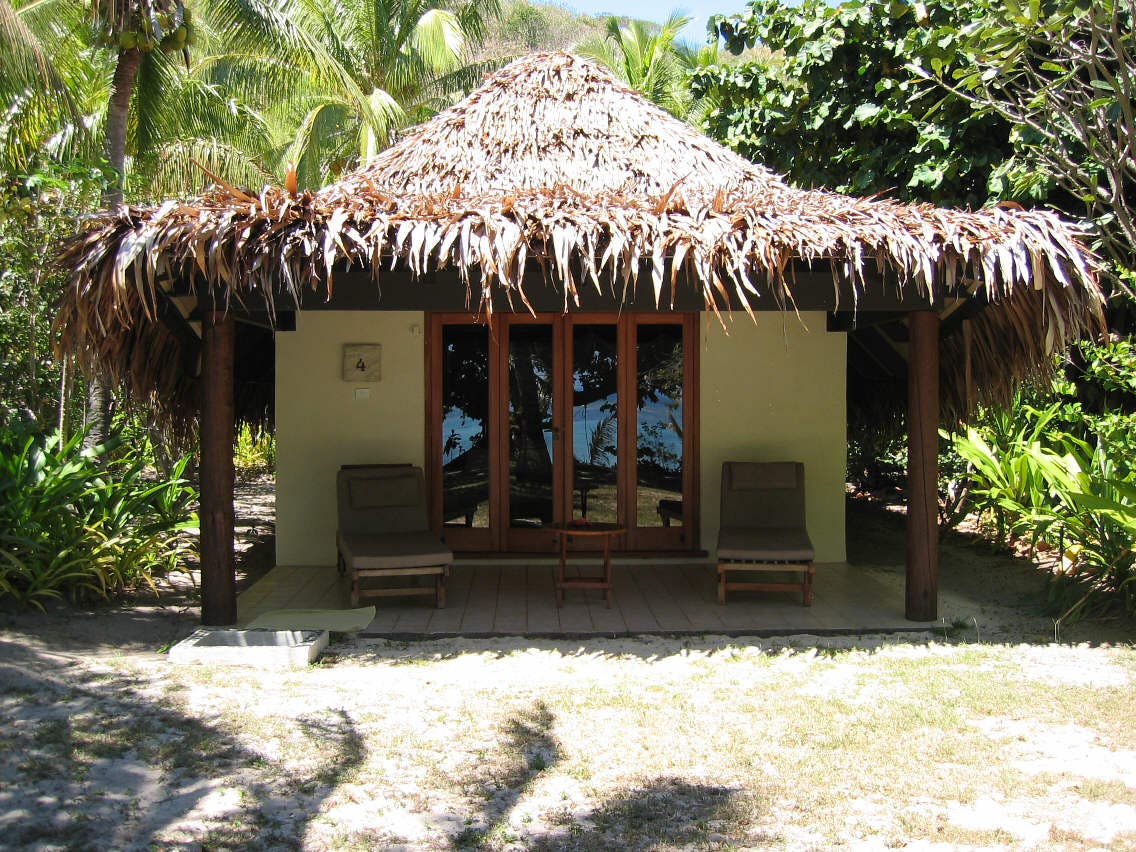
I (Christina) recently got back from a trip to Vanua Levu, Fiji and got to experience life around the tiny Fijian cottages called bures (pronounced bur-ray). The traditional Fijian bure is a wood hut with a straw roof and usually no heating or air conditioning. The structure is cooled by placing windows where there is a cross-breeze. Bures are sometimes built with whatever is on hand in the local area.
Bures are used in Fijian tourism as travelers’ cottages or small resort structures. They are usually eco-friendly and powered by solar and with rainwater or spring-fed plumbing. They can range in sizes, but most of them are one-room structures. Because of the heat and humidity of the area, most time is spent out on a large, covered deck at the front of the bure. Also, because of the amount of rainfall in the Fiji islands, many bures are built on stilts.

Inside most tourist bures are some simple furniture, but in traditional bures most villagers sit on the floor on handwoven mats made from the pandanus plant.

Read more

A Comment About Tiny Homes

Walt Barrett sent me an article sharing his thoughts about tiny houses and I thought you would enjoy reading it so let me turn it over to Walt.

Lately, in the light of two very recent earthquake disasters, I have been giving a great deal of thought to the advantages of living in a small self contained, or autonomous home. The benefits are quite obvious, and huge. First of all, you will probably be located in a rural area far from the looting and other crimes commonly found in cities after a disastrous earthquake, or other natural disaster.

Photo Credit: Jay Shafer

There is also the advantage of not running out of power because you will be making your own. If you are using a composing toilet you do not have the problems associated with sewerage disposal. You most likely will have your own water supply which would be pumped from the ground by a solar powered water pump.

Read more