The Tiny Cottages of Faubourg Marigny

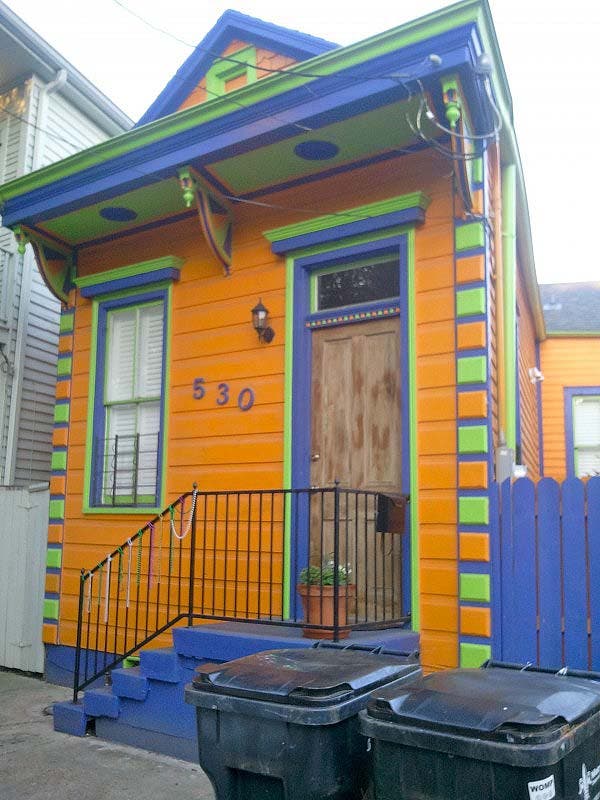
marigny orange

The French Quarter of New Orleans usually gets most of the attention for its architecture, stylish balconies and lively street life, but a small neighborhood just east of the Quarter has a selection of some of the best Creole and Classic Revival cottages in New Orleans. In addition, many of them are tiny.

marigny orange


My husband and I recently went to New Orleans to visit with family and we rented a small apartment in the Fauborg Marigny area of the city. It’s only a few blocks from the French Quarter, but it feels like a different city altogether. The vibe is more historical and bohemian and less touristy and Bourbon Street-y. The main road is Frenchman, which is called the “local’s Bourbon Street”, and is known for its great restaurants, coffee shops and jazz clubs. Because the neighborhood is on higher ground, it escaped the worst of the Katrina flooding.

Read more

Dan’s Lithuanian Small Home

cabin on the lake

by Daniel Combellick

*New Photos added

The house began with ordering 60 logs from the forest service, which they delivered to the site. Common Fir. Some of these I used to build a small hut, which were all hand-hewn, along with some Birch logs taken from my forest. I lived in this small 12 X 16 ft hut the entire time I was building the house.

The foundation was dug by hand, and filled the same… this was one of the three procedures on the house I had help with – the other two were installing the metal roof, and hanging the drywall – besides these all work was completed by me. In my shed there was no electricity or water – the water I brought in containers in a wheel barrow, or on a sled in the winter – from a nearby farmers well, the old kind, drawing the water with a bucket on a chain and dumping into the old milk containers I used for storage. My light was from headlamps, and kerosene lanterns. I had a propane stove, an outhouse, and an outside bathing shelter.

cabin on the lake

When I had completed my lumber take-off I sent the logs to a mill and had them sawn. Then, I commenced building. I was alone almost every day, this is a very remote spot, it is very quiet. Sometimes the loudest sound above that of my tools was the flap of a bird’s wings overhead. Did you know crows are very noisy fliers?

Read more

Wyoming Cabin in the Woods

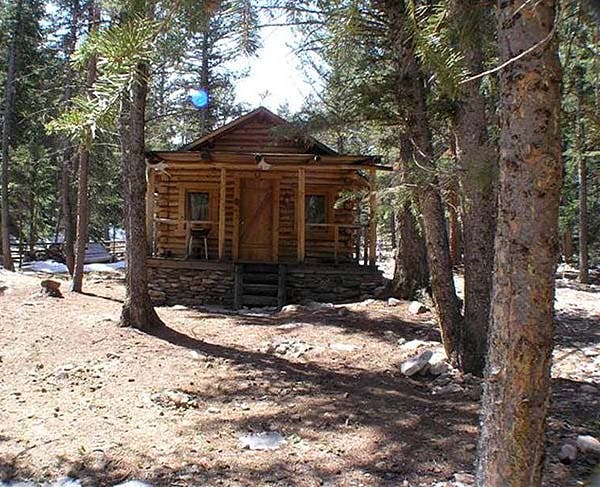
front of cabin

by Ann Bucholtz

I bought the Little Cabin in 2003. It was a one room 20 x 30 ft. hunting cabin without indoor plumbing or electric and I paid $95,000. Utilities existed at the road about 100 feet from the cabin. My son and I used it as a summer camp cabin and each year I added an upgrade. One year water to a hydrant out back, another year electric to a power pole, another year a septic system. When visiting we would run a 100 ft electric cord to the interior to run a small electric heater (the wood stove was unsafe) and a small refrigerator. The homeowner’s association would not allow a compost toilet system because of my close proximity to the adjacent stream.

front of cabin

When I first bought the cabin, it contained old sleeping mattresses and had a broken window. Mice had moved in and it required deep cleaning to be habitable as a camp cabin. The cabin is situated on nearly 4.5 acres surrounded by National Forest, has year round access and is 3 minutes from a small Western town with amenities. Occasionally, the town runs horses and cattle down main street changing pastures! There is even a local rodeo every weekend in the summer as well as packhorse races for entertainment. Winter brings cross country skiing and animal watching.

Read more

I Can Really Cook in my Tiny Kitchenette

Guest Post by Heather Neilson

We are nearing the four month mark of using our basement kitchenette while we are remodeling the upstairs kitchen/dining/family room areas. At first down sizing to such a small area seemed like an impossible task for a family of six, with a mom who LOVES to cook.

It took a couple of years kicking around a few ideas and a trip to IKEA to get inspired.

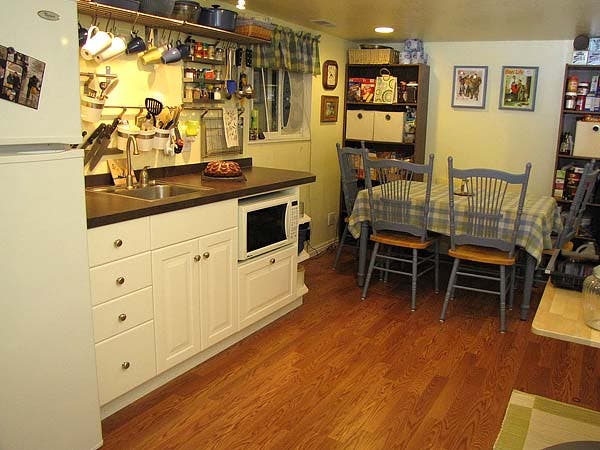
Here is a video of the installation of the Kitchenette. The cabinets and wall system were purchased at IKEA and installed by us. *note that we planned ahead and put 2X4’s in the wall wherever we knew the wall system would attach. Our home was a basement home from 1939-1944 and we just put a kitchen back where there once was one. It is a walk-out basement and with the kitchenette/living area, two bedrooms, and a bathroom it will make a cozy 700 sq. ft. apartment someday.

Sure, it was cute to look at, but I have been most surprised at how much I can do in this little gem. We eat family dinner together nearly every night and for six people that is no small task. Three of these people are ravenous teenagers. Originally, we had purchased a much smaller fridge, but decided that with all of the milk consumed in this household, a bigger (but still small) one was necessary. The far wall where the “dining area is will revert back to a small living room and the dining table for two you can see part of on the right side of the photo (the flip up kind from IKEA)

Read more

Tiny Arizona Casita

When architect Lila Cohen and designer Teina Manu purchased a lot with a bungalow in Arizona, they decided not to live in the bungalow, but to make it their architectural office. Their home then became the 450 square foot shed at the back of the property. According to Lila and Teina, the shed was most likely built around 1916 and they wanted to retain the original style by re-purposing many of the items and materials found in the little structure.

Manu, who is a designer who creates custom furniture, wanted the home to be eco-friendly as well.

“Little and low-priced to me is green,” he said to Arizona Central.

The tiny house contains a small kitchen/dining area, a living room, one bedroom with a walk-in closet and a bathroom with a sunken tub. From the front door of the house, every room is visible except the bathroom. A full size washer and dryer are inside a closet and a tiny office area utilizes a vintage sewing-machine cabinet as a desk. In the kitchen the appliances are smaller than average and the eating area is a steel breakfast bar. The couple had a stove custom made and they use Japanese shoji screens to separate the bedroom and living/cooking area. In fact, every door in the house is a sliding screen door.

Read more

Indoor Plumbing with a Twist

By Margy Lutz

Several years ago I wrote posts about living off the grid in our float cabin on Powell Lake in Coastal BC. You can read them here on the Tiny House Blog at “Our Little Cabin Up the Lake” and “Living on the Water.” Our float cabin, at the time, was 420 square feet downstairs with a 200 square foot sleeping loft under the peak of the roof. That is more than ample living space, but what it didn’t have was “indoor plumbing.” This fall we decided to trade in our trusty outhouse for a 60 square foot (6X10) bathroom with a composting toilet. The view won’t be as great, but the convenience will be appreciated. And instead of climbing four flights of stairs, we just have to go into another room. No rain, no wind – how civilized.

Our good friend John, who built our cabin, took a design I created and made it a reality. The bathroom addition is downstairs off our guest bedroom. He framed the walls, tied the roof into our existing one, made the old window into a doorway, added a window to the bedroom, and even gave us a side porch extension. He is a jack of all trades and was able to handle most of the work single handedly. Wayne and I worked on finishing touches like painting and furnishing.

We chose a Sunmar Excel NE for our composting toilet. The NE stands for non-electric. While it isn’t hooked up to our cabin’s solar powered electrical system, it does have its own panel to run a small fan within the air circulation pipe. That helps eliminate odour, and keeps the air moving around the compost as it processes. Six twists of the built in handle after each use keeps the contents in the holding drum mixed and working. The air circulation pipe rises above the roof line and has a built-in rain deflector. There’s also an overflow tube just to make sure there are no accidents indoors. With just two of us using the toilet, the capacity is excellent. We’ve had in operation for two months now, and are very pleased.

Our bathtub has been in our downstairs storage room for several years. Now it’s part of a real bathroom. The tub, however, isn’t connected for hot or cold water. Our bathtub is a cold weather luxury. In the summer, our natural swimming pool is all we need for a cooling swim or wash. We’ll continue to heat our water on the wood stove. I can fit four large pots on the surface at the same time, and a hot winter fire will get them almost boiling. Add an equal amount of cold water, and you have enough for a nice soak or soaping down. And there’s nothing like bathing with a friend to save water.

The bathroom also gives us some additional space for storage. A shelf built by John holds towels and toilet supplies, a recycled $1 end table holds toiletries, and a commercial pantry kit on sale for $49 provides space to store my canning in a cool place away from the sunlight. What a difference a little extra space makes when it is used wisely.

You can find more information about float cabin and off the grid living at http://PowellRiverBooks.blogspot.com. For information about Wayne’s Coastal BC Stories, come to www.PowellRiverBooks.com. Up the Lake and Farther Up the Lake have lots of information about our cabin life on Powell Lake.

John frames the 6 X1 0 bathroom addition and new side porch.

Read more