Pod and Yotel Rooms
I do a fair bit of traveling around the world and my husband and I enjoy staying in tiny inns, hotels, B&B’s and other minuscule accommodations. Some of these rooms have been a little unusual: we had a fun time staying in a fairy chimney cave in Cappadocia, Turkey and at a capsule inn in Tokyo, Japan both of which were tiny spaces.
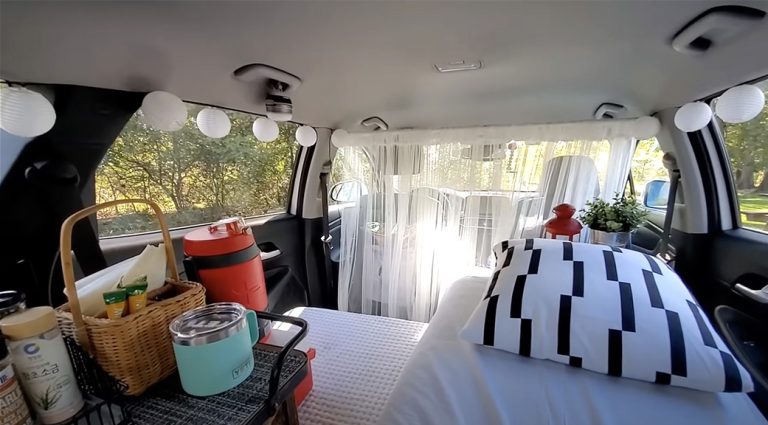
The latest issue of AARP Magazine recently profiled several chain hotels that are going small. In London, Amsterdam and New York City, micro-hotels are becoming a popular place to stay for travelers on a budget who don’t mind a small space. Some rooms in the Pod Hotel start at $89 a night for a 60 to 170 square foot room. At the Yotel in midtown Manhattan, the tiny, Japanese-inspired rooms include everything you need: flat-screen TVs, media hubs, free Wi-Fi and custom modular furniture. Some of the rooms also have a galley kitchen rather than a mini-bar. In London and Amsterdam, the Yotel rooms are located inside the terminal buildings of Heathrow, Gatwick and Schiphol airports. Both Pod and Yotel plan to open locations in Boston, Chicago, Los Angeles and Washington, D.C. in the next few years. Continue Reading »
My Home in a Box
Despite several controversial issues with using shipping containers as homes, there are still many people who are interested in converting the ubiquitous metal structures into their own tiny house. My Home In a Box is a blog dedicated to shipping containers and how they can be used as the basis for a small or tiny home. With its various photos, videos, information on exterior and interior design, the blog is a great reference.
The blog covers building with both 20 foot and 40 foot containers, information on insulation, alternative energy, heating and cooling and interior and exterior ideas. The owner of the blog, Dean, has also designed his own conceptual off-grid shipping container home with a composting toilet, a living room with a hidden bed, water storage, a solar panel and wind turbine and a hot water heater on the roof. The design also has a two drawbridge sides that become decks, an aquaponics system and the ability to store up to 6 months worth of food. Continue Reading »
The Ephemeral Architecture of Burning Man
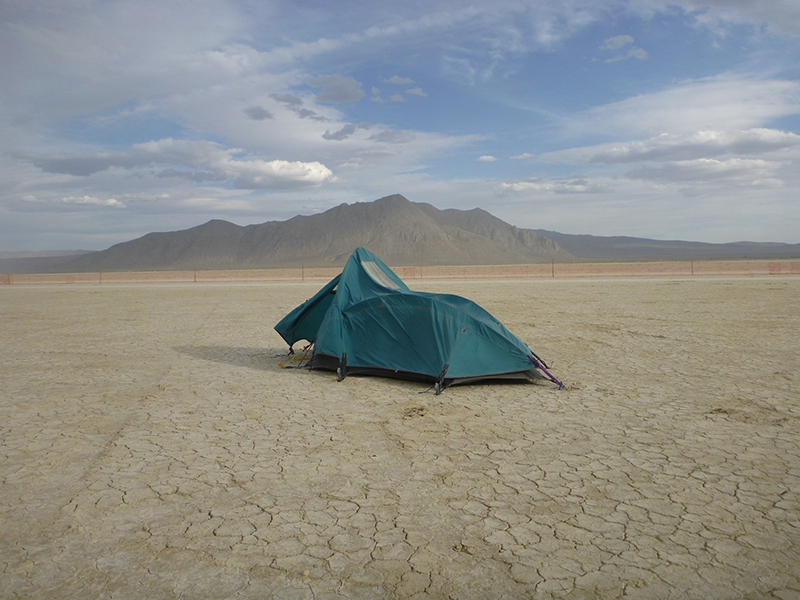
All over the world, participants of Burning Man live the entire year in anticipation of the month of August. In about two weeks, the yearly event in the Black Rock Desert of Nevada (which is expected to host 60,000 people) will begin, and Black Rock City will burst out of the desert floor like a giant flower. During the last week of August until Labor Day, these residents (called Burners) will live in their own shelters that they’ve brought to the event. These shelters take on many forms: from berber tents and Monkey Huts to flamboyant RVs and festooned Costco carports. Black Rock City has it all.
Phillipe Glade has photographed and blogged about most of these structures during his years of attending Burning Man. His beautiful photographs have now been published in his new book, Black Rock City, NV: The Ephemeral Architecture of Burning Man. The book is 112 pages and contains nearly 200 photos of the structures and shelters built by the denizens of Burning Man.
In a way, the dwellings of Burning Man can be described as vernacular. They are created specifically for the harsh, desert conditions and creative atmosphere of the fifth largest city in Nevada. The structures have to be able to withstand the desert’s 50 mile per hour winds, the boiling sun and allow for airflow and enough room for communal living, cooking and sleeping.
Vertical Camp is covered in garden shade material to allow for airflow and shade from the sun. Downstairs is a large kitchen and living space and the compartments on the top floors contain the bedrooms of the camp residents. Some bedrooms even have faux fur-covered beds and bedside dressers. The views from the top deck are incredible. Continue Reading »
Ode to the Outhouse
The lowly outhouse may be making a comeback. Some tiny houses being designed these days are not being outfitted with a bathroom or even a space for a composting toilet. While a specific design or structure may be sound and even really beautiful, it may not provide people with one of the most basic of human needs. A simple or more complex outhouse could be a viable solution.
The outhouse originated about 500 years ago in Europe, and was used primarily at inns or in public spaces. During this time, the ubiquitous symbol of the crescent moon on the outhouse door also began to appear. Since most people were illiterate during this time, the male outhouses were marked with the symbol of a sun, indicating masculinity, and the women’s were marked with a symbol of a crescent moon, which represented the feminine (also the Roman goddess Diana who was the protector of women). As time went on and the American frontier opened up, the men’s outhouses were not maintained as well as the women’s (since men tended to just go out in the woods), so the men’s outdoor commodes began to disappear, leaving the women’s (and their crescent moon symbol) behind. Eventually, outhouses became unisex and some even included several different sized holes for men, women and children. Continue Reading »
Old Pallets and Creative Ideas
Just a quick post this morning, I’m needing a little break today…
If you think old wood pallets are garbage, think again.
The Canadian Wood Pallet & Container Association has launched a campaign to encourage people to recycle and reuse wood packaging material.
Visit their website: CanadianPallets.com

7 Space Saving Techniques for Living in Small Quarters
Houses and apartments come in all shapes and sizes, the smaller the place, the more likely you could use some good space saving ideas. Maybe your living room isn’t as big as you’d like to be, and you want to have plenty of room for seating. You might need to save space in your kitchen so it isn’t cramped for cooking and dishes.
If you don’t have a lot of storage space or simply want to save the space you have, there are a number of fantastic and economical ideas that can both create more space and make the most of what you have, while making sure that your apartment looks spectacular.
Saving Space in the Kitchen – The kitchens in apartments are usually smaller than houses, which can make it difficult to deal with if you’re a foodie who loves to cook. Bad part is that once you cook there are dishes, figuring out how to find time and space to wash the dishes can prove to be a huge task at hand. Often, downsizing in the kitchen can be helpful, especially if you’re trying to share space with a dining room. For instance, you can set up a small, cozy bistro area, rather than an actual dining room. If you can’t abide by downsizing to a mini-fridge to give yourself more room, then improvise. Cans and smaller boxes can easily be stored in a plastic shoe holder designed to hang on the wall!- Lighting Tricks – It might not seem like lighting takes up a lot of space, but if you favor floor and table lamps, it can take up the extra space you have. If you’re allowed, try to use track lighting instead. In addition to making a room look larger, it will free up a surprising amount of space. Closets are one place where you should include lighting, however. That way, you’ll be able to see how much space you do have, so you can utilize it best.
Cheat Your Storage Space – One of the hardest things to do in many apartments is find space for storage. You just need to cheat what you’ve got. In addition to utilizing closet space, some things can be stored under your bed, your couch, and your chairs. You can also assign bureau drawers as storage spaces.- Shelving – Shelving can be your best friend. Bookshelves may be too bulky, but free floating shelves are ideal. They can hold books, figurines, knick-knacks, and pretty much anything else. They can also be quite attractive, especially “invisible shelves” made of glass.
- Smart Furniture - The kind of furniture you use to furnish your apartment matters as well. For instance, you might have an armoire. This is a large piece of furniture, true, but it is also versatile. It has plenty of room for storage, but it can go almost anywhere in your home. Furniture that can double as something else, such as an ottoman that contains a storage unit in the middle, is always a good idea.
- Create Versatile Rooms – You want to use every inch of space you have. Your living room can double as a family room and entertainment area, if you make good use of a wall unit. Your television, stereo, video games, and so on, can go into the unit, leaving plenty of room for seating. As briefly mentioned, you can also find a way to combine your kitchen and dining room in a charming but economic way as well.
Cutting Clutter – The fact remains that there are some items you might not be able to make room for in a small apartment. If you cannot store and have not used it in a year, cut ties. That’s the hard, fast rule for getting rid of things when your space is limited. By cutting out the erroneous, unnecessary items in your life, you will be surprised at how much space is left over.
As you can see, there are many ways to save space in even the smallest houses or apartments. These tips work well for small homes as well. You don’t have to be a slave to space. There are easy, clever ways both to save the space you have and make use of storage options you may not realize you had. Hopefully, now you have some redecorating ideas that will help you take the steps necessary to make your cozy apartment a roomy home.
This post was written and provided by Martha Keagan who is a freelance writer and full time mother. She is currently living in a small two bedroom apartment in Kansas City and is constantly finding new ways to pack more things in her home.