Sir James
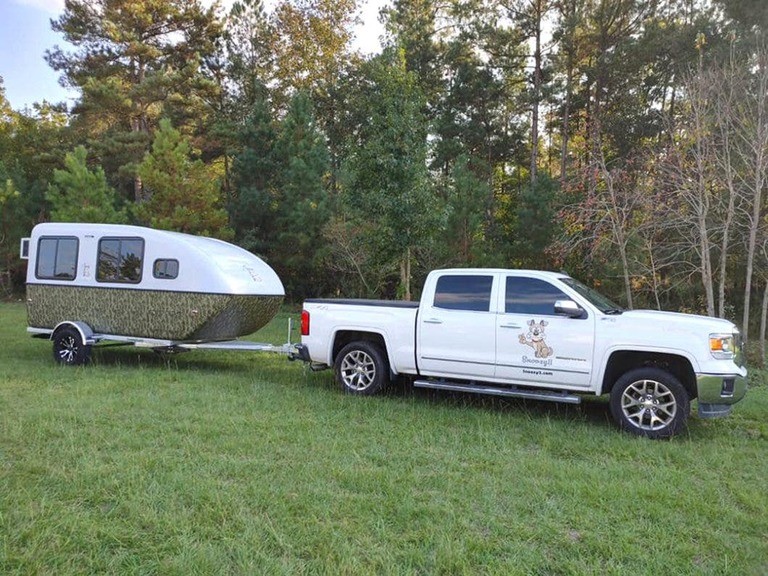
At this year’s Burning Man, I was thrilled to find this modified gypsy caravan right next door to my camp. The builders of this unique rig are Christy Horne and Michel Olson, and they were kind enough to give me more information about their comfortable, tiny house which they named Sir James.
Sir James started his life as an 8×12 dual axel car trailer from California Custom Trailers. The trailer came licensed with brakes and everything for $1,700. The house was made with a welded iron “cage” and then wood, tarpaper and plywood layers were all bolted into the cage. It’s 7 feet wide by 12 feet long and it took 4 months to build. Sir James is Michel’s second of four original designs. Continue Reading »
We Can Do It! Trailers for the Ladies
Last year, I did a post on Sisters on the Fly, a camping and fly fishing group for ladies who love small, vintage trailers. Since I (Christina) just went camping over the holiday in my teardrop trailer, I thought it would be appropriate to list a few ladies (some who are Sisters on the Fly members) who camp in style. Girls, no matter what the men say, there is nothing wrong with a little “glamping”.
Facebook Fan Page: We Can Do It! Women Who Camp with a Teardrop, Tent or Trailer Continue Reading »
The Spaceship
3…2…1…BLAST OFF!
Get ready to head into the world of nomads with the Spaceship. Even though this vehicle is primarily used for traveling and vacations, I thought I would include it in the blog for its fun and unique use of space and nifty storage options. Think of it as a Swiss Army knife on wheels!

The Spaceship is only available in the UK, Australia and New Zealand as a vacation and camping rental, but it’s fascinating to look at as an all encompassing place to sleep, cook, eat, lounge and live for a short period of time. Continue Reading »
Rolling Huts
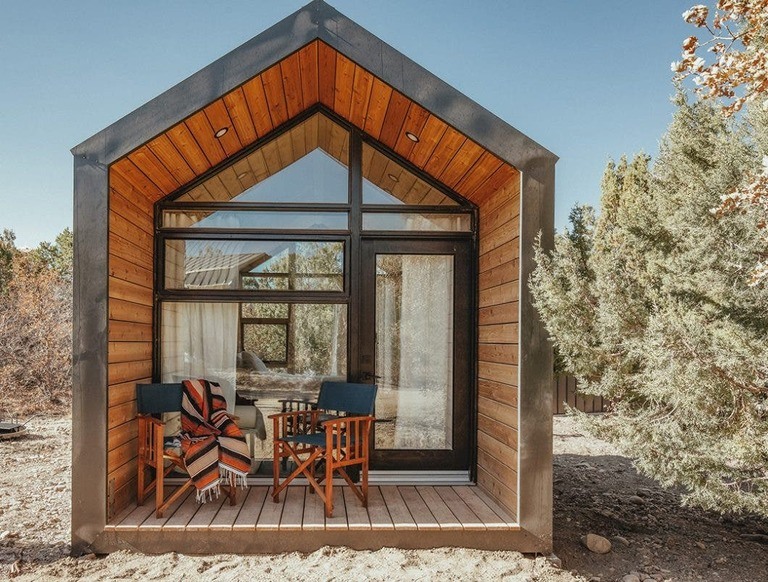
When I first saw these huts on wheels, they looked a bit like an alien vehicle from Star Wars. The more I looked at them though, the more I fell in love with these sleek little houses.
Designed as a modern alternative to camping by Tom Kundig of Olson Sundberg Kundig Allen Architects in Seattle, the Rolling Huts are available for rent in the Methow Valley of Washington state. The huts are several steps above camping, while remaining low-tech and low-impact in their design.
The huts sit lightly on the site, a flood plain meadow in an alpine river valley. The owner purchased the site, formerly a RV campground, with the aim of allowing the landscape return to its natural state. The wheels lift the structures above the meadow, providing an unobstructed view into nature and the prospect of the surrounding mountains.
The huts are grouped as a herd: while each is sited towards a view of the mountains (and away from the other structures), their proximity unites them. They evoke Thoreau’s simple cabin in the woods; the structures take second place to nature.
Each hut comes equipped with a small refrigerator, microwave, fireplace and Wi-Fi. A sleeping platform is perfect for two, and the modular furniture in the living area can be reconfigured to sleep two more. Each hut has an adjacent portable toilet, and full bathrooms and showers are housed in the centrally located barn a short distance away. There is a water faucet outside of each hut and a picnic table in front of each hut that seats 12. You can stay in one of these huts for about $80-$100 a night.
If you enjoyed this post, subscribe to our feed
The Yellow Teardrop Trailer
The idea of a teardrop trailer as a temporary home or a guest room for a tiny home owner, seemed to be a popular post the last time we wrote about it. The buzz around my life lately is about my new bright yellow teardrop trailer.
The new tear is a Pleasant Valley Lil Traveler Teardrop. They are built by Amish craftsman in Sugarcreek, Ohio.

The large, dual-locking side entry doors have screened tinted glass-sliding windows. The interior features natural birch wood walls, ceiling and overhead storage cabinets. A fan located in the galley pulls fresh air into the sleeping area. The wooden interior produces the retro look of the originals from the 1930s and 1940s. The lockable rear full length hatch opens to a full hardwood kitchen, complete with doors and drawers allowing ample cooking space. This teardrop is 5 ft wide by 8 ft long but they also come in 4×8 and 5×10 sizes. They weigh between 760 and 1,160 pounds and can be towed by most cars.


The battery to run the lights and the plugs in the galley and the sleeping area is located inside the galley cabinet, but you can also have the battery strapped to the front of the teardrop utility platform.
What drew me to this particular teardrop was the size, roominess, and of course, the color. Pleasant Valley is known for their bright “Spirit” model which comes in red, green, blue, and yellow. They also have a regular silver model.
Pleasant Valley also offers a larger travel trailer called the Pleasant Traveler which are between 14 and 16 feet long.
If you are interested in finding out more about tiny trailers, view our previous posts about the T@B and the classic Gypsy caravan, or visit these websites:
Teardrops & Tiny Travel Trailers Forum

If you enjoyed this post, subscribe to our feed
The Tipi
My neighbor, Dale, lived in a tipi for five years while he saved up to build his own house. He set it up on the land of an acquaintance who owned a ranch in exchange for working on the ranch, and was able to use the bathroom and water supply of the ranch worker’s apartment. He ran an electrical cord under the ground from the apartment to run an electric blanket. “You can be comfortable anywhere if you have an electric blanket.” he said.
His tipi from Sacramento tent manufacturer, Goodwin Cole, housed a bed covered with sheepskins, a small dresser for clothes and a Franklin stove which kept the tipi warm in winter. For cooking, Dale used a Coleman stove outside on a picnic table.
Dale said he chose the tipi, rather than a tent or trailer, for the romantic aspect of it. His background was in Anthropology and his study of the American Plains Indians gave him the knowledge he needed to live their way of life. He said the best part of living in a tipi was being woken up by the daylight coming through the canvas in the morning, and because of the conical pyramid power of the structure, he slept very well. The worst part was the lack of a noise barrier and being open to the elements. “But living that way forces you to be a part of the outdoors,” he said. Dale and his wife, Denise, still use the tipi in their backyard for a summer getaway.
Nomadic people have used portable tipis for thousands of years. The word tipi (also teepee or tepee) comes from the Lakota word meaning to dwell or live. These simple, circular structures provide snug, low-cost shelter. Even though they look very basic, a well built tipi is precisely designed. Tipis consist of four elements: a set of ten to twenty sapling poles (depending on the size of the tipi), a canvas or hide cover, an optional inner canvas or skin lining, and a canvas or skin door.
Prior to the introduction of horses to North America, tipis were only about 8 to 14 feet in diameter, since the poles and buffalo skin coverings were pulled on travois from one encampment to another by dogs or women. Once the American Indian plains people acquired horses, tipi designs expanded into the shape and style we’re familiar with today. By the late 1800s, after the near extermination of the buffalo herds, tipi covers made from bolts of canvas provided by the U.S. government replaced the 10 to 14 buffalo skins needed for the earlier style.
Most tipis now are made of canvas and are about 16 to 20 feet across with ceilings 12 feet high. Many modern tipis include raised wooden floors for the sleeping area to keep bedding and clothes free from bugs, dirt and dampness. A fire pit or carefully vented small woodstove in the tipi center provides heat during winter months. In about an hour, two people can easily erect a 16 foot-diameter tipi with 22 foot-long poles. The conical shape of the structure makes it stable in the high winds that often blow briskly across the Great Plains, and closable smoke flaps keep driving rains outside. Tipis are routinely transported to powwows, barter fairs and rendezvous on a truck’s carrying rack. At Burning Man this year, I saw whole villages made out of tipis. They seemed to be very wind resistant and cool inside.
One aspect of tipis that lend to the romantic vision is the artistic details of the canvas or animal hide. In American Indian culture most tipis in a village would not be painted, but those that were often featured geometric portrayals of celestial bodies and animal designs. Sometimes tipis were painted to depict personal experiences, such as war, hunting or a vision quest. Many are also decorated with pendants or medallions. Traditionally these were embroidered with dyed porcupine quills; more modern versions are often beaded. Buffalo horns and tails, tufts of buffalo and horse hair, bear claws and buckskin fringe were also used to decorate tipi covers. These attachments are often referred to as “tipi ornaments”.
Earthworks Tipis
Earthworks is having a sale of 20% off their tipis until December 1, 2008.
Mother Earth News: That Good Ol’ Tipi Living
If you enjoyed this post, subscribe to our feed