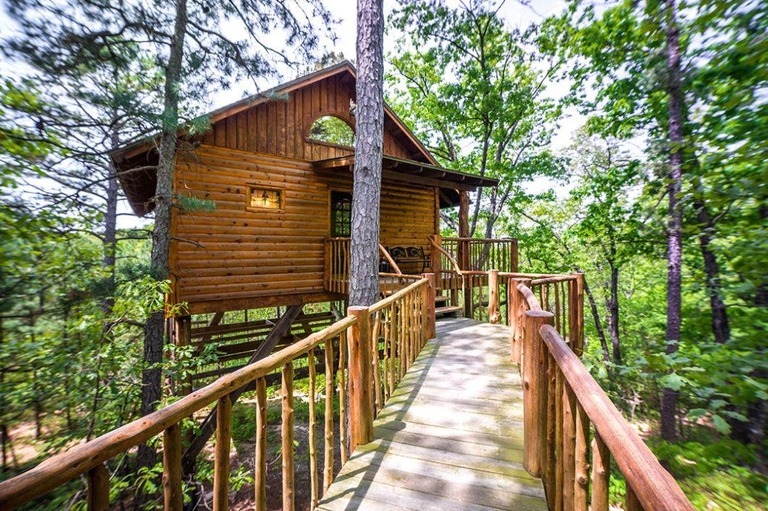
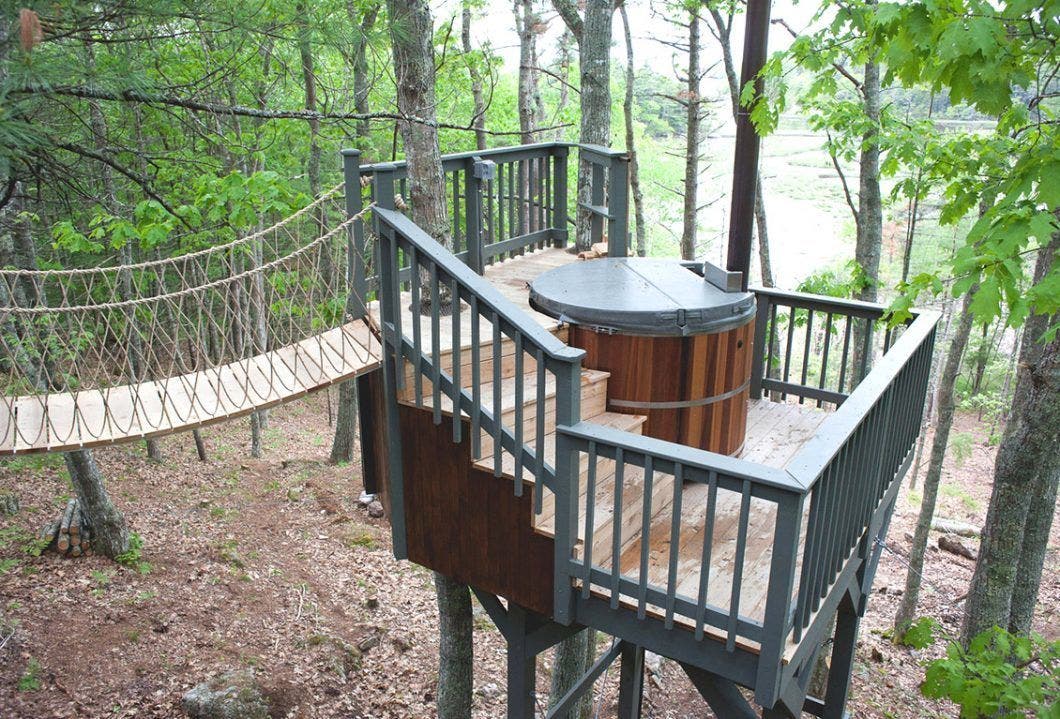
The HemLoft

by Kent Griswold on April 19th, 2012. 126 Comments

by Joel Allen

Some people make a conscious decision to buck the American standard of living and shoehorn their lives into a tiny home. It didn’t happen to me that way. I ended up building a small home through a series of bizarre circumstances. I started off with a career in Software development at the age of 23. By 26 I had saved some money and I attempted a retirement stunt that went sideways, leaving me penniless. That’s when I began living out of my car and decided that instead of returning to software, I would test my aptitude as a carpenter.

The HemLoft

Photo Credits Joel Allen

While living out of my car I discovered that I quite liked the sport of compact living. I was in Whistler at the time and although I didn’t own a home, I enjoyed one of the biggest backyards in the world. I even began sleeping outdoors and got a kick out of finding places where no one else had slept before. I called it sport sleeping and it led me to the believe that my home extended far beyond the confines of my car.

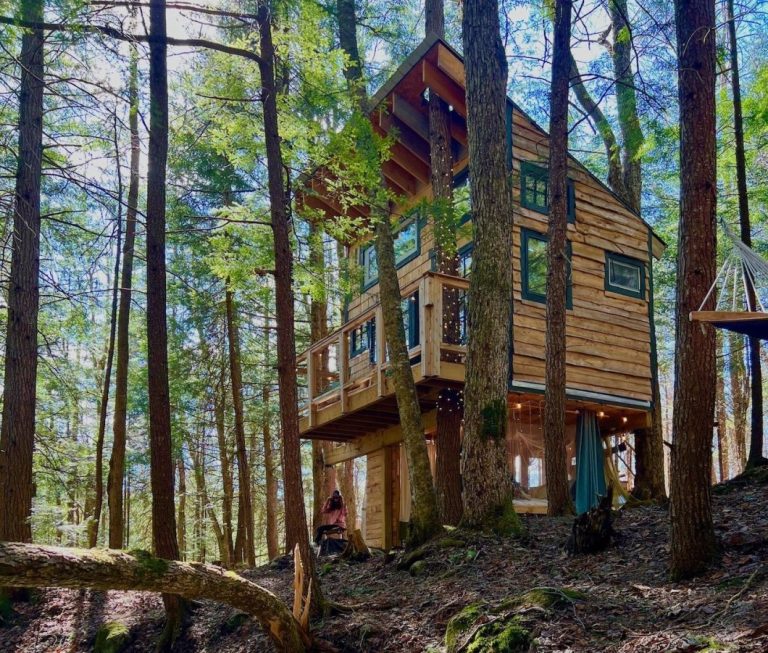
That fall I decided to build a treehouse in my spare time. It was meant to be a simple sleeping loft that I could use as a secret camping spot on crown land in the woods. I felt compelled to build something more elegant than the average treehouse so I began consulting a couple of friends who were recent graduates from architecture school. Together we conceived of the egg-shaped treehouse. Continue Reading »

Posted April 19th, 2012 by Kent Griswold and filed in Tree House
Tags: , , , , , , ,
126 Comments

“Deek” Diedrickson on GardenFork Radio

by Christina Nellemann on February 6th, 2012. 3 Comments

Treehouses, homemade canoes and Labrador Retrievers. What more can you ask for in a radio show?

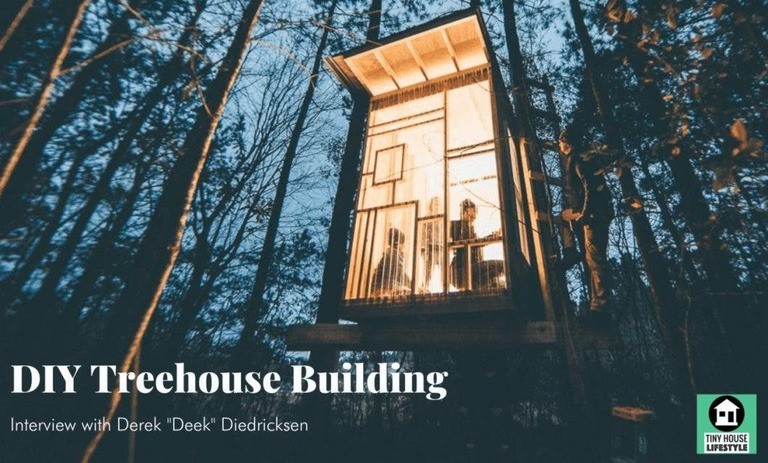
Eric Rochow of GardenFork recently spoke with Deek Diedrickson, microhome builder and author of the new “Humble Homes, Simple Shacks” book in an episode of GardenFork Radio.

Deek and Eric (two men cut from the same cloth) discuss the merits of publishing your own book, using recycled and curbside found materials for tiny homes, how to build and anchor a treehouse and how Deek is able to make a living with his various building, music and drawing hobbies.

They also talk about Deek’s future plans which include teaching a few of the Tumbleweed Tiny House workshops, building a houseboat, a treehouse workshop and writing and publishing another book.

You can download the episode from iTunes or you can listen to it on the GardenFork website.

Photos courtesy of Relaxshacks.com.

By Christina Nellemann for the [Tiny House Blog]

Posted February 6th, 2012 by Christina Nellemann and filed in Announcement, Tiny House Articles, Tree House
Tags: , , , , , , , ,
3 Comments

baumraum Treehouses

by Christina Nellemann on March 21st, 2011. 14 Comments

I’m sure many tiny house enthusiasts have dreamed of living in the branches of an oak tree in their own tree house, hidden by leaves and accompanied by birds and a light breeze. This dream could become a reality with these elegant, little nests from the German company, baumraum. They specialize in the design and building of tree houses and other constructions in natural surroundings.

The company combines the creative and constructive expertise of an architect with the experience of a landscape designer, a tree expert, and other craftsmen. They transform individual ideas and wishes into ingenious and inspiring dwellings that combine versatility with craftsmanship of the highest quality and maximum safety standards. These tree houses are also installed without harming the tree. They are not anchored with bolts or nails into the tree, but rather with textile belts and adjustable steel cables. This protects the bark, trunk and branches and allows the tree flexibility and growth.

The dimensions and the height of the tree houses depends on the stability and health of the tree. Sometimes it might be better to anchor the tree house to two or more trees rather than a single one. The tree houses can have a horizontal or upright design, with two or more levels, or even consist of several interconnected constructions at different heights. Most of the tree houses are units about the size of a small trailer or caravan. Continue Reading »

Posted March 21st, 2011 by Christina Nellemann and filed in Tiny House Concept, Tree House
Tags: , , , , ,
14 Comments

An Atypical Tree House via Dwell

by Kent Griswold on November 8th, 2009. 11 Comments

Ryan alerted me to this 172 square foot tree house which serves as an office and guest room that was featured in Dwell.

This office/guest house is built on an estate in Brentwood, California a suburb of Los Angeles and was designed by Rockefeller Partners Architects, Inc. I’m sure this was an expensive tree house but that information was not given.
treehouse-exterior-back-facade

The architects took about eight months to design the tree house. Construction of the inhabitable sculpture, with its studio and lounge, took another 18 months. Continue Reading »

Posted November 8th, 2009 by Kent Griswold and filed in Tiny House Concept, Tree House
Tags: , ,
11 Comments

Green Line Architects Tree House

by Kent Griswold on October 14th, 2009. 16 Comments

Steve from Green Line Architects had commented on the Old Time Tiny Houses post and I happened to click on his link and discovered this cool tree house. Steve said I could share it with you, so here are the details.

This treehouse was designed for relaxation and contemplation, a meditative space for kids of all ages…   It was originally conceived as a place for children to play, but its equally comfortable for adults.

_MG_0664_sm

It is ideal for a couple, on a romantic evening, or could easily fit a family of four.  In a pinch, it could sleep up to 6 adults.

It’s fully insulated, which is a necessity in our cold mountain climate, with has a natural gas heater and electricity, and no bathroom, though the owner will be use a composting toilet in it from time to time.

The owner has requested anonymity, as well as keeping the cost a secret!  (we can tell you that it was very expensive…)

IMG_w5829

It was designed collaboratively between Green Line Architects and David Rasmussen Design.  David is a designer/project manager at Green Line and he built the treehouse, and designed and built the custom lighting fixtures.  He honed his skills building  handicapped accessible treehouses for Forever Young Treehouses. Continue Reading »

Posted October 14th, 2009 by Kent Griswold and filed in Tiny House Concept, Tree House
Tags: ,
16 Comments

Free Spirit Spheres

by Christina Nellemann on August 17th, 2009. 17 Comments

What do Ewoks and Julie “Butterfly” Hill have in common? They have discovered the ethereal magic of living up in a tree.

Tom Chudleigh of Vancouver Island, Canada has discovered the same magic with his Free Spirit Spheres, handcrafted tree houses that bob among the trees like giant apples.

freespirit-eve3

Chudleigh calls his design a bio-mimicry. Each sphere attaches to a web of rope. The web connects to whichever strong points are available. This replaces the foundation of a conventional building. A tree house sphere uses the forest for its foundation, so the occupants of a sphere then have a vested interest in the health of the trees. Each sphere has four attachments on top and another four anchor points on the boom. Each attachment is strong enough to carry the entire sphere and contents.

freespirit-eve5

A suspended sphere is tethered by 3 nearly vertical ropes to each of 3 separate trees. This distributes the load evenly over the 3 trees and results in a stable hang. Like an inverted three-legged stool, there will be almost equal tension in each of the three suspension ropes. The sphere resides in the center of the triangle formed by the 3 trees. It can be slung from 5 to 100′ off the ground, depending on the size of the trees.

Photo from Kiwipulse

Photo from Kiwipulse

If something really big, like a tree, falls through the web then some strands will break and let it pass through. The sphere remains suspended by the remaining strands. A major disaster like that is not likely, but possible. Everything, including spiral stairways and suspension bridges, are hung from ropes. Trees are protected where the spiral stairways hug the trees and ropes pass around the trees. The spheres are well adapted to life in a large mature forest.

The sphere concept borrows heavily from sailboat construction and rigging practice. It’s a marriage of tree house and sailboat technology. The wooden spheres are built much like a cedar strip canoe or kayak and suspension points are similar to the chain plate attachments on a sailboat. Stairways hang from a tree much like a sailboat shroud hangs from the mast. The joinery is yacht style with much brass trim, varnished wood and cane doors. They have closets on either side of the door.

Photo from Kiwipulse

Photo from Kiwipulse

A sphere is accessed by a spiral stairway and short suspension bridge. The two lower back suspension points of the sphere are tied horizontally to the two back trees, to keep the suspension bridge from sagging when it is walked on. The door faces the “door tree” and the suspension bridge connects the two. A helical stairway spirals up or down from the suspension bridge to the ground or next level.

Two Spheres, named Eve and Eryn, are available for overnight rental year round. Eve rents for $125 a night or $199 for two nights while Eryn rents for $175 a night or $299 for two nights Eryn’s rate is based on 2 people. The motion in a sphere is a slow gentle rocking when the wind blows. The rope tethers are almost vertical which lets the treetops move considerably while hardly moving the sphere at all. When another body inside a sphere shifts his/her weight the motion is abrupt. This is because the mass of the sphere is low.

Photo from Kiwipulse

Photo from Kiwipulse

In the Eryn style, there is a double bed on the right centered under the 40″ window. A settee with table is placed in front of the 42″ window on the left. The back wall opposite the door provides a galley area with counter cupboards and a sink. A microwave and refrigerator are also installed. Above the galley area there is a loft bed with full sitting headroom at the center. Circular shelf segments connect the loft bed to the cupboards on either side of the door. An outhouse and washroom are located nearby on the ground.

Photo from Kiwipulse

Photo from Kiwipulse

Free Spirit Spheres can also be purchased as completed projects or as shells and component kits. Wood spheres are made of two laminations of wood strips over laminated wood frames. The outside is then finished and covered with clear fiberglass. The result is a beautiful and very tough skin. The cost of these are sold for about $125,000-$150,000.

Fiberglass shells are also sold at $39,000-$45,000. The skins are waterproof and strong enough to take the impacts that come with life in a dynamic environment such as the forest.

Both wooden and fiberglass spheres are insulated. Vinyl upholstery fabric is stapled to the frames (lines of longitude). Each fabric joint is then covered with a decorative wood strip. The wood strips come together at the top and give a nice cathedral ceiling effect.

Photo from Kiwipulse

Photo from Kiwipulse

By Christina Nellemann

Copyright © 2009 Tiny House Blog

If you enjoyed this post, subscribe to our feed

Posted August 17th, 2009 by Christina Nellemann and filed in Dome, Tiny House Concept, Tree House
Tags: , , , , , ,
17 Comments