That Roundhouse

by Christina Nellemann on August 30th, 2010. 8 Comments

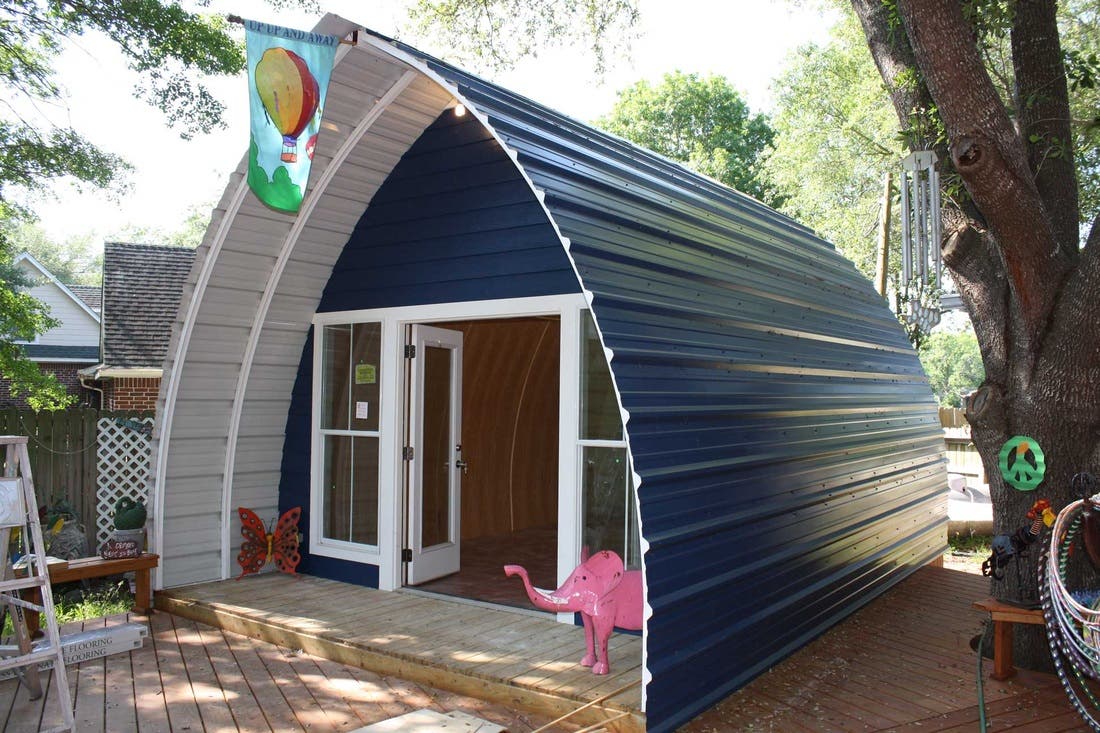
This roundhouse, built of cordwood, cob, straw and recycled windows, is located in southwest Wales and owned by Tony Wrench. It’s not only a low impact, natural dwelling built with what was on hand, but it’s become a symbol for the rights of natural builders within the United Kingdom.

The house was built in 1997 by Tony and featured solar power, a wind turbine, composting toilet and reed beds for gray water. Tony based this house on American Indian designs he had seen in history books. In the past, he had had experience building “wacky structures” and wanted to live as close to the land as possible. Even though he built it inside Pembrokeshire Coast National Park, with agreement from the owners of the land, he never got permission for the structure from the local planning board. After several court appearances, he and his partner, Jane, decided to demolish it in 2004, but changed their minds after public demonstrations persuaded them not to. The Pembrokeshire Coast National Park Authority attempted to get a court injunction to force Tony to demolish it, but were persuaded to allow it to stay up until July 2006, when they could re-apply under the new Low Impact Policy. In 2008, the committee voted to give Tony a conditional for three years. So – the roundhouse still stands. Continue Reading »

Posted August 30th, 2010 by Christina Nellemann and filed in Dome, Earth/Cob
Tags: , , , , , , , , , ,
8 Comments

Indianapolis Island

by Christina Nellemann on July 26th, 2010. 14 Comments

What looks like an iceberg in the middle of a lake or a half-melted marshmallow is actually is an experimental living structure inhabited by art students. Indianapolis Island is an art piece created by Andrea Zittel and inhabited this summer by art students Jessica Dunn and Michael Runge. It is one of the eight works of art in the Indianapolis Museum of Art’s 100 Acres art and nature park.

About 20 feet in diameter, Indianapolis Island is a tiny house made of fiberglass and foam that examines the daily needs of contemporary human beings. For the next four summers, the island will be occupied by one or two commissioned residents who are local art students. They will collaborate with Zittel by adapting and modifying the island’s structure according to their individual needs. Continue Reading »

Posted July 26th, 2010 by Christina Nellemann and filed in Dome, Floating Homes, Tiny House Concept
Tags: , , , , , ,
14 Comments

Findhorn Whiskey Barrel House

by Christina Nellemann on April 26th, 2010. 10 Comments

The Findhorn Foundation near Forres in Scotland is a spiritual community, organic farm international center for holistic education. It is known around the globe for its sustainable living, ultra small carbon footprint and its legendary vegetable gardens. It is also known for its eco-village and within that village, several round houses made out of recycled whiskey barrels.

The cluster of whiskey barrel dwellings overlook organic vegetable gardens, dancing wind turbines and the sandy dunes of the North Sea’s Moray Firth. More than 40 houses of ecological design can be found at the Findhorn eco-village including a guest lodge and youth building with turf roofs, straw bale houses and earthships using recycled car tires. Near the entrance to the village is an old tin caravan bearing the Gaelic name Tír Tairngire (in English, “the promised land”). Continue Reading »

Posted April 26th, 2010 by Christina Nellemann and filed in Dome, Tiny House Concept
Tags: , , , , ,
10 Comments

Mongolian Yurts

by Christina Nellemann on March 29th, 2010. 11 Comments

For over 3,000 years the nomadic tribes of Central Asia have lived in portable round abodes called ger or yurts. Probably because of the stark locations in which they live, their homes are showcases for their beautiful handiwork emphasized by bright, happy colors which certainly caught my attention. These handmade yurts, imported directly from Mongolia by Groovyyurts in Quebec and Mongolian Yurts in Ohio, are one way to live a simpler life while supporting a developing country.

Yurts are resilient, adaptable, portable and can be used for parties, exhibitions, as temporary or permanent housing, a hunting or ski lodge, a guest room or as a meditation space. Usually two to four people can assemble a yurt in about half a day. Continue Reading »

Posted March 29th, 2010 by Christina Nellemann and filed in Dome, Tiny House Concept, Yurts
Tags: , , , , , ,
11 Comments

Curved by Design

by Christina Nellemann on March 15th, 2010. 11 Comments

If your dream home still takes on the shape of a mushroom or a Hobbit house, maybe one of these dome homes by Curved by Design will fit your bill. Curved By Design, Inc. is based in British Columbia, Canada and they design and build small garden or backyard domes, cottages and guest houses for recreational and tourist properties.

Their smallest design is the Garden/Backyard Dome which is approximately 12 feet in diameter, provides 100 square feet of floor space and can be built on a small stem wall to provide additional height. The advantage of this size dome is that it falls under building permit requirements and yet provides a spacious and calm ambience. Curved by Design also features two small designs: the 24 Foot Open Plan dome which is ideal as a relaxing yoga studio, a spacious conference room, or a guest house and the 24 Foot One Bedroom dome which can accomodate one spacious bedroom, a full bath and kitchen, a cozy living room and plenty of storage. Continue Reading »

Posted March 15th, 2010 by Christina Nellemann and filed in Dome, Pre-fab, Stick Built, Tiny House Concept
Tags: , , , ,
11 Comments

International Dome Houses

by Christina Nellemann on February 15th, 2010. 21 Comments

The Japanese know a thing or two about living in small spaces. Additionally, Japanese designers and architects also have to know a thing or two about how to design homes for a country with high land prices, strict building codes and numerous earthquakes. These futuristic prefab houses from the International Dome House Company are built from segmented slices made of expanded polystyrene that claim to be superior to wood, iron and concrete.

Japanese Dome House Website

The company is located in Japan, but the dome segments are made in their factory in South Korea. Several small “villages” of various sizes of the dome houses have been built in Japan, where the design has been approved by the Japanese Ministry of Land and Transport. This building system can also be adapted for small businesses, storage areas or bathhouses. Continue Reading »

Posted February 15th, 2010 by Christina Nellemann and filed in Dome, Pre-fab, Tiny House Concept
Tags: , , , ,
21 Comments