
This video showcases a sustainable tiny home project that blends creativity and practicality. Built over the last eight years, the homes feature reclaimed materials, local resources, and eco-friendly designs. From inventive rolling windows to functional Driftwood decor, each space is a reflection of the natural surroundings. The project aims to solve housing crises by using invasive trees, and focuses on cost-efficiency, sustainability, and maximizing living space. The host shares insights into building methods, the challenges of working with unique materials, and the importance of creating homes that support both the environment and their occupants.
In a world where housing costs continue to soar and environmental concerns take center stage, one family has created something truly remarkable. Nestled in their stunning location, they’ve spent the last eight years crafting a tiny home that proves sustainable living doesn’t mean sacrificing style or comfort.
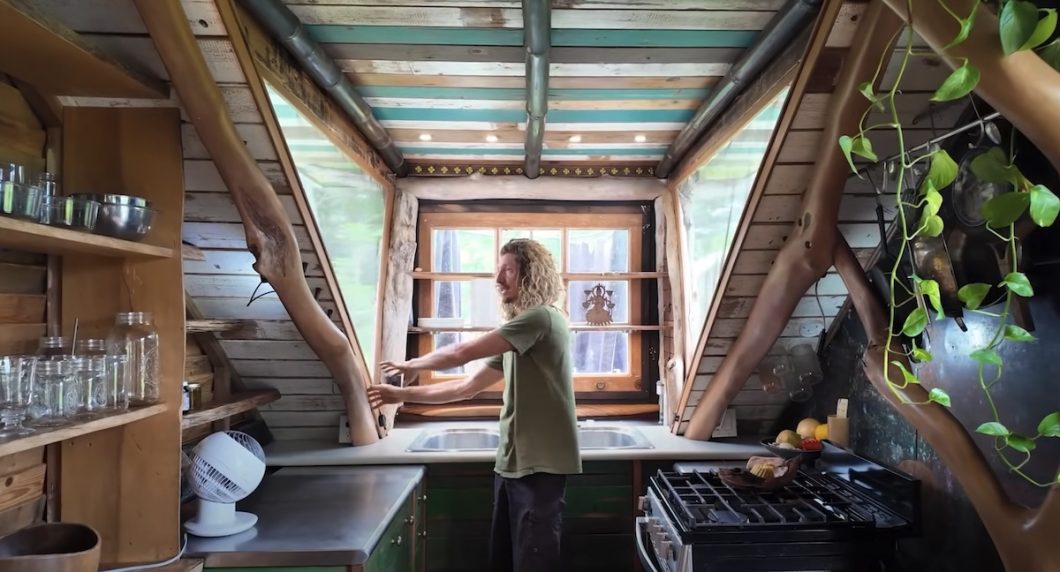
What makes this project special isn’t just its size – it’s the thoughtful approach to every detail. Imagine windows that roll open to welcome fresh breezes, driftwood transformed into beautiful decor pieces, and clever solutions that make every square foot count. But perhaps most impressive is their innovative use of invasive trees, turning an environmental challenge into an opportunity for sustainable building materials.
This isn’t just another tiny home story – it’s a masterclass in creative problem-solving and eco-conscious design. The family behind this project has shown that with patience, ingenuity, and a deep respect for natural resources, it’s possible to build a home that’s both kind to the planet and a joy to live in.
Video from Tiny House Giant Journey Channel.
Takeaways
- The family built their own tiny home about eight years ago, living in a 240 sq ft space for four years.
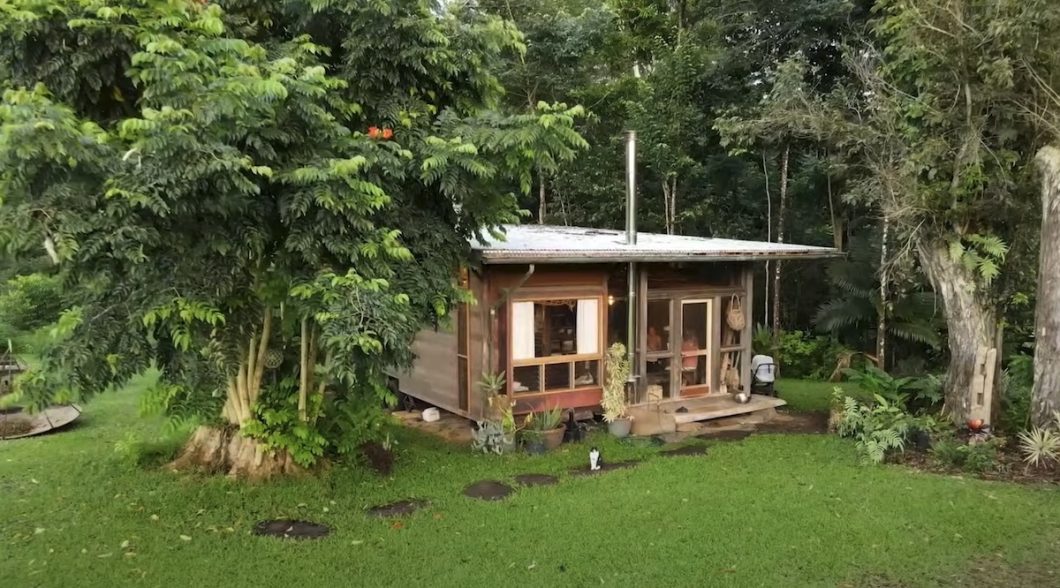
- The house was designed with sustainability in mind, using reclaimed materials and local wood, including invasive species like the Beia tree.
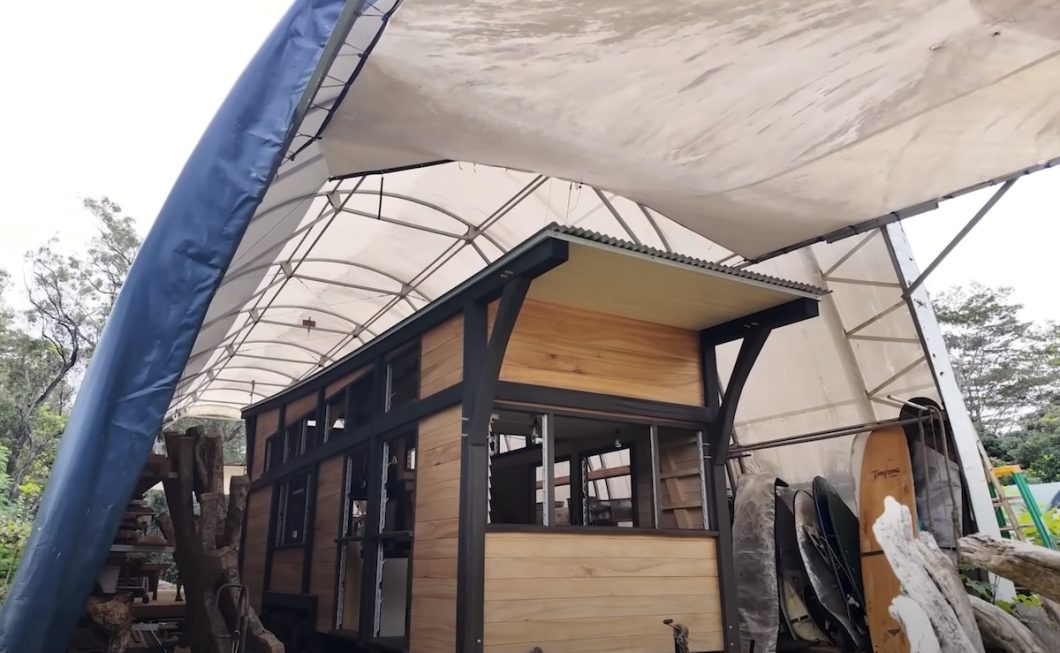
- The home was initially 240 sq ft, but they extended it by doubling the square footage as their family grew.
- The house features a unique curved roof design inspired by nature, giving it a wave-like appearance.
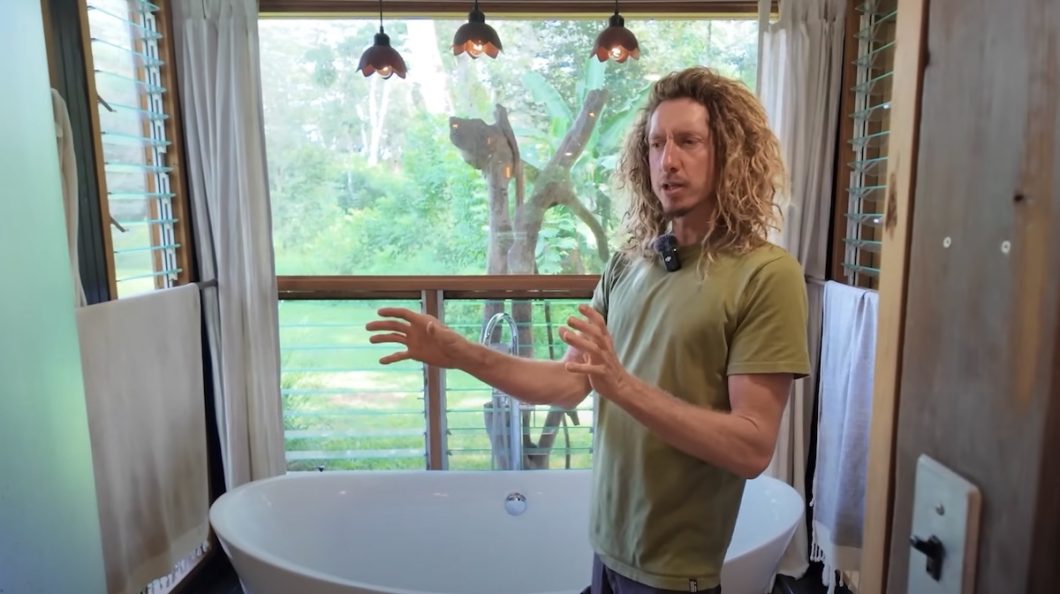
- A key feature of the home is its ‘blendability’ with the outdoors, using operable, rolling windows that connect the indoor and outdoor spaces.
- The builder has 25 years of experience working with wood and emphasizes the importance of building your own home, which he believes is a primal and empowering skill.
- The internet provides numerous online resources for beginners to learn basic woodworking skills, with platforms like Woodworkers Guild of America offering valuable tutorials.
- The home uses locally sourced materials like Driftwood, which is incorporated into the design as functional art.
- In the subtropical climate, the home doesn’t require insulation or air conditioning, relying on natural ventilation and a wood-burning fireplace for comfort.
- The property is off-grid, using rainwater catchment, solar panels, and other sustainable features to reduce its environmental impact.
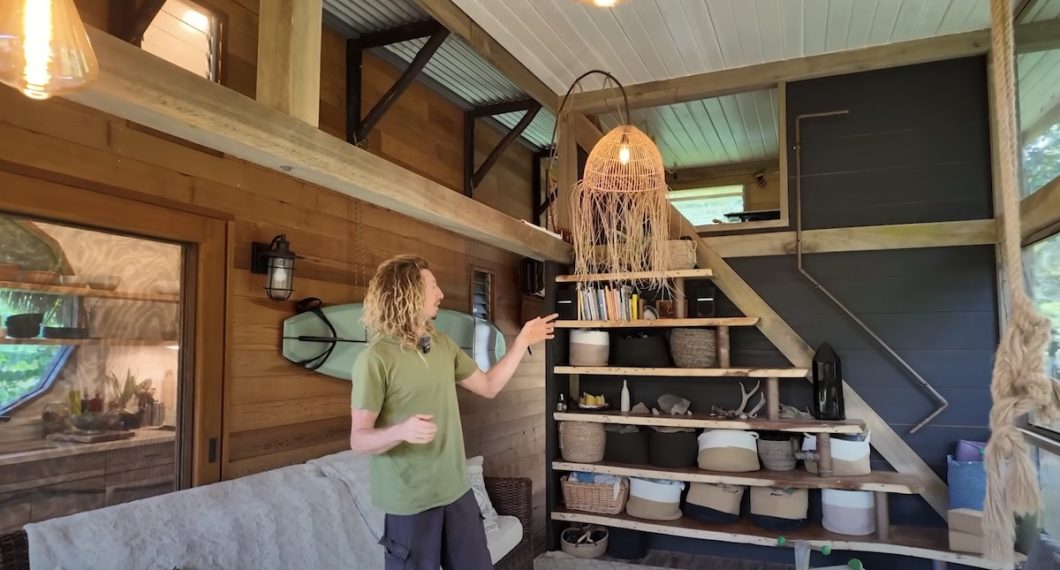
- The design of the home includes efficient use of space, such as a multifunctional loft that can be expanded when needed for a larger family or rolled up for more headroom.
Questions and Answers
What is the inspiration behind the design of the homes featured in the video?
The design of the homes is largely inspired by nature, specifically the local environment, using sustainable materials and a blend of organic shapes. For instance, the wave-shaped roof of one home mimics the natural curves seen in the local trees.
How has the family incorporated sustainability into their home?
Sustainability is central to the home design, with a focus on using reclaimed and locally sourced materials, such as driftwood and invasive tree species like Alesia. Additionally, the homes are built to be off-grid with features like rainwater catchment systems, solar panels, and composting toilets.
What is the significance of using driftwood in the home’s design?
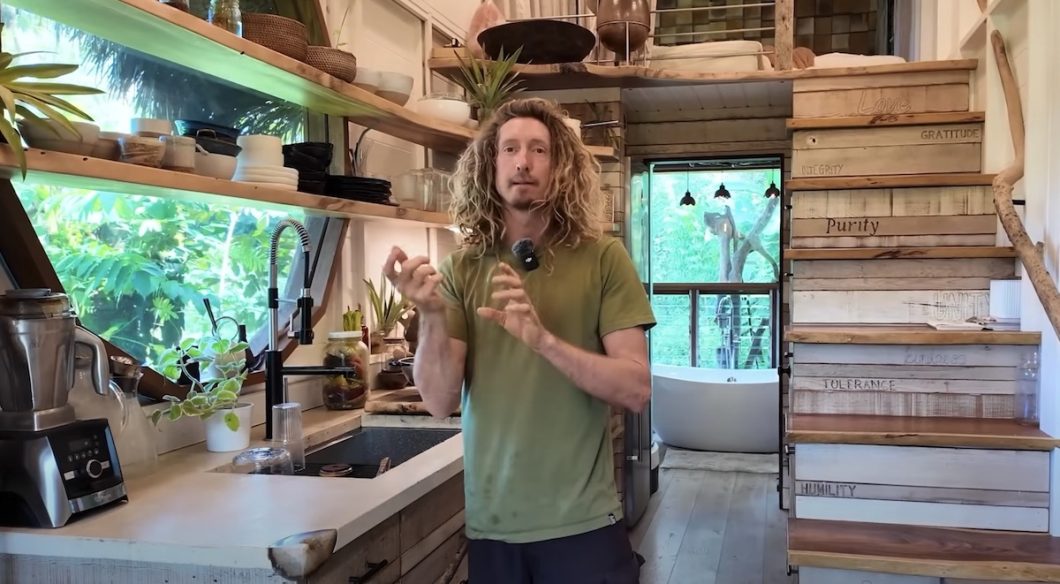
Driftwood is used for its natural beauty and artistic value. It’s a tree that has been naturally eroded by water, creating a unique, weathered appearance. The family uses it to create functional art pieces in the home, such as furniture and decor.
How do the homes address the challenges of living in a tiny space?
To maximize space, the homes incorporate multifunctional design elements like foldable lofts, clever storage solutions, and flexible living areas that allow for comfortable family living. The goal is to create a home that feels spacious despite its small footprint.
What innovative feature does the house have for connecting the indoors and outdoors?
One of the key features is the use of operable rolling windows, which are repurposed from tempered glass tabletops. These windows function like sliding doors, offering a seamless transition between the interior and exterior, enhancing the feeling of openness.
What is the ‘jungalow’ mentioned in the video?
The ‘jungalow’ is a term used to describe the family’s living space, which is a hybrid of a home and a nature-inspired sanctuary. It’s designed with a focus on bringing the outdoors inside, utilizing natural materials and creating a harmonious relationship with the environment.
What unique feature does the tiny home have to allow for more space and better headroom?
The tiny home includes a design feature where the roof can be hinged to create more vertical space. By raising the front of the roof, the family can enjoy more height, better airflow, and a larger area in the loft.
How does the family address energy and heating concerns in the subtropical climate?
In the subtropics, the family doesn’t rely on insulation or air conditioning. Instead, they use natural ventilation, including strategically placed vents and upper windows, to allow cool air to flow. They also use a wood-burning fireplace to dry out moisture in the air.
What is the family’s approach to building with wood?
The family has been working with wood for over 25 years, experimenting with different building methods and materials. They focus on using sustainable wood sources, including invasive tree species, and they enjoy blending natural elements to maintain the organic beauty of the materials.
How do the homes balance functionality with aesthetic design?
The family emphasizes functional art, where design elements serve both aesthetic and practical purposes. For example, the kitchen countertop is made from reclaimed wood, while also incorporating custom features like a surfboard-inspired countertop for a personal touch.
LEARN MORE ABOUT SOL PROJEX: https://www.solprojex.com/ / sol.projex / @jackwhitfield7746
Conclusion
As we’ve seen, this isn’t just a story about building a house – it’s about building a sustainable future, one reclaimed piece of wood at a time. From its humble 240-square-foot beginnings to its thoughtfully expanded space, this family’s journey shows us what’s possible when we combine creativity with consciousness. Their wave-inspired roof, rolling windows that embrace the outdoors, and clever use of driftwood prove that eco-friendly living can be both beautiful and practical.
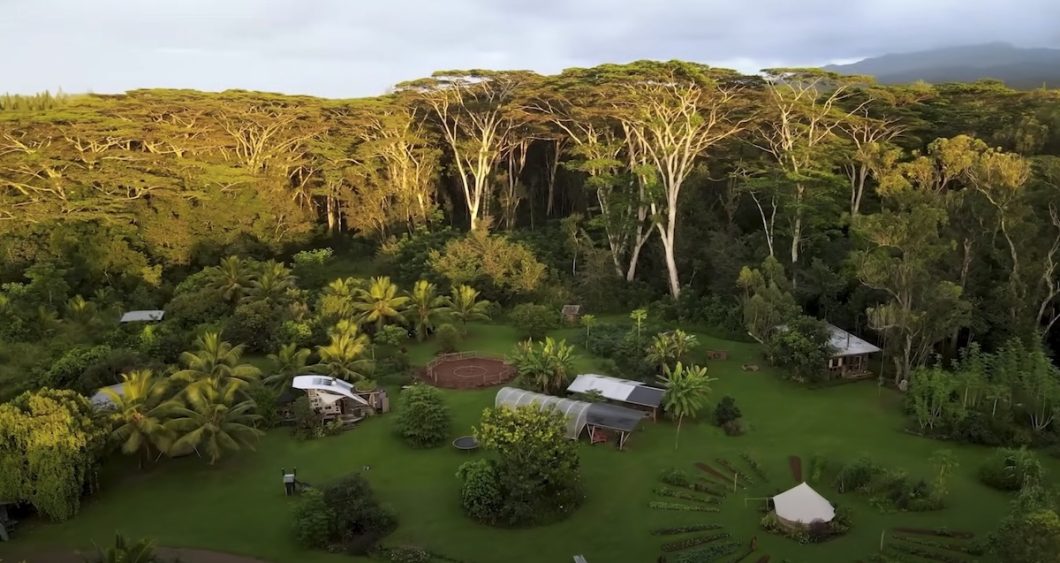
Perhaps most inspiring is how they’ve achieved true harmony with their environment – living comfortably off-grid, powered by the sun, and cooled by natural breezes. In a world increasingly concerned with sustainability, this family hasn’t just built a home; they’ve created a blueprint for living that reminds us that our strongest foundation comes from working with nature, not against it.
Their story shows us that with determination, skill, and respect for our environment, we can create spaces that not only shelter us but help heal our planet, one tiny home at a time.
