
Marek and Ko Bush have an incredible story of paying off $125,000 debt during the first couple of years as a married couple. They are a great example of a couple committed to each other and committed to a less-stress life. They work hard, play hard, and dream big!
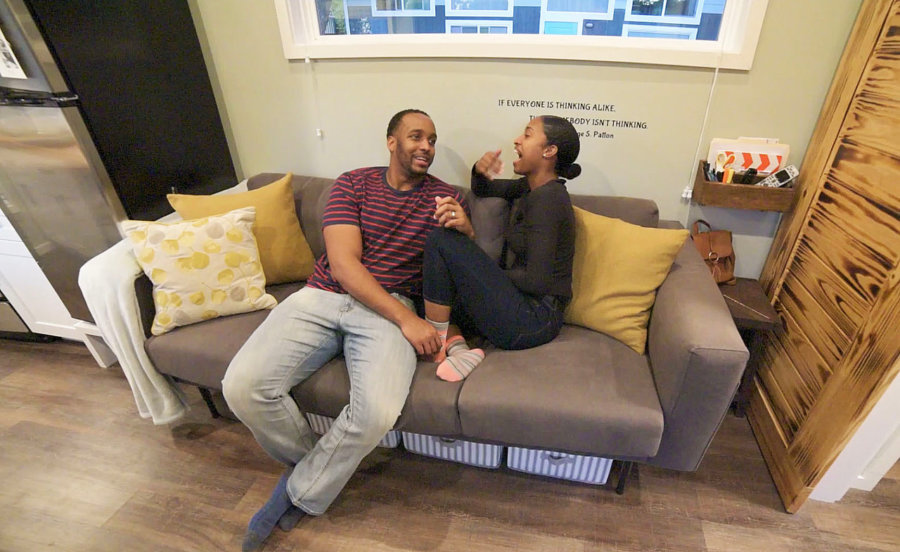
In mid-summer, they released a video on YouTube explaining three great methods for earning money with tiny houses. Their advice and illustrations were forthcoming and inspiring. The couple sat on their couch, faced the camera, pressed record, and opened their hearts.

We want to talk about three ways to make money with tiny houses. There’s more awareness around tiny houses, what they are, who built them, who lives in them, and where they live in them.
But it seems like there still isn’t a lot of conversation happening around how to make money with tiny houses, how to invest with tiny houses, and what are some of the different business models you can set up in order to make income off of tiny houses.
The first way to make money off tiny houses and especially the easiest when you talk about locations that have approved tiny houses as ADUs is just to put one in your backyard.
Create A Backyard Tiny House Environment
This may take the shape of a backyard villa or an in-law suite or even a granny suite. You could certainly have a tiny house for those reasons but we’re talking about having a tiny house in your backyard for the sole purpose of renting it out.
There are cities where parking a tiny house on wheels as a short term stay or a rental is completely legal. This is most obvious when you do a quick search on Airbnb for tiny houses in certain locations. In December of 2019 Los Angeles approved ADUs. They are completely legal now and that is going to help in a number of ways.
Of course it is different from city to city but it can be a great revenue source once you dig in and find out your legal options. So let’s look at the math.
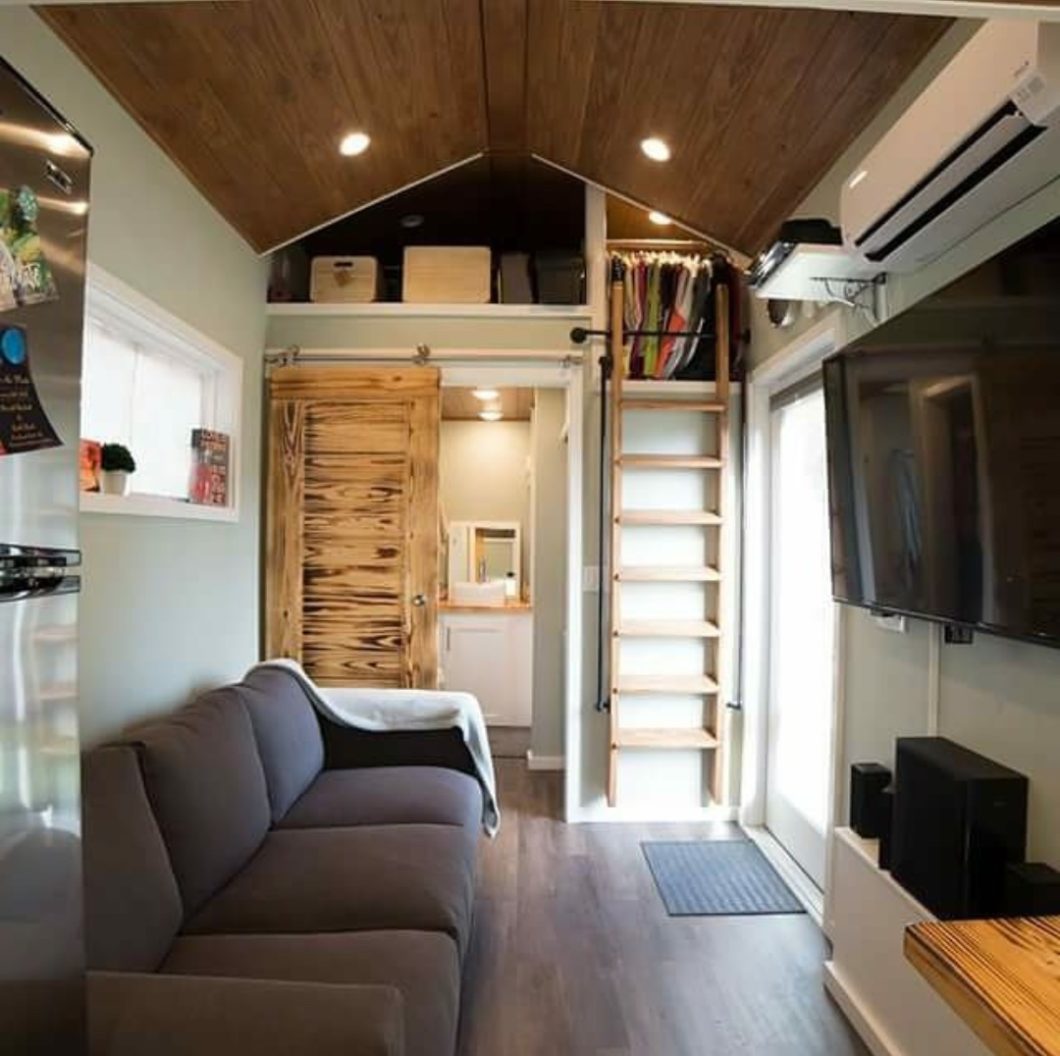
If we were to have a legal backyard villa we would charge no less than $95 per night. Multiply that by a maximum of 365 nights (that is, of course, the maximum that can be earned) and you can easily make $34,675.00 per year.
That’s a great top line and we realize that of course we would have to subtract the nights the villa is vacant as well as cleaning fees, possible management fees, and general upkeep.
You don’t want to forget the upfront work you may have to do with the city before moving the villa onsite.
There are permits to consider, rules and regulations regarding the parking of the tiny house. Even still, starting at a potential of just under $35,000 and then factoring in the expenses, there is a good revenue to be earned.
And with the average price of a tiny house ranging from $30,000 to $60,000, the loan to purchase could easily be paid off in three years or less which would make every year after a 100 percent profit earner.
Tiny House Hotel
The second idea for making money with a tiny house and Ko’s personal favorite is a tiny house hotel. Ideally this would involve several homes on a property with a very simple business model. In essence it would be the aforementioned backyard environment but multiplied by four (or even five or six!)
The hotel would be for weekend trips, people wanting to get away, affordable business overnighters, and more.
It’s important to know that this sort of arrangement would require a special use permit due in large part to the zoning of the actual land.
Most municipalities have a minimum dwelling area for a single family residential and so we’d have to get the business plan approved before setting anything up. In order to truly make money at this venture it would be wise to have a few conversations with the municipality’s zoning coordinator to make sure when the time comes, a land purchase doesn’t turn out to be a bust.
Create A Community
The third option is one that comes up in a lot of conversations. It consists of a piece of property where homeowners would bring in their own tiny house and rent space on which to park.
This is a great option if you consider that your upkeep would really just involve the land. The homes are owner-occupied so upkeep on each home would be the responsibility of the homeowner. This is beneficial to a property owner because it is the responsibility of the homeowner alone.
In that regard it is very different from traditional real estate rental where a property owner is also property manager and has to maintain an escrow account to take care of household emergencies or repairs.
Both the second business model and the third are desirable but the profit margin on the second makes it much more attractive. High risk equals high reward.
Perhaps the key to any of these ways to make money from tiny houses lies in location. A number of people regard tiny houses as getaway locations.
Getaways are made more attractive by their proximity to attractions. This certainly impacts the business opportunity in any of the aforementioned methods.
As with all investments the only way to truly make money with a tiny house is to earn more than you spend, be comfortable with your investment, and have a clear vision. Start small and build. There is money to be made if you are willing to make it!
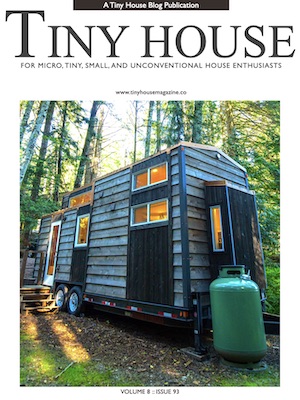
First published in Tiny House Magazine Issue 93
Rent is theft, so I object to renting a tiny house as an air-bnb or lot renting for tiny homes. You should own your home and the ground that it sits on. The goal should be to end exclusionary zoning that doesn’t allow for small, affordable homes. As long as a home is not a threat to anyone’s health or safety, then any restriction against that home is a misapplication of the police power. Such restrictions should be null and void. This would allow people to save more for retirement and retire sooner and to live comfortably in retirement. People could more easily MOVE and participate in the economy. It is really no one else’s business how many square feet your home has. Exclusionary zoning is straight up intolerance. Freedom doesn’t mean the freedom to take away someone else’s freedom. That is the principle Lincoln used to issue the Emancipation Proclamation. Biden could use the same principle to issue the Housing Freedom Restoration Proclamation.
Wauw, actually very good tips. for sure the one about community. I do think communities are going to be the main priority ascpects of life in the near future. seems like society is going to be pushed in that direction. Tiny house communities is a perfect example
I wonder if you would recommend buying a house that is already finished or in the process of unfinished construction?
It does not seem in the case of small houses is much more comfortable that the house was built to your liking and was completely new, in addition, you can conduct a waiver of pledge if something goes wrong. What is the trend with small houses?