Idaho Sheep Wagons

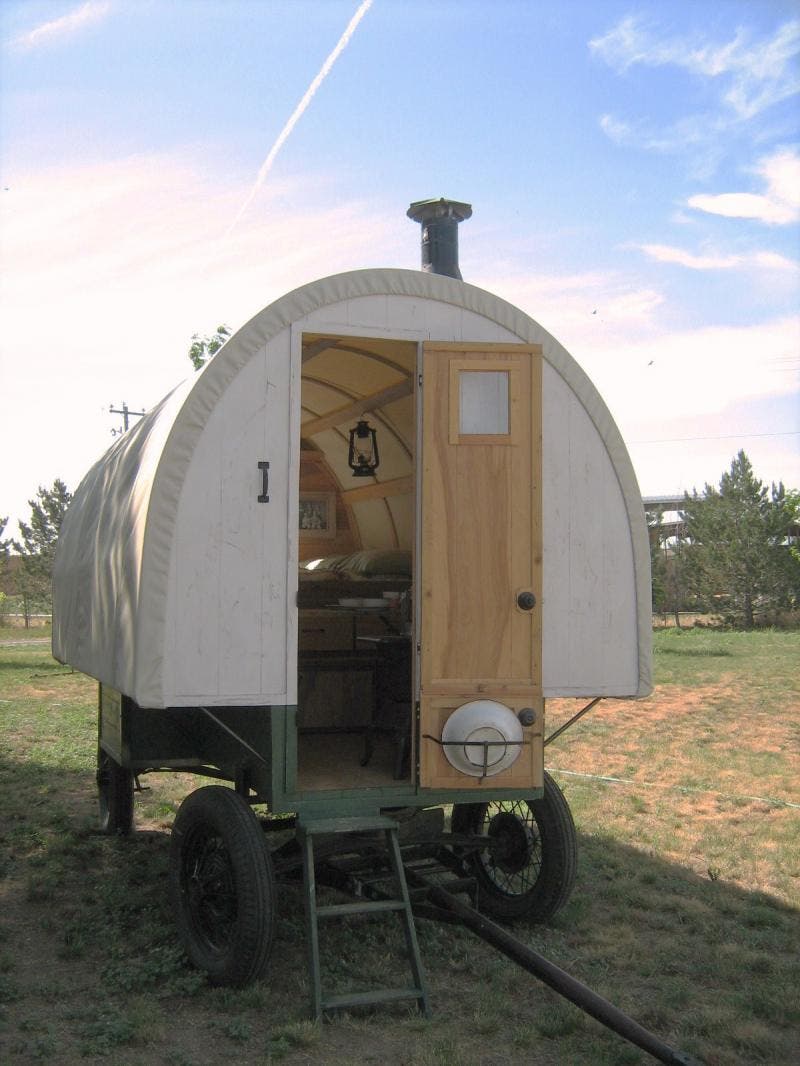
Kim Vader and his family have lived in Boise, Idaho since the early 1900’s. His ancestors were sheep farmers, his aunt was Basque, and their lives in the high desert have inspired Kim to design and build classic sheep wagons. This style of wagon was originally used by sheep herders who needed a portable place to live while tending their sheep in the high desert and mountains of the Western U.S.
Kim has been a craftsman for over 35 years and builds the wagons from scratch. You can purchase a finished wagon or have a custom sheep wagon built to your specifications. The wagons can be built on running gear that is freeway worthy or they can have original antique wood spoke wheels.

Typically, each wagon will have a bed with a memory foam mattress, a sitting and eating area with storage underneath, an antique wood stove or an electric stove, and a small kitchen area with custom cabinetry. They can also have several 110 electrical outlets and a storage area on the back of the wagon. The wagons are painted in traditional white and green colors and will have the classic canvas roof that is rated to last up to 10 years. The wagons are built with 2×6 Douglas fir and the cabinets and doors are built with 3/4 inch birch, pine and Douglas fir.

These sheep wagons can be used as a tiny house, on a farm or ranch, as a guest house, or an artist’s studio. Idaho Sheep Wagons also offers delivery. The prices range from about $9,000 for a 12 foot wagon to $13,500 for a wagon with original spoke wheels. Currently the company has a wagon for sale for $8,300.
Read more

Modern Sheepwagon

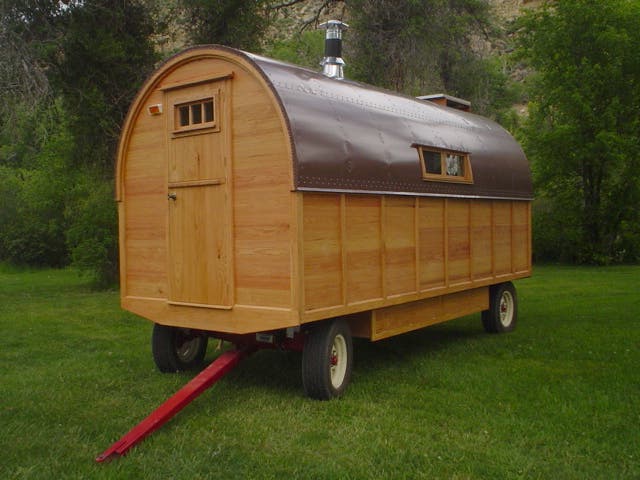
This beautiful custom sheep wagon by Wizard Wagonworks is based on the original “sheep camp” of the 1880’s with a modern twist. It is designed for both highway and off-road use as well as for durability, comfort and ease of maintenance. Kenny Harris of Wizard wagonworks is in the cabinetry business and built two of these sheep wagons according to a customer’s specifications. One is now being sold for $60,000, but Kenny can build any custom sheep wagon for less than the current price.

The exterior of the wagon contains laminated oak struts, a T&G planked floor and metal roofing. The wagon is insulated and the exterior wood is finished with teak oil. The interior has oak bead board paneling and the benches, tables, cabinet doors and drawer fronts are solid oak. The wagon can by towed by a truck or other large vehicle and handles well on the highway with speeds up to 70 MPH.

Read more

SALE! Topaz Lake Tiny House

This tiny house that I wrote about last year near Topaz Lake in California is still for sale. The owner, Tracy Pope, is eager to sell it as soon as possible and is willing to take as low as $1,500 for it. If anyone is interested in taking it off … Read more

Sir James

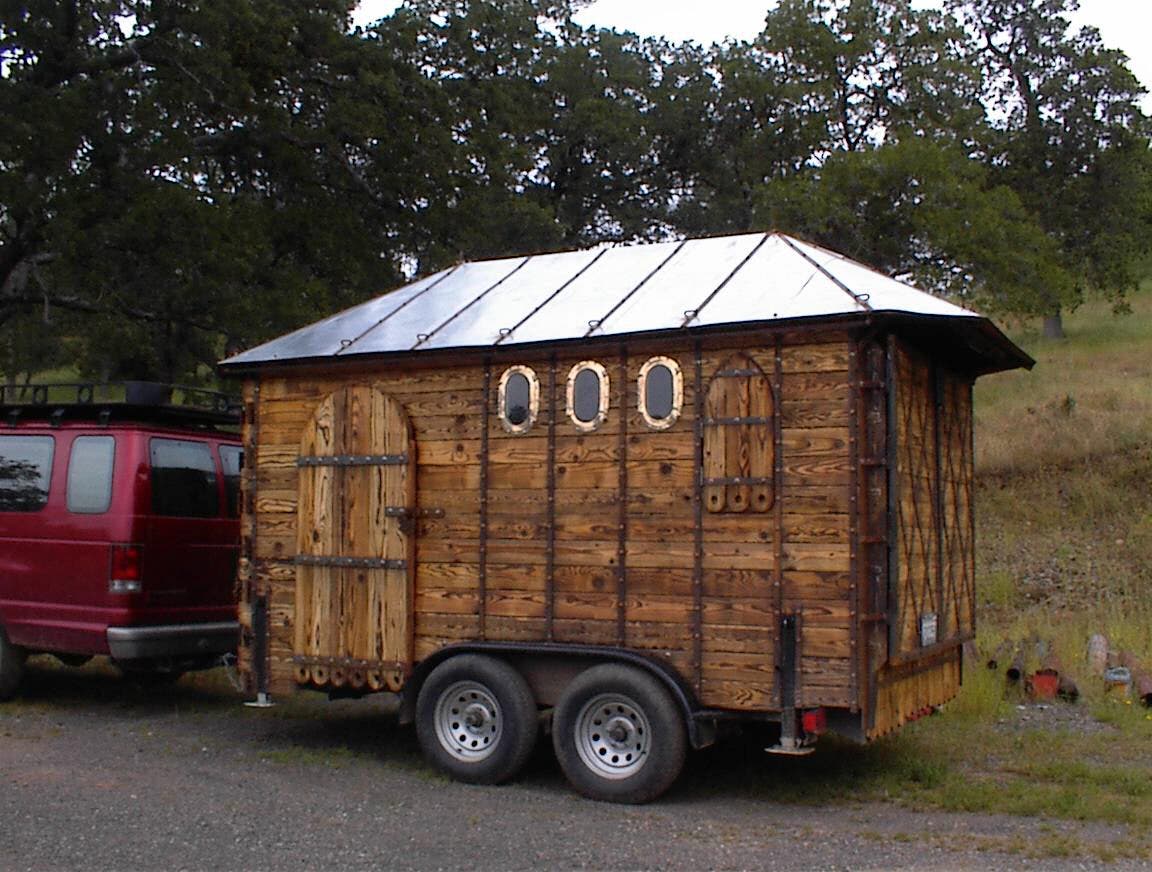
At this year’s Burning Man, I was thrilled to find this modified gypsy caravan right next door to my camp. The builders of this unique rig are Christy Horne and Michel Olson, and they were kind enough to give me more information about their comfortable, tiny house which they named Sir James.

Sir James started his life as an 8×12 dual axel car trailer from California Custom Trailers. The trailer came licensed with brakes and everything for $1,700. The house was made with a welded iron “cage” and then wood, tarpaper and plywood layers were all bolted into the cage. It’s 7 feet wide by 12 feet long and it took 4 months to build. Sir James is Michel’s second of four original designs.

Read more

The Tiny Houses of Christiania

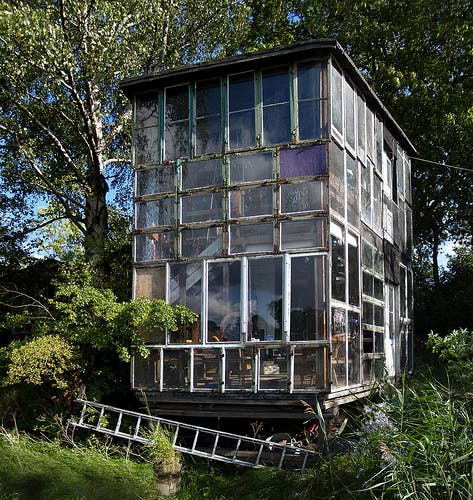
A town within a city, a rebel neighborhood within a well-ordered society. This is Christiania (Freetown), Denmark, a small community smack dab in the middle of Copenhagen, Denmark. Within this community are tiny houses, built by hand and with whatever materials are within reach.

Christiania began in 1971 as an occupation of disused army barracks in the southern portion of Copenhagen near a lake. The 900 or so freethinking individuals who inhabit the area are a self governing community who refuse to pay taxes to the Danish government, run their own businesses and schools, live without cars on unpaved roads, build their own houses, restaurants and civil buildings and even have their own currency.

Read more

Living in a Vardo

I recently came across these photos belonging to Scott, who traded in his $1,400 mortgage for a hand-build vardo and a rental lot in a KOA campground. It took Scott about three years to build the vardo, but he wanted to give it a style like an old gypsy caravan. … Read more