Wooden Wonders
“In a hole in the ground there lived a hobbit. Not a nasty, dirty, wet hole, filled with the ends of worms and an oozy smell, nor yet a dry, bare, sandy hole with nothing in it to sit down on or to eat: it was a hobbit-hole, and that means comfort.”
From The Hobbit, or, There and Back Again by by J.R.R. Tolkien
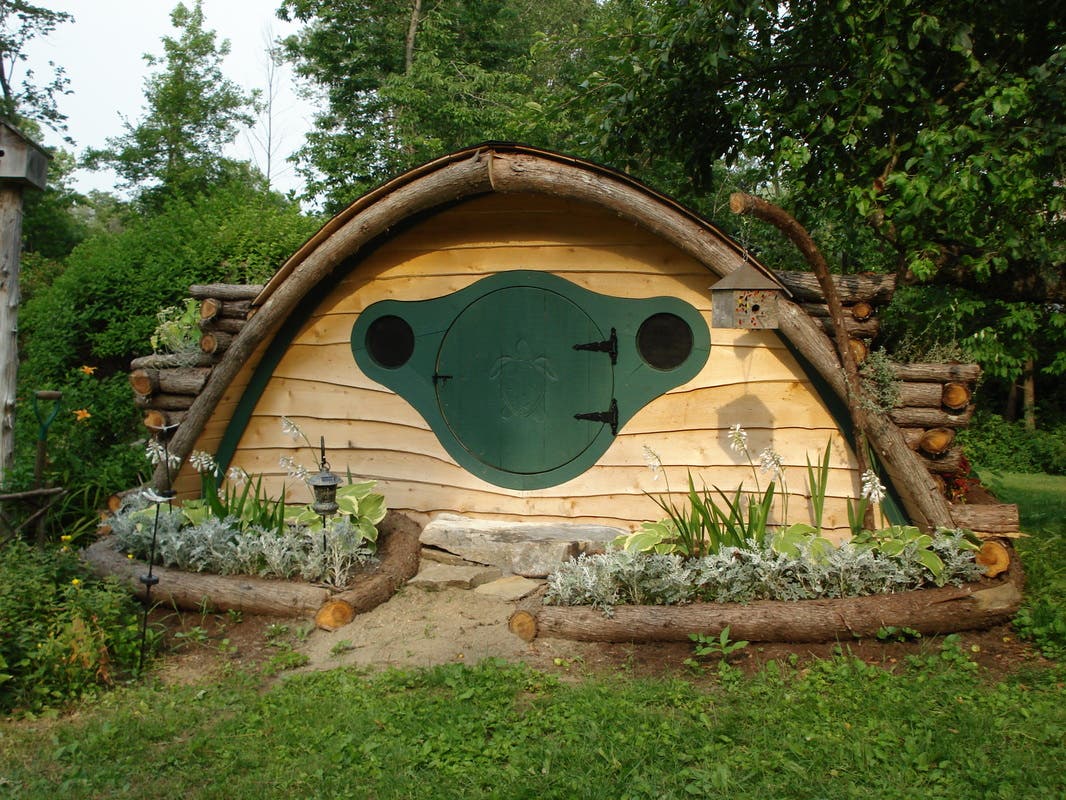
For the lovers of that hole in the ground, take a look at these little, wooden houses with the quintessential round door made very familiar by the Lord of the Rings books and movies. Wooden Wonders, in Unity, Maine, custom designs and builds these little wooden structures that can be used as playhouses, saunas, writing nooks, guest cottages, yoga or meditation rooms or maybe even a tiny house.
The structures can be integrated into your own landscaping and flower boxes can be added onto the back. The structures can be customized with different colors, additional materials, windows, dormers, interior shelving and other decorative features. Wooden Wonders also features a “heavy duty” package with double doors that allows for storing a lawn tracker or an ATV. Continue Reading »
The Tipi
My neighbor, Dale, lived in a tipi for five years while he saved up to build his own house. He set it up on the land of an acquaintance who owned a ranch in exchange for working on the ranch, and was able to use the bathroom and water supply of the ranch worker’s apartment. He ran an electrical cord under the ground from the apartment to run an electric blanket. “You can be comfortable anywhere if you have an electric blanket.” he said.
His tipi from Sacramento tent manufacturer, Goodwin Cole, housed a bed covered with sheepskins, a small dresser for clothes and a Franklin stove which kept the tipi warm in winter. For cooking, Dale used a Coleman stove outside on a picnic table.
Dale said he chose the tipi, rather than a tent or trailer, for the romantic aspect of it. His background was in Anthropology and his study of the American Plains Indians gave him the knowledge he needed to live their way of life. He said the best part of living in a tipi was being woken up by the daylight coming through the canvas in the morning, and because of the conical pyramid power of the structure, he slept very well. The worst part was the lack of a noise barrier and being open to the elements. “But living that way forces you to be a part of the outdoors,” he said. Dale and his wife, Denise, still use the tipi in their backyard for a summer getaway.
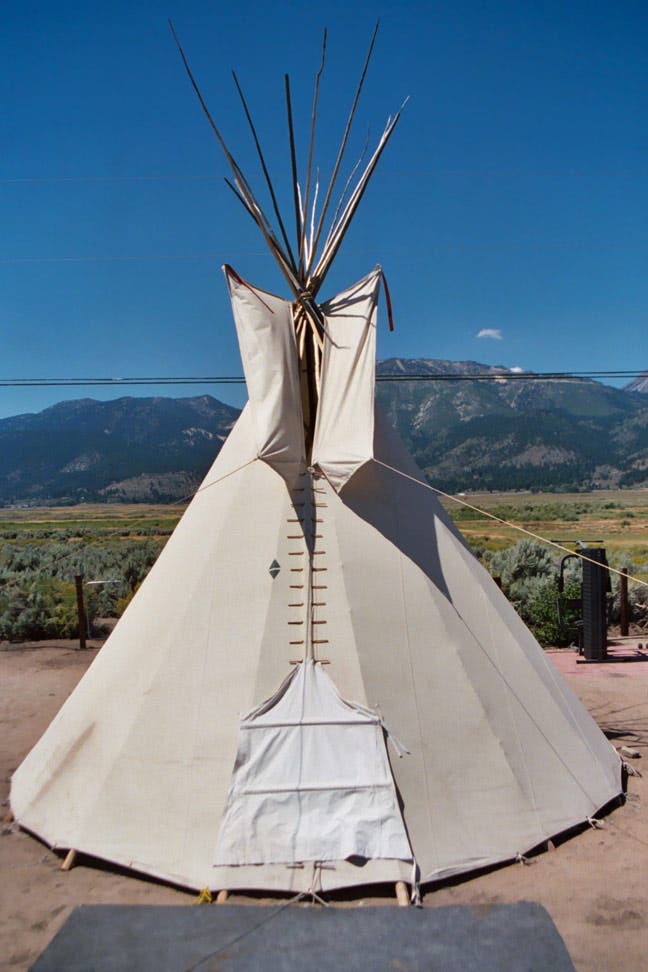
Nomadic people have used portable tipis for thousands of years. The word tipi (also teepee or tepee) comes from the Lakota word meaning to dwell or live. These simple, circular structures provide snug, low-cost shelter. Even though they look very basic, a well built tipi is precisely designed. Tipis consist of four elements: a set of ten to twenty sapling poles (depending on the size of the tipi), a canvas or hide cover, an optional inner canvas or skin lining, and a canvas or skin door.
Prior to the introduction of horses to North America, tipis were only about 8 to 14 feet in diameter, since the poles and buffalo skin coverings were pulled on travois from one encampment to another by dogs or women. Once the American Indian plains people acquired horses, tipi designs expanded into the shape and style we’re familiar with today. By the late 1800s, after the near extermination of the buffalo herds, tipi covers made from bolts of canvas provided by the U.S. government replaced the 10 to 14 buffalo skins needed for the earlier style.
Most tipis now are made of canvas and are about 16 to 20 feet across with ceilings 12 feet high. Many modern tipis include raised wooden floors for the sleeping area to keep bedding and clothes free from bugs, dirt and dampness. A fire pit or carefully vented small woodstove in the tipi center provides heat during winter months. In about an hour, two people can easily erect a 16 foot-diameter tipi with 22 foot-long poles. The conical shape of the structure makes it stable in the high winds that often blow briskly across the Great Plains, and closable smoke flaps keep driving rains outside. Tipis are routinely transported to powwows, barter fairs and rendezvous on a truck’s carrying rack. At Burning Man this year, I saw whole villages made out of tipis. They seemed to be very wind resistant and cool inside.
One aspect of tipis that lend to the romantic vision is the artistic details of the canvas or animal hide. In American Indian culture most tipis in a village would not be painted, but those that were often featured geometric portrayals of celestial bodies and animal designs. Sometimes tipis were painted to depict personal experiences, such as war, hunting or a vision quest. Many are also decorated with pendants or medallions. Traditionally these were embroidered with dyed porcupine quills; more modern versions are often beaded. Buffalo horns and tails, tufts of buffalo and horse hair, bear claws and buckskin fringe were also used to decorate tipi covers. These attachments are often referred to as “tipi ornaments”.
Earthworks Tipis
Earthworks is having a sale of 20% off their tipis until December 1, 2008.
Mother Earth News: That Good Ol’ Tipi Living
If you enjoyed this post, subscribe to our feed
The Hexayurt
On my trip to Burning Man this year, I noticed quite a few camps utilizing the Hexayurt. A model of this affordable “refugee” shelter was also on display along with the art on the playa, and I was suprised how cool it was in the boiling heat, and how sturdy it was against the notorious Black Rock Desert winds. The inside had room for a full-size futon, some chairs and a table, as well as a few bookshelves.
The Hexayurt, created by Vinay Gupta, is made from Thermax HD from Dow for permanent use and and with laminated hexacomb cardboard from Pregis for temporary use. The reflective material on the outside keeps out the heat. These units take a team of three people around an hour to assemble. They are assembled using a 6 foot wide, 600+ lb bidirectional filament tape, and anchored to the ground like a tent. No heavy lifting, ladders or scaffolding are required.
A Hexayurt is primarily an emergency structure which is self-contained and easily packed for transportation. They cost around $200 to $500 plus another $100 to add a utility package for water decontamination, heating and cooking, communal composting toilets and solar power.
There are three sizes available:
* Stretch Around $100 per unit, 6′ high, 72 sq ft
* 8 foot Around $200 per unit, 8′ high, 166 sq ft.
* 12 foot Around $300 per unit, 12′ high, 166 sq ft.
A Hexayurt can also be used for a temporary structure to live in while building a more permanent dwelling.
Based on work done at the Rocky Mountain Institute, a Hexayurt village is intended to replace all the infrastructure which might be damaged after a major disaster such as an earthquake or flood — in other words, it is an autonomous building suitable for a family. Both the American Red Cross and the U.S. Department of Defense are planning on using the Hexayurt for refugees and military use.
Treehugger: The Hexayurt: Efficient, Emergency Shelter
The Sietch Blog: Interview with Vinay Gupta
If you enjoyed this post, subscribe to our feed


