Welcome aboard!
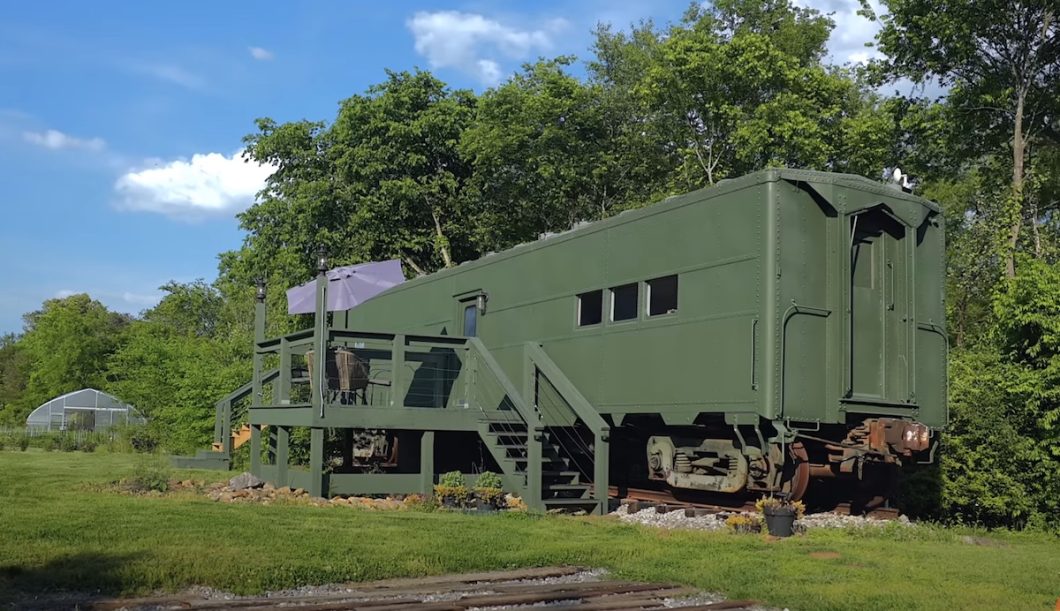
Ever wondered what it would be like to transform a piece of World War II history into a cozy modern home? That’s exactly what we’re exploring today as we step inside Platform 1346, an extraordinary tiny house project that’s catching everyone’s attention in Tennessee.
This isn’t your typical tiny home story. What started as a humble military kitchen car that once fed countless soldiers during WWII has been lovingly converted into a charming 450-square-foot Airbnb retreat. Join us as Christian and Alexis from Tiny House Expedition guide us through this remarkable transformation, where industrial heritage meets modern comfort.
From its space-saving Murphy bed to a luxurious clawfoot tub and full-size kitchen, every inch of this converted train car tells a story. And if you’ve ever dreamed of taking on a similar project yourself, you’re in luck – we’ll be diving into all the practical details, from choosing the right train car to managing transportation and renovation costs. Ready to see how a piece of railroad history became someone’s dream tiny home? Let’s dive in!
Video by: Tiny House Expedition
Takeaways
- The train car tiny home is located near the Smoky Mountains in Tennessee, with a unique property that includes a flower farm and a small airstrip.
- The train car was originally a kitchen car during World War II, helping feed troops as they traveled between bases.
- The converted train car is approximately 450 sq. ft., 9 feet wide, and 50 feet long, with an open, rustic industrial design that preserves the original features of the train car.
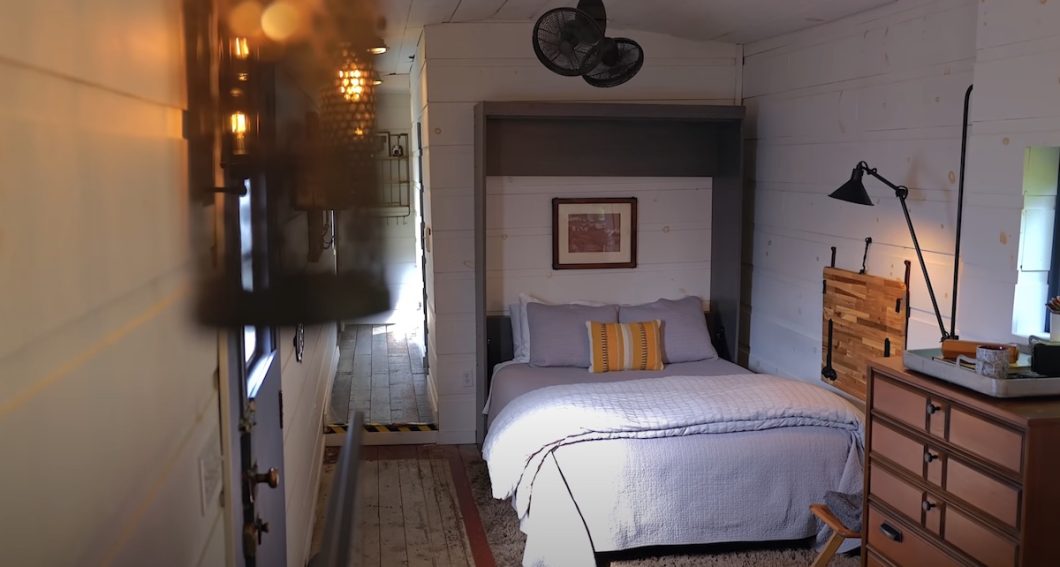
- The bedroom features a Murphy bed, which can easily transform into an exercise space or a home office, with plenty of storage and a mix of mid-century modern furniture.
- The bathroom is spacious for a tiny house, with a clawfoot tub that doubles as a shower, a sliding barn door, and clever storage options using shiplap and basket shelving.
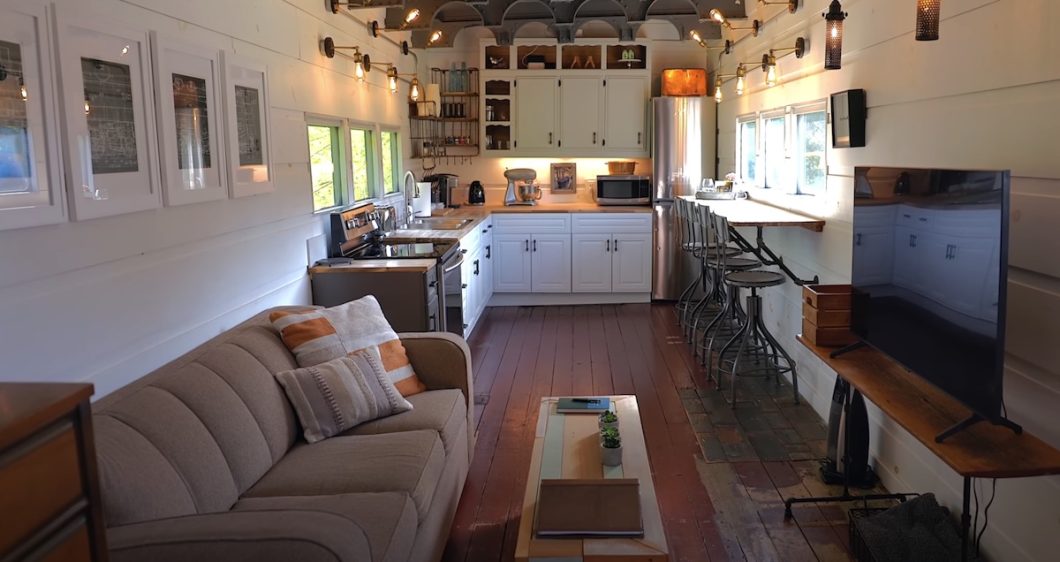
- The living room emphasizes the rustic industrial style, with a cozy and substantial feel, a comfy sofa bed, and unique industrial lighting.
- The kitchen is one of the standout features, boasting a full-size range, ample counter space, industrial-style decor, and a full-size fridge. It’s a functional and stylish space perfect for full-time tiny home living.
- The train car’s renovation includes thoughtful details such as exposed metal trusses that add visual interest and help emphasize the industrial aesthetic.
- Converting a train car into a tiny home requires careful planning, including choosing the right type of train car (box car, caboose, etc.), securing the land, and considering transportation and permits.
- The cost of converting a train car into a tiny home can vary widely, ranging from $20,000 to $60,000 for renovations, with additional costs for land, permits, and transport, making it an affordable alternative to traditional housing.
Questions and Answers
What is the history of the train car used in the tiny home?
The train car was originally set up as a kitchen car during World War II to feed troops traveling between military bases. It was later purchased at an auction by a railroad enthusiast and transformed into a tiny home.
What are the dimensions of the train car tiny home?
The tiny home is approximately 450 square feet, 9 feet wide, and 50 feet long.
What design style is featured in the interior of the train car?
The interior features a rustic industrial design that incorporates both natural textures and galvanized metal elements, fitting the train car’s history and atmosphere.

What makes the Murphy bed in the bedroom so functional?
The Murphy bed is a space-saving feature that transforms the bedroom into a multi-functional space. When the bed is lifted, it creates room for an exercise area and a fold-down desk for a home office.
How does the tiny house maximize storage space?
The train car utilizes several storage solutions, including a mid-century modern dresser, wall-mounted shelves, and hidden storage under the sink and in various other areas like the hallway and bathroom.

What makes the bathroom in the tiny house spacious for its size?
The bathroom is designed with thoughtful storage solutions, including a pull-out drawer for easy access and a barn door for space-saving. It also features a clawfoot tub, which can be used as both a bath and shower.
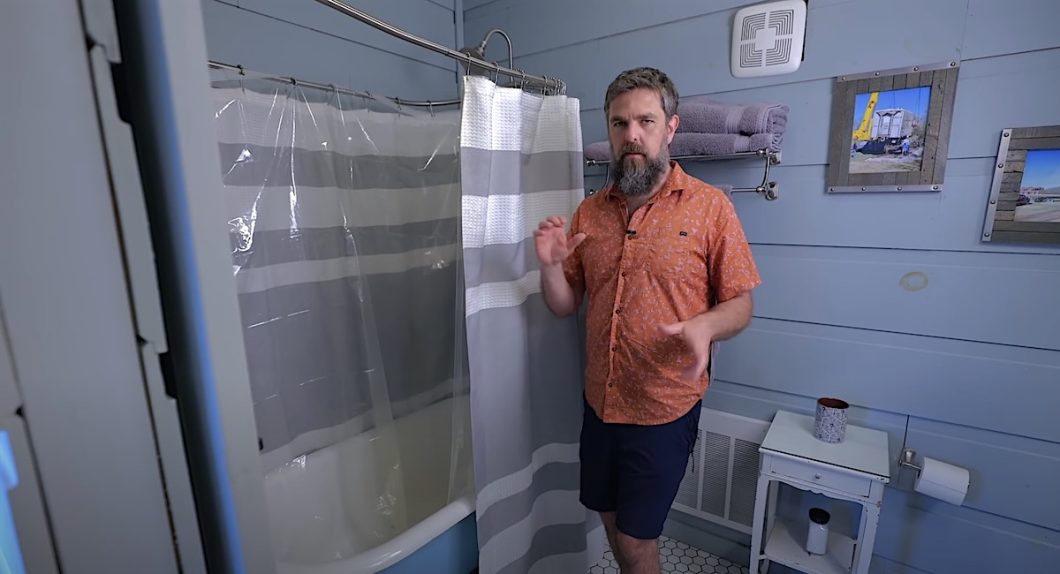
Why do the hosts recommend cutting a shower curtain for a more functional fit?
The hosts suggest cutting the shower curtain to avoid it dragging in the tub and creating a messy shower experience. It helps ensure the curtain isn’t too deep into the tub, allowing for a more practical setup.
What is unique about the train car’s lighting design?
The lighting features industrial exposed conduit Edison bulbs, which are dimmable, allowing for customizable mood lighting. This creates a cozy and visually striking atmosphere in the home.
What challenges should one be aware of when converting a train car into a tiny home?
Challenges include the weight and transportation of the train car, the potential for damage from previous use, obtaining permits, and the renovation costs. It’s important to consider the expenses for moving, land, and necessary conversions.
How much does it cost to move a train car and convert it into a tiny home?
The cost of moving a train car typically ranges between $5 and $15 per mile. The overall cost for converting the train car into a tiny home, including renovations and transport, can be under $100,000, depending on the materials and specific work required.
Conclusion
It’s clear that Platform 1346 is more than just a converted train car – it’s a masterpiece of innovative tiny living. Nestled in Tennessee’s gorgeous Smoky Mountains, surrounded by a flower farm and even its own airstrip, this 450-square-foot home proves that history and modern comfort can ride the same rails.
What began as a humble WWII kitchen car has been thoughtfully transformed into a stunning living space that honors its industrial heritage while embracing contemporary design. From the space-saving Murphy bed that doubles as a home office to the luxurious clawfoot tub and full-size kitchen that would make any chef smile, every inch of this 9 by 50 foot space has been carefully considered.
For those inspired to embark on their own train car conversion journey, know that it’s an achievable dream. While costs can range from $20,000 to $60,000 for renovations (plus land and transport), it’s still a fraction of traditional housing costs. The key is careful planning – from selecting the right car to securing permits and land.
Platform 1346 shows us that sustainable living doesn’t mean sacrificing style or comfort. Whether you’re dreaming of your own tiny home adventure or simply appreciate innovative design, this converted train car reminds us that with some creativity and vision, any space can become an extraordinary home.
Ready to start your own tiny home journey? Whatever track you choose, remember that the best tiny homes are those that tell a story – and this one certainly does that in spades!
