ClickClackGorilla

The exciting tale of the ClickClackGorilla begins with a daring escape from a cubicle life in the U.S. and ends with a life of traveling with a band, Dumpster diving, and living in a rescued caravan in a wagenplatz in Germany. The Gorilla is Nicolette Stewart, an ex-pat writer, proud gleaner and soon-to-be mother who blogs about her unconventional life while trying to live that life with more freedom and environmental consciousness.

Her home in Germany (which she shares with her partner, “The Beard”, who also has his own trailer) is a caravan which was formerly parked on a farm. The 60-year-old wooden wagon, known as a Bauwagen in German, was on the farm for at least 20 years and the owners of the farm gave it to Nicolette for free if she hauled it out herself.

She proceeded to fix and decorate the wagon over a the course of a year with about 900 Euros and many trips to the Dumpster for furniture, lighting, kitchenware, bedding and even food. Her wagon, affectionately called the trash house, is parked in a wagenplatz, an intentional community in which people live together on a piece of land in a variety of wheeled dwellings.

Read more

Joseph’s Gypsy Wagons

Joseph Crowell has been building buses and vans for many years, but was recently inspired to build his first gypsy wagon by Sunny Baba, an activist and spiritualist who has built dozens of gypsy wagons.

Idaho Sheep Wagons

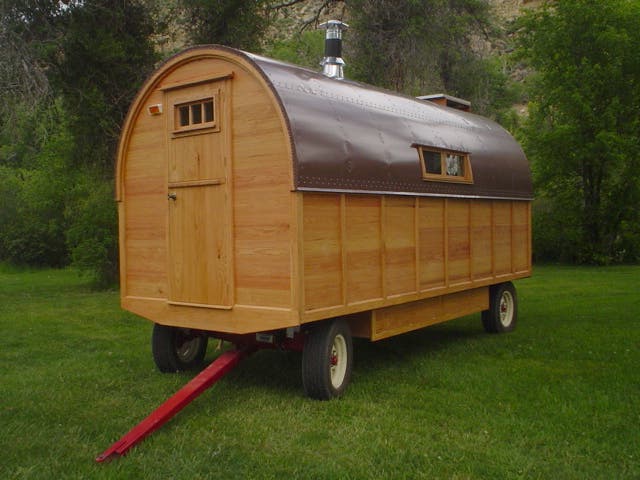
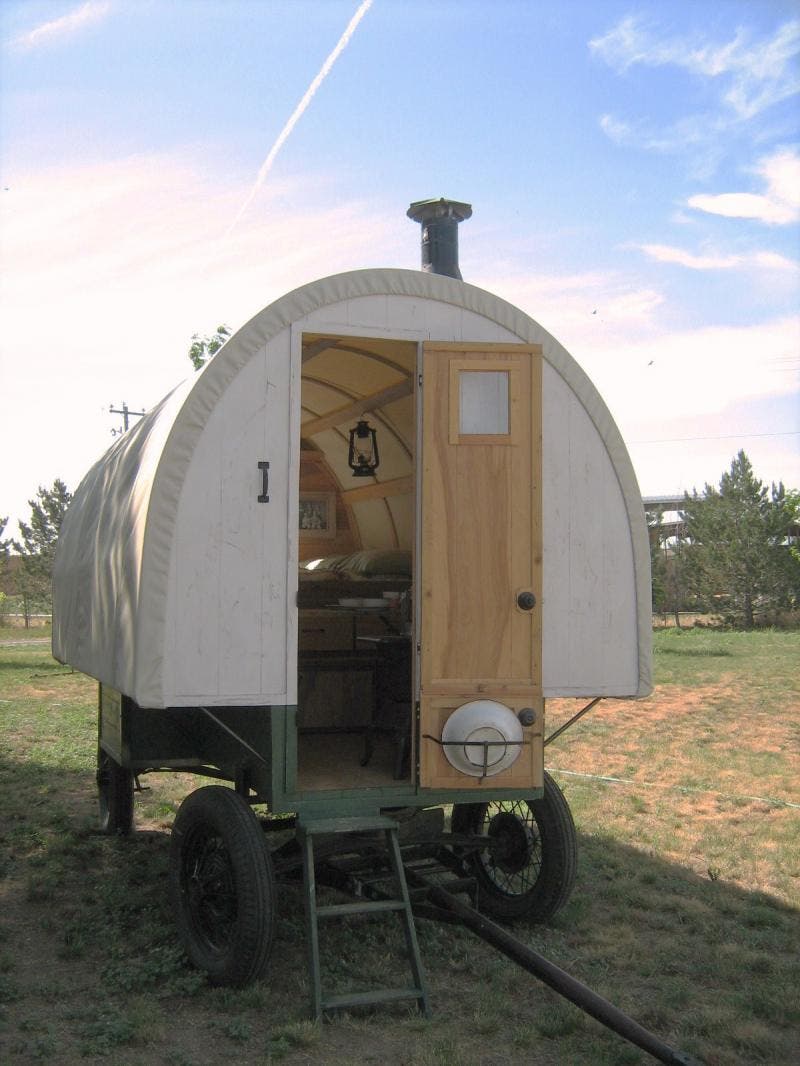
Kim Vader and his family have lived in Boise, Idaho since the early 1900’s. His ancestors were sheep farmers, his aunt was Basque, and their lives in the high desert have inspired Kim to design and build classic sheep wagons. This style of wagon was originally used by sheep herders who needed a portable place to live while tending their sheep in the high desert and mountains of the Western U.S.

Kim has been a craftsman for over 35 years and builds the wagons from scratch. You can purchase a finished wagon or have a custom sheep wagon built to your specifications. The wagons can be built on running gear that is freeway worthy or they can have original antique wood spoke wheels.

Typically, each wagon will have a bed with a memory foam mattress, a sitting and eating area with storage underneath, an antique wood stove or an electric stove, and a small kitchen area with custom cabinetry. They can also have several 110 electrical outlets and a storage area on the back of the wagon. The wagons are painted in traditional white and green colors and will have the classic canvas roof that is rated to last up to 10 years. The wagons are built with 2×6 Douglas fir and the cabinets and doors are built with 3/4 inch birch, pine and Douglas fir.

These sheep wagons can be used as a tiny house, on a farm or ranch, as a guest house, or an artist’s studio. Idaho Sheep Wagons also offers delivery. The prices range from about $9,000 for a 12 foot wagon to $13,500 for a wagon with original spoke wheels. Currently the company has a wagon for sale for $8,300.

Read more

Modern Sheepwagon

This beautiful custom sheep wagon by Wizard Wagonworks is based on the original “sheep camp” of the 1880’s with a modern twist. It is designed for both highway and off-road use as well as for durability, comfort and ease of maintenance. Kenny Harris of Wizard wagonworks is in the cabinetry business and built two of these sheep wagons according to a customer’s specifications. One is now being sold for $60,000, but Kenny can build any custom sheep wagon for less than the current price.

The exterior of the wagon contains laminated oak struts, a T&G planked floor and metal roofing. The wagon is insulated and the exterior wood is finished with teak oil. The interior has oak bead board paneling and the benches, tables, cabinet doors and drawer fronts are solid oak. The wagon can by towed by a truck or other large vehicle and handles well on the highway with speeds up to 70 MPH.

Read more

Wandering Book Artists Gypsy Wagon

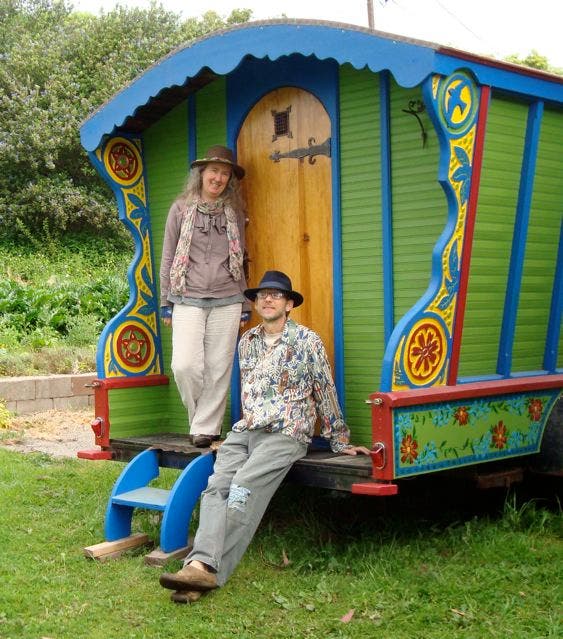
Peter and Donna Thomas are book artists from Northern California who have been spending the last year traveling around the U.S. in a handmade gypsy wagon. The wagon is their temporary home as well as a place for them to sell their books, teach book arts workshops and give talks and lectures. Wherever they’ve gone, their gypsy wagon has attracted attention for its whimsical color and design.

Peter and Donna fell in love with gypsy wagons when they were craftspeople at Renaissance fairs. Many of the fair vendors built the wagons to sleep in and sell their wares from. Peter and Donna built the wagon on a 16-foot Carson car hauler. The entire trailer weighs 3,800 pounds and it took them three years to build. The rafters were made with laminated pine boards and the floor with locally milled sugar pine. It is insulated, contains a small kitchen and electricity. They have a camping toilet in the closet and a solar shower that they keep in their tow vehicle, but the couple usually use campgrounds, friendly locals and universities for their bathing.

Read more

Les Roulottes de Campagne

Ever since Kent posted the MiniCasas on the Tiny House Blog, my love of gypsy caravans has been renewed. The other day I ran across these gypsy caravans for rent and for purchase in France, and was amazed at how beautiful and spacious the designs were. The Roulottes de Campagne were designed by the same company who created the Carré d’étoile or the French Cube. Gypsy caravans like these are offered in over 50 locations within France. They cater to vacationing Europeans, but tiny house lovers can get a lot of ideas on how to live luxuriously in a small space with these beautiful photos.

The caravans are built from partially recycled timber and meet high quality environmental standards. The insulation is made from wool and the windows and doors have double glazing. A hot water heater and electrical wiring is included.

Most of these caravans are around 215-230 square feet and include a kitchen, a bathroom and sleeping facilities as well as plenty of storage, heating for winter use, outdoor living spaces and lovely details including polished brass port-hole windows. They come fully equipped and can accommodate up to four people. Some are even accessible for the disabled. The units start at €29.800 or $41,000 and take 2-4 months to be completed.

Read more