5 Tiny Houses that Scream Cottagecore

The term “cottagecore” may not be familiar with anyone hovering in the Baby Boomer or GenX categories, but for many 20-somethings it’s a lifestyle to strive for. Similar to farmcore, fairycore, and grandmacore, cottagecore is an aesthetic community that takes its name from the 1980s hardcore punk scene term. The … Read more

Hus-1

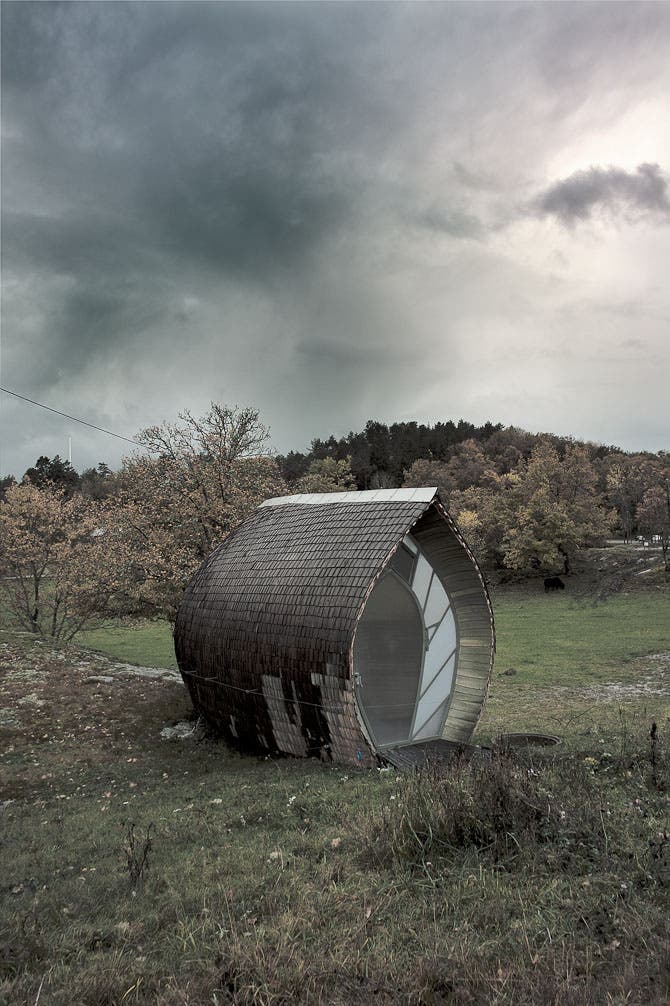
Swedish architect Torsten Ottesjö has recently create a free-standing and nearly free-form tiny house that can be moved anywhere to create the illusion that the house has sprouted out of the ground. The Hus-1 is a 270 square foot dwelling that can accommodate two people and contains a kitchen, sleeping … Read more

The ecoPerch

Treehouses have been making the news lately with Deek Diedrickson’s “Wolfe’s Den” and Joel Allen’s HemLoft. Across the pond, the ecoPerch is a new tiny house design based on a treehouse from the Blue Forest company in the U.K. This beautiful structure is designed to fit into the natural surroundings … Read more

Living in the Future

According to the Lammas ecovillage in Wales, living in the future means looking to the past. This series of videos shows the baby ecovillage’s plans and struggles to develop a low impact village in the open countryside. The series also profiles several other successful ecovillages around Europe. The village is named after the pagan holiday that celebrates the abundance of the fall months.

Lammas is the United Kingdom’s first planned ecovillage and is sited on 76 acres of mixed pasture and woodland in Pembrokeshire. The houses use low-impact architecture which uses a combination of recycled and natural materials. The village will contain five detached buildings and one terrace of four dwellings. The homes will be built of straw bale, earth, timber frame and cob; they will have turf roofs and wool insulation and will blend into the landscape.

The videos (also available as podcasts) cover everything from searching for land, working with local codes, inspectors and design councils, examples of different types of natural building including straw bale and cob, surviving cold weather, self-sufficiency, growing your own food, and keeping community intact. The ecovillages profiled are Cae Mabon, The Village, Ireland and Findhorn. That Roundhouse by Tony Wrench is also featured.
Read more

Ellen’s Tiny House

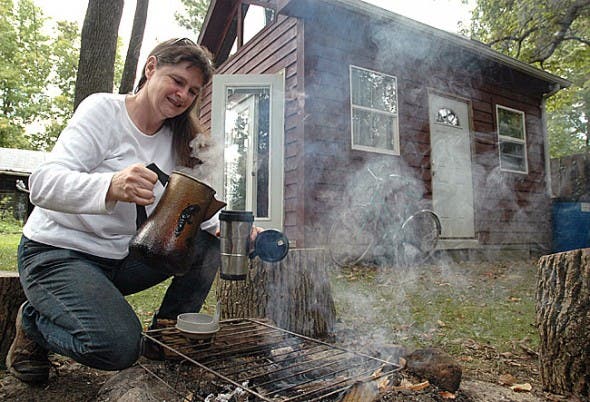
Ellen Dawson-Witt was recently featured in her local newspaper because of her tiny house and her downshifted life. Ellen’s 192 square foot house is located on her property in Yellow Springs, Ohio where she grows some of her own food and carries water from a well for washing, uses solar panels for a lamp, CD player and laptop and uses a composting toilet. She does her cooking on a gas range from 1934.

Dawson-Witt, a freelance editor and government contractor, has avoided television and fashion and wanted to live her life like that of Henry David Thoreau.

“I wanted to live deliberately and to not be on automatic pilot,” she said. “I wanted to be connected to the elements.”

However, she is not able to live in her tiny house full-time. The county in which the home is located does not allow full-time living in a home without indoor plumbing. She keeps another house close to her work.

Inside the tiny house, there are three chairs, one table, one desk, a kitchen cabinet from the 1920s, one bookcase, a loft with one bed and one small chest that contains an extra blanket. About 75 percent of all she owns fits in the tiny house. (Ironically, she has a whole shelf of books on voluntary simplicity, she said.) She has her clothes and a file drawer in her other house and her tools and camping gear in a nearby shed.

Dawson-Witt will be leading a seven-week discussion on sustainability at her tiny house. The sessions started on October 4, 2011. Her talks will cover simplicity, ecology, food, money and more for those who want to live more lightly on the earth.

Read more