Tinier Living Update

tinier living house

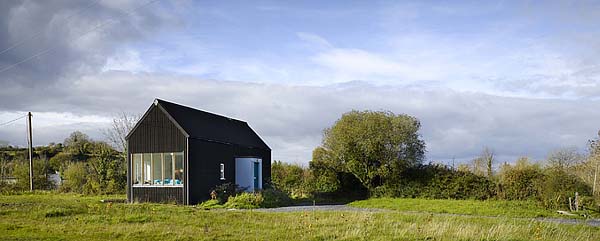
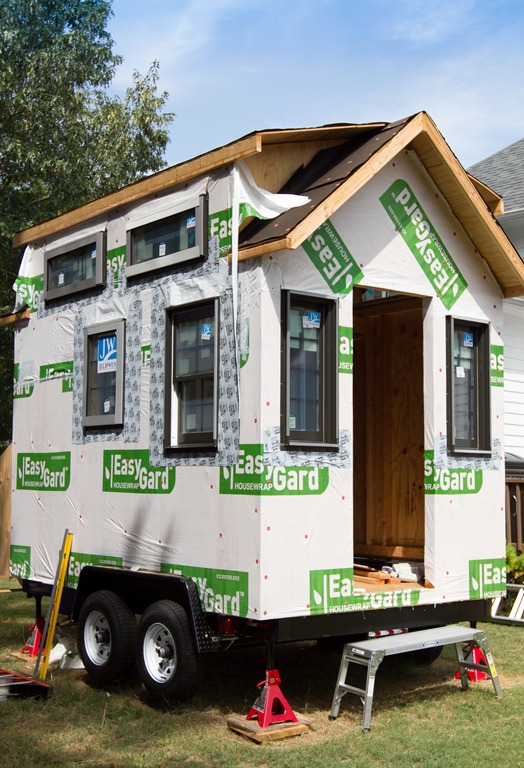
by Kent Griswold  Dan Louche over at Tiny Home Builders has been busy working on his latest project called Tinier Living. He has just installed the windows and next is the door, the siding, and then the roof. The entrance to the house is situated at the back of the … Read more

Tiny House in a Landscape

Irish Vernecular

This week’s Tiny House in a Landscape comes to us from the little country of Ireland. I had the privilege of visiting Ireland last summer and it is one of the greenest places I have ever seen. Known as the Irish Vernacular this home was built in the traditional style … Read more

Green Cedar Bus

Green Cedar Bus

by Josiah Williams

My wife, Christy, and I took a 1994 Blue Bird school bus and turned it into a home for us and our little boy.

We spent the summer of 2011 doing most of the conversion. I worked days as a carpenter and put in long nights and weekends on the bus and was rewarded with a comfortable, warm, and unique space for our family, free from rent and mortgage.

We spent the winter months traveling from Georgia to Washington state, spending most of the time around the south-west.

Green Cedar Bus

Along our journey we found out that we were pregnant with our second child so, though our time in our new home has been short, we are now in the prossess of selling the bus in order to fund a move to Alaska. We hope to get enough money from the sale to be able to start a life there and begin plans for another small, simple yet beautiful and unique home, this time though on a soil foundation!

Read more

Straw Bale and Tiny Homes

straw bale window seat

Guest Post by Andrew Morrison

As you may know, my wife, 12 year old daughter, and I recently sold more than half of our worldly belongings to fund our adventure, let go of our large rental house, and spent the next 6 months in a quest to reconnect with each other and with what really matters in life. Most of that time was spent in a 150 sq ft pop up tent trailer in Baja, Mexico where we were able to live off grid and to essentially unplug ourselves from our “normal” day-to-day lives. What we learned was that in living with the least, we gained the most and that in finding the stillness that comes in not busying ourselves, we reclaimed our joy and inner calm (to read more about this journey, please visit www.SmallHouseRevolution.com).

One of our favorite topics of conversation since embarking on this adventure has become housing. What defines a home, what are the things that are essential in making a home a wonderful space, what do we want in our own dream house, etc… Being that the professional focus for most of our adult lives has been straw bale construction and green housing, we naturally have been exploring the merits of this mode of building as a solution for those of us that are wanting to build affordably, to tread lightly on the planet, and to be involved with our own home’s creation. We now see, more than ever, that straw bale construction is an amazing building technology fully able to fill those needs.
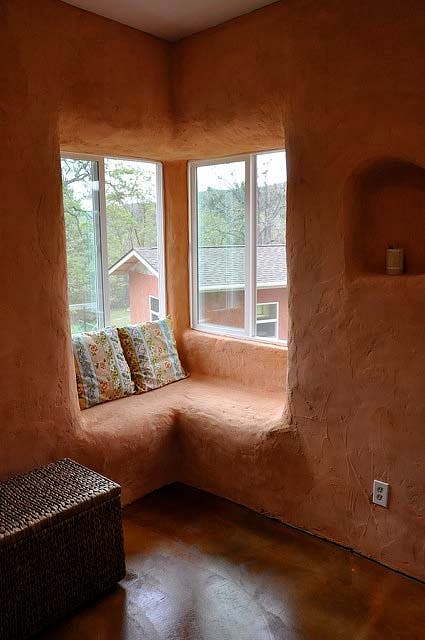
straw bale window seat


The idea of stacking straw bales to create a super insulated and natural shelter first appeared on the Nebraska plains over 100 years ago and some of these original homes are still in use. The technology has advanced significantly since those early builds and today, two major styles of straw bale construction have been developed: Load Bearing and Post and Beam. Load bearing construction uses no structural frame (such as framed 2×6 walls) to support the roof. Instead, the bales carry the load. Post and beam construction, on the other hand, uses a structural frame to support the roof while the bales act as insulation within that frame. Whichever system is implemented, the benefits of building with bales include: 3 times the insulation value of a conventional wall; 3 times more fire proof than a conventional home (yes, you read that right!); lessens pollution by using a waste material that normally contributes significantly to the pollution cycle; ideal building system for the owner builder; incredibly sound proof; able to withstand natural disasters (earthquakes, high wind/tornado) significantly better than a conventional home; aesthetically beautiful.

Read more
The Lodge Tech Story

lodge tech yurt

When I was twenty-six I went to live in a Tipi at a nature preserve, to escape the rat race and find some peace of mind. I soon discovered that it really did not live up to all my expectations. The mosquitoes were constant, water dripped from the poles, and the smoke was real bad. Even after installing a wood stove the experience was not what I had in mind.

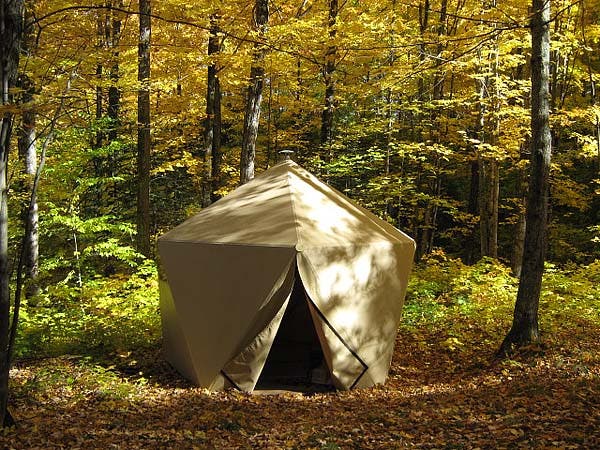
After many moons slipped into oblivion, I decided to study and design a new system. I bypassed the traditional Yurt design, because I felt the lattice walls were too weak and cumbersome to make. Instead, I went with the Geodesic design which is vastly stronger and offers more versatile space and comfort.

lodge tech yurt

Lodge Tech now manufacture some of strongest and most economically priced Domes and Yurts around. These can be made into homes if one is far enough off the beaten path and knows how to work around zoning ordinances etc. Or if you need a great farm building, or to rent them out to hikers or campers.

Read more

Rosie our Airstream Home

Rosie has been SOLD!

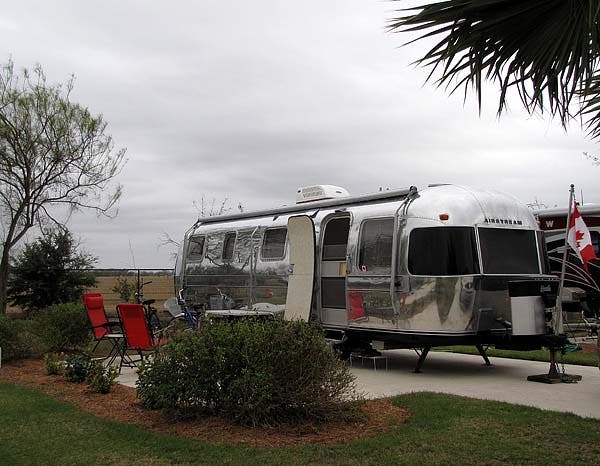
We are ‘snowbirds’ from Canada, 60 something, who have always tried to have a small footprint. We were environmentalists and vegetarians long before it was the ‘in thing’. In our retirement we sold all the trappings of our old lives and travelled in a van and backpacking tent. That proved to be the most liberating experience of our lives! It came to be though, that we wanted a home base in Canada so we bought a bit of land and built…by ourselves…as small a cottage as the local bylaws would allow. Winters, however, have been spent in Texas pursuing our simple passion for birding. For this purpose we bought an 1983 Airstream Excella, that we named Rosie, to refurbish and be our winter home. We have been comfortably living in ROSIE’s 232 sq ft for 4 months a year. She has everything we need and more. We enjoyed the challenge of making her liveable and easy to maintain.

A change came over us this winter though. We decided that we needed less space! We would like to explore but do not own a tow vehicle for Rosie. We needed to think even smaller and lighter to make more travel affordable; we needed to think even simpler to make boondocking possible. So, to that end, we have purchased a used 17 ft Casita Spirit Deluxe, already named Megg (for the EGG that it is ;-)), that our Toyota can easily tow. We will be downsizing to 102 sq ft! Our plans are to stay down south for even longer periods, maybe up to 6 months. We’ll have the option of summer trips up north too.

Read more