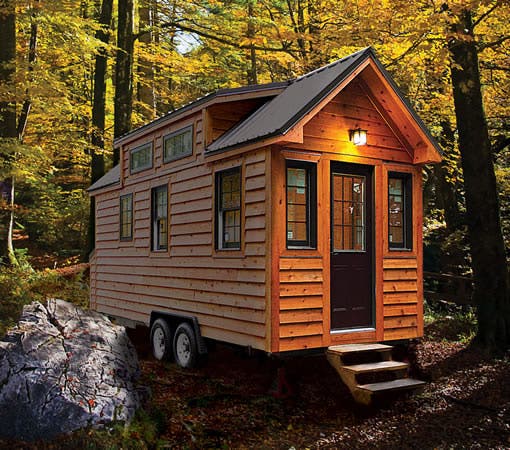
Tiny Houses in Gothenburg, Sweden

Sweden tiny houses

by Anders Karlstam

I have attached a picture over a part of our city built up with tiny houses of different designs. This type of building in this type of area are called “kolonistuga” and the tiny houses are called “koloniområde.” This area was built way back to give hard working People in factories a chance to get recreation on vacation.

There are several areas with tiny houses in our city. Most of them are located in surrounding locations of the city, but this one and two to three more areas are located inside the city. It is a very nice contrast to all large buildings.

Sweden tiny houses
Photo Credits Anders Karlstam

Usually, people are not allowed to live in these permanently and they are empty during the wintertime.

Every house is owned personally, but owners have to be a members of a community that rents the land from the city. So every house owner rents the ground from the community, which is called a leasehold.

Read more

Dan Louche’s Tiny House Build Along

Dan Louche from Tiny Home Builders is going to be offering a unique workshop starting in March and I wanted to make sure you all new about it. I’ll let Dan tell you about it below. Building a tiny house by yourself can be intimidating, especially if you have limited … Read more

Built by Friends: Evan and Gabby’s Tiny House

Like an Amish barn raising, Evan and Gabby’s tiny Tarleton house is going up piece by piece with the help of friends and family. The Illinois couple were inspired by the Tumbleweed houses and decided to downsize their already sustainable lifestyle even more. With no prior construction experience, they have been working on their tiny home for just over a year and plan to move in (along with their two cats) soon.

The couple also plan to move around the country, staying in campgrounds that offer year-round rates. They then want to purchase some land where tiny house living is more acceptable.

Their 117 square foot Tarleton, built on a car hauler trailer, will have a great room, a sleeping loft above the bathroom and kitchen, another storage loft above the door and a bathroom with a custom shower and composting toilet that vents to the outdoors. The kitchen has four feet of stainless steel countertop, a two-burner stove, a bar sink, a toaster oven, a small fridge and – rare for a tiny house – a combination washer and dryer that they got from a family member for free.

Read more

Tiny House Community Survey

The Tiny House Community survey and blog are designed to gather the thoughts of tiny house fans on creating a community of tiny houses. The ideal is to create a village where size is not an issue but quality of life is. Beautifully crafted tiny houses of less than 400 … Read more

Cae Mabon

The Cae Mabon Retreat Centre in North Wales has been building small, natural dwellings for their residents and visitors since 1989. This intentional community is located in the best of what nature can offer: in the woods, by a river, near a lake, at the foot of the mountains and within sight of the sea.

Cae Mabon’s principal creator is Eric Maddern, who was inspired to create the community after spending time with the Aboriginal people in Alice Springs, Australia. He wanted to create a place that was not the ostentatious beauty of the wealthy but the humble beauty of the simple and natural. The buildings he created are mostly made from timber, stone, reed, straw, grass, lime and clay and they blend in with their surroundings.

Read more

Baggins End Domes

Baggins End, on the campus of the University of California, Davis is a small community of undergraduate and graduate students who live together in a bundle of round, white domes among several acres of community gardens, chicken coops, trees and flowers. Sounds idyllic, right? The students think so and are prepared to fight for their little slice of heaven. Recently, the university has determined that the domes are no longer safe for residential use and plan to shut down the Domes and Baggins End this summer.
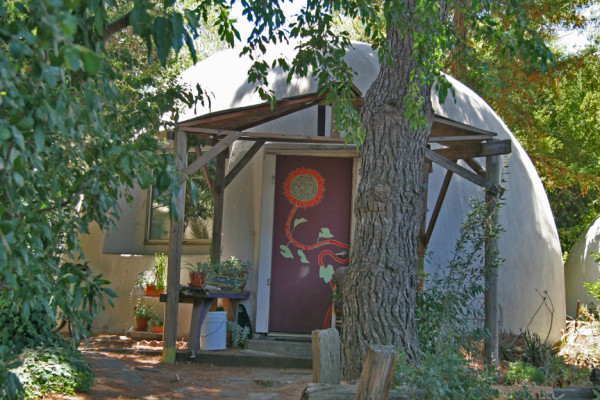
The university’s student housing department said the Domes are not up to code, are not Americans With Disabilities Act-compliant, and not worth spending money on to salvage. Supporters of the Domes claim the university administration has neglected these issues for decades and is trying to make a land grab, motivated by budget cuts and pressure to squeeze every last dollar out of campus real estate.

Sacramento News & Review Article on Baggins End

Sacramento Public Radio Story on Baggins End

The Domes have been on the campus since 1972 and are constructed of three to four inches of polyurethane foam surrounded by a fiberglass shell. A few of the Domes are beginning to delaminate. Baggins End (named after the home of Bilbo and Frodo Baggins from The Hobbit and the Lord of the Rings trilogy) is comprised of 14 domes housing 28 students where they emphasize cooperation and sustainability. The students grow a lot of their own food and raise chickens and a rooster named Chamomile. The Domes are around 450 square feet and contain a kitchen, living room, two bedrooms or a sleeping loft, heating and skylights. The students are allowed to perform their own construction projects and have access to the community’s free materials yard, fire pit,  garden and tool shed, compost pile, greenhouse and the weekly potluck dinners. Each resident pays $2,712 for a year long lease.

Read more