A common question on tiny house forums is in regards to electricity. Can we use standard size appliances? How do you wire a tiny house trailer? Are there plugs inside a tiny house? Where do you plug in? All perfectly valid questions save one factor. I have not yet seen a post on how you actually get electricity on a lot you intend to park your tiny house on. Yes, you can run an extension cord if you are parked in someone’s driveway. You can use an RV connection if you are at a mobile home park. You can even install solar as we have talked about several times. You first have to determine the electric load of your house though in order to determine your solar need. I digress though as I am getting ahead of myself.
The question for us was HOW DO WE GET ELECTRICITY TO OUR TINY HOUSE? It sounds simple enough but with our lot being wooded, our closest neighbor an acre away, no budget for solar until 2012 (or even 2013), and a fear of running hundreds of feet of extension cord illegally, how would we get electricity to our tiny house?
Let’s first talk legalese. At the current time our lot is not approved for full-time domestic use. It hasn’t been perked, it has no septic, and it has no real address. We are solving those issues (as we don’t see them as problems, to be honest) by drilling a well, installing a compost toilet in our house, and renting our current PO Box. Here is where we had to get creative.
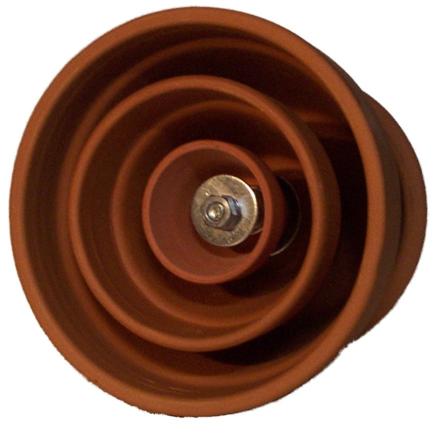
 We 3 sizable chicken coops – one of which came from Georgia with us – as well as a hog pen, and the beginning of a goat shed. We also have our garden needs and shed coming up within the month. All of those can benefit from electricity in the form of electric de-icers, incubators, security light, and a shed light. Armed with those needs we contacted our county Planning & Inspection Department to talk about agriculture power poles. If you don’t know what an ag power pole looks like take notice next time you pass a mobile or modular home. They are standalone poles that are attached by cable to a power pole with transformer. What we soon found out was that 42 feet away from where we thought our pole should go, there was a transformer; dormant, but present.
Read more