Sarana House

Sarana House is named after a word in Pali, an ancient Buddhist language, that means “safe place” or “refuge. It will be the ultimate refuge when moved from its current location in Los Angeles, where it’s being built, to its final home on a private 23 acre forest retreat, named Sarana Park, in Northern California.

The tiny house on a trailer is being built by Juko and Jerry, not only as a new home, but as a way to respond to the Great Recession. Following the foreclosure of their home in Santa Monica, the couple decided to downsize and live more simply. Their first tiny house, the Huling Halfway Hut, was featured in  a Tiny House Blog “Tiny House in a Landscape” post. During this time, Juko and Jerry became stewards of Sarana Park and wanted to make this new land a place for reflection, restoration, and transformation. They think of it as a “re-boot camp” – a place where their friends and guests can take some space to recharge, rest, and be inspired.

Sarana House is being built with as many reclaimed materials as possible. They are using reclaimed white pine from Ohio (Juko’s childhood home) and Pennsylvania; and Juko is building a larger kitchen by re-furbishing an IKEA freestanding kitchen. A long bench will be the focus of the dining room. It will be large enough for several people to sit or for one person to sleep. Bamboo flooring has been installed and  a stock door from Lowes has been cut down to fit the entrance.
Read more

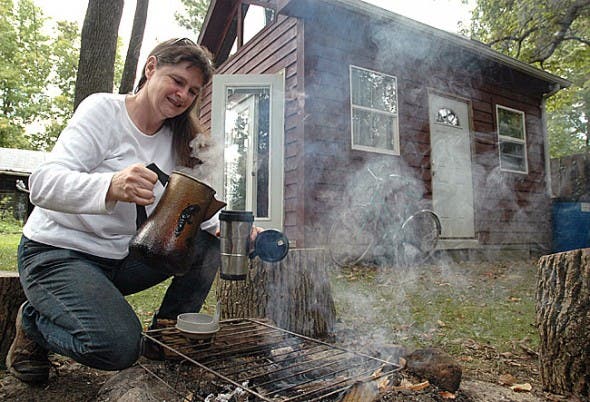
Ellen’s Tiny House

Ellen Dawson-Witt was recently featured in her local newspaper because of her tiny house and her downshifted life. Ellen’s 192 square foot house is located on her property in Yellow Springs, Ohio where she grows some of her own food and carries water from a well for washing, uses solar panels for a lamp, CD player and laptop and uses a composting toilet. She does her cooking on a gas range from 1934.

Dawson-Witt, a freelance editor and government contractor, has avoided television and fashion and wanted to live her life like that of Henry David Thoreau.

“I wanted to live deliberately and to not be on automatic pilot,” she said. “I wanted to be connected to the elements.”

However, she is not able to live in her tiny house full-time. The county in which the home is located does not allow full-time living in a home without indoor plumbing. She keeps another house close to her work.

Inside the tiny house, there are three chairs, one table, one desk, a kitchen cabinet from the 1920s, one bookcase, a loft with one bed and one small chest that contains an extra blanket. About 75 percent of all she owns fits in the tiny house. (Ironically, she has a whole shelf of books on voluntary simplicity, she said.) She has her clothes and a file drawer in her other house and her tools and camping gear in a nearby shed.

Dawson-Witt will be leading a seven-week discussion on sustainability at her tiny house. The sessions started on October 4, 2011. Her talks will cover simplicity, ecology, food, money and more for those who want to live more lightly on the earth.

Read more

Teardrops for MINIs

For those of us who want summer to go on for just a little bit longer, here are some tiny teardrop trailers that exemplify the ease of summer camping. MiniTears are beautifully designed and built by Kurt Bowden in Northern California for MINI Cooper enthusiasts and other small car owners. … Read more

The Cloud

Have you ever wanted to sleep on a cloud? If you are living in, or visiting the Bordeaux region of France, you can sleep (for free) in a tiny cloud house constructed by Zebra3 and the Bruit du frigo collective until October 31, 2011. Le Nuage, or The Cloud, can sleep up to seven people and is located by a lake in St. Catherine Park in Lormont, France.

The cumulous structure is built of wood and plexiglass and is part art, part practical living. The Cloud was created as a refuge from urban life and has an open living plan and integrated beds. There is no bathroom and cooking is done outside. Reservations can be made on The Cloud’s Facebook page.

Read more

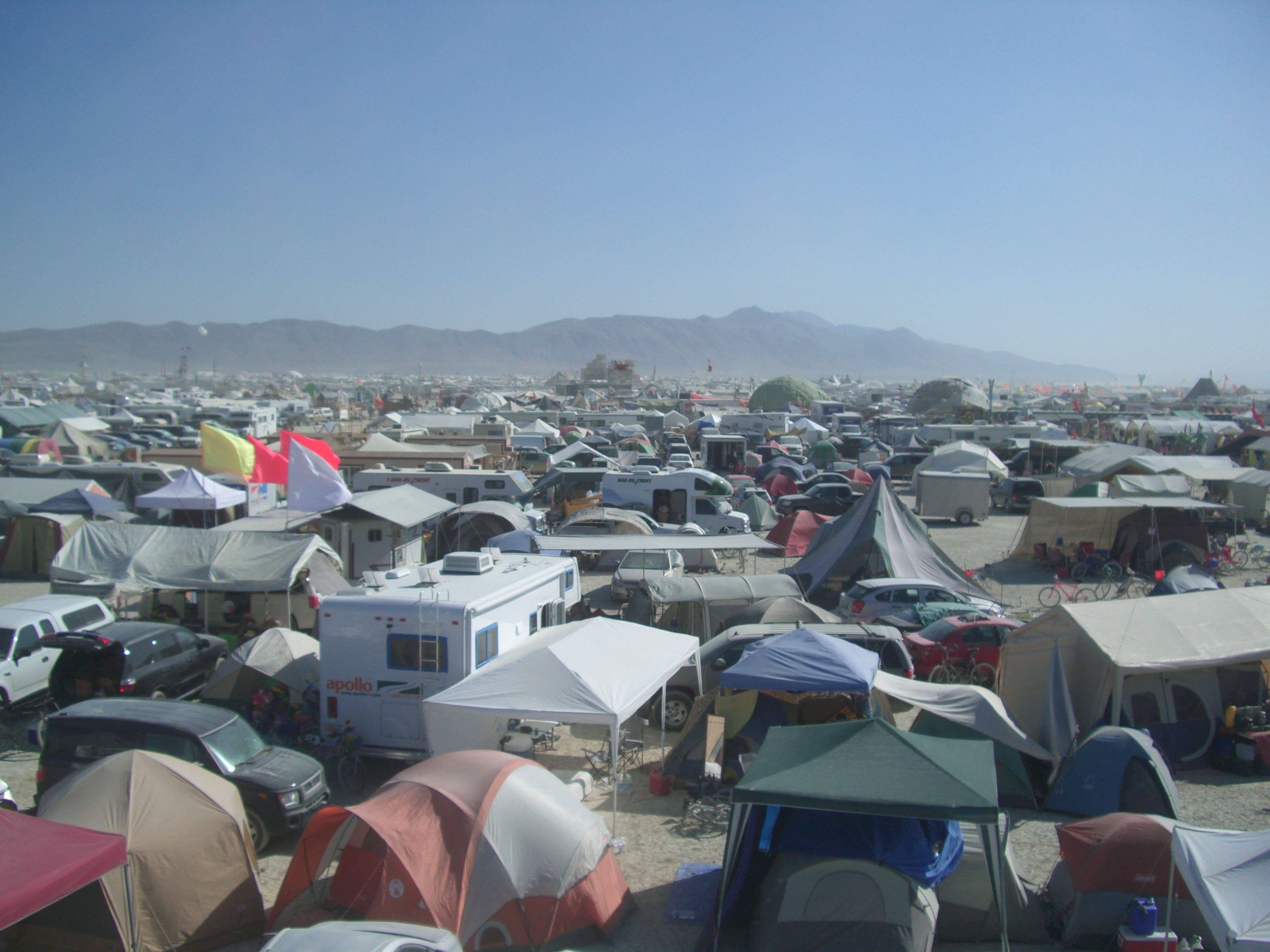
The Tiny Houses of Black Rock City: Rites of Passage

This year’s Burning Man was a rite of passage for two of our good friends who decided to come along with my husband and me to this popular event. It was their first time attending, and many of our discussions revolved around how impressed they were with the organization and creativity of the event…especially the building of Black Rock City. I agreed that the ingenuity of the camps and shelters that make up the city grows each year.

The art, the shows, the dancing, the fires and fireworks are all wonderful, but personally, my favorite part of Burning Man is visiting the camps and admiring the multitude of styles and designs of shelters. These shelters (most of them specific to Burning Man) are built to create shade from the blistering sun, as blocks against the wind that sweeps across the desert, and to protect Burners from the ubiquitous dust that gets over everything. Each year I’m in awe with how the artists transport these structures across the country and erect them in this stark desert, only to take them down again a week later.

This year the weather couldn’t have been better. The dust was minimal, the winds were mellow and the temperatures were fairly low. In fact, you needed a shelter warm enough for the very cold nights that affected most Burners this year. Here are a few of my favorite tiny houses of Black Rock City 2011.

Read more