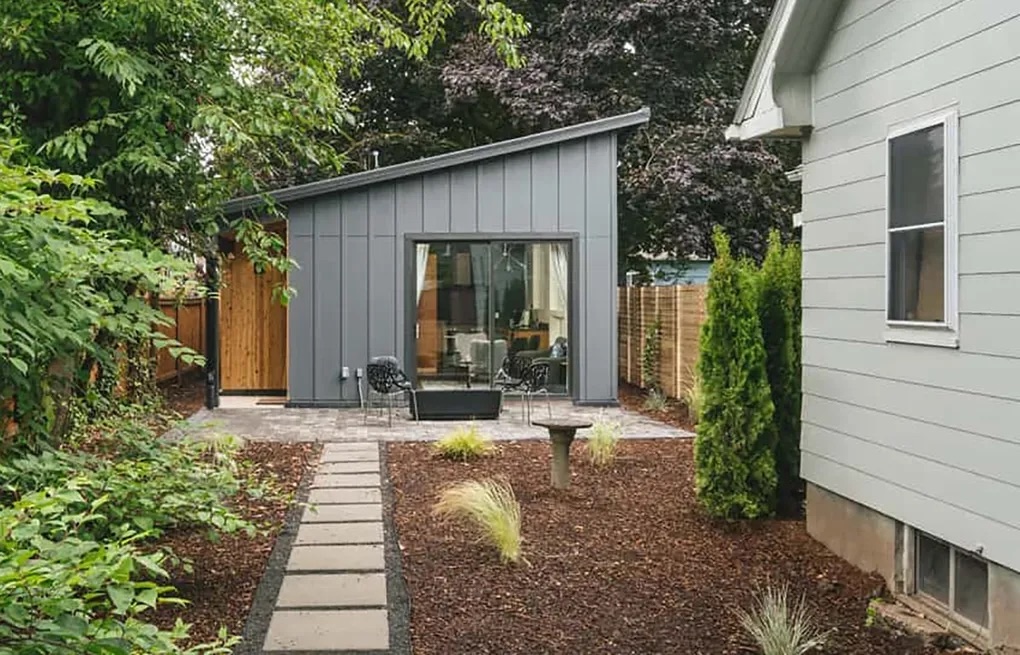
What if the answer isn’t bigger, but smaller?
We’ve been trained to think growth means expansion. More buildings. More roads. More sprawl.
But what if growth meant rethinking the space we already have?
Three-quarters of American residential land is locked up in single-family zoning. That’s not just policy—it’s culture. A belief. A story we tell ourselves about what home should look like.
And yet, quietly, something is changing.
Backyard cottages. Basement apartments. In-law suites. Small, smart spaces, tucked into places we forgot we had.
Accessory Dwelling Units aren’t a loophole. They’re a rethink. A gentle nudge toward density, without tearing down identity.
California gets it. So does Utah. Blue states. Red states. Cities with vision are rewriting their codes—and their future.
Because the real innovation isn’t in skyscrapers. It’s in turning the invisible into the possible.
You don’t have to bulldoze the neighborhood to build something better.
You just have to see what’s already there.
So the challenge:
What if you looked at your own backyard–and saw a solution?
Want to learn more about tiny houses?
A huge part of the problem is the paradigm of seeing houses first as investments to hold monetary value and having shelter be a secondary function. This leads to NIMBYism as no existing homeowner wants to risk jeopardizing their property values.