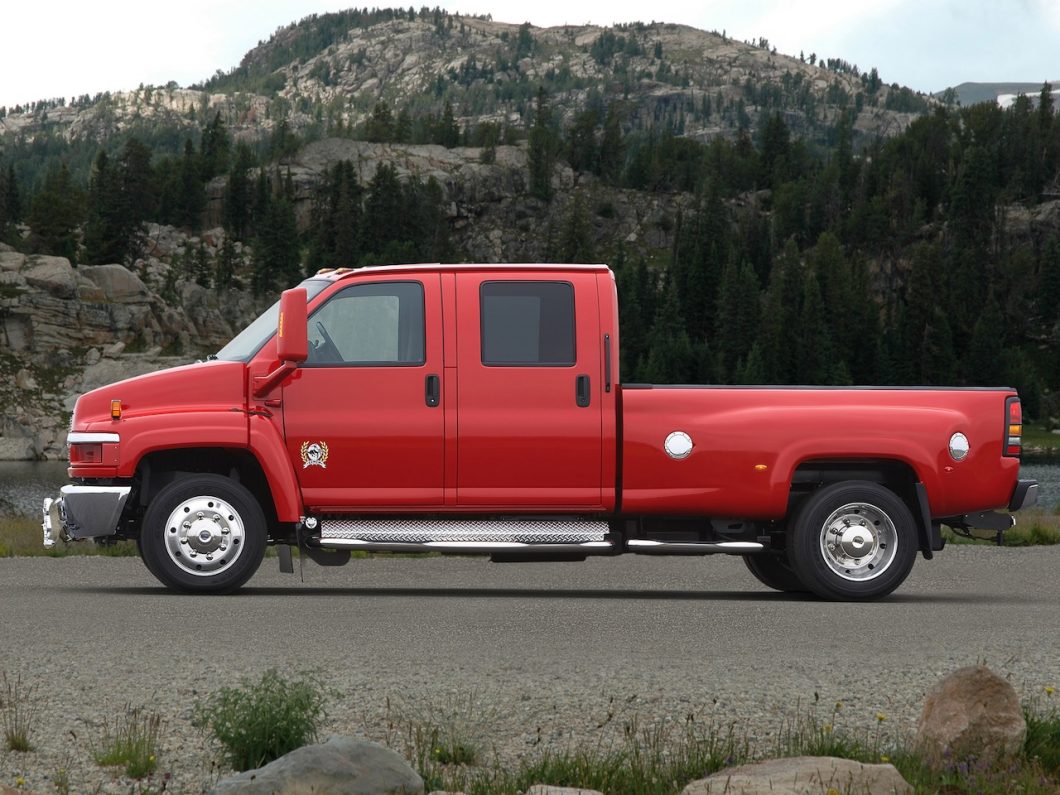
When building a tiny house trailer I think it is fair to say that many forget all about the need to tow it until a little later in the process (than I would recommend anyway). Choose the trailer is probably the top priority and then keep the weight manageable during the build is the second. But no matter whether your tiny house ends up weight under 5,000 pounds or over 10,000 a tow vehicle is necessary.
The image of Jay Shafer toting his little house on wheels around the country several years ago is permanently etched in the brains of so many. Problem is U-HAUL (his method of choice) has recently started welding bolts through the hitch of their bumpers so they cannot be used for towing. The other thought is to hire a professional shipper to move the tiny house. This doesn’t always end up so well though as uShip is only as good as the driver your budget can secure! So what is left? An SUV? A borrowed pick-up?
For many tiny housers, the choice of a tow vehicle need not be confusing with a little homework. Whether borrowed, purchased, or pulled from some junkyard uptown, there are several tow vehicles on the market today that can be used in conjunction with your trailer. Some of these vehicles can also be used for daily commuting, while some are designed exclusively for heavy-duty towing.
Let’s assume you are planning to buy though (new or used). What do you look for? What do you think about? What are some specifications you should be investigating? The following tips will prove helpful when comparing tow vehicles.
Know What You Need
Before hitting the showroom floor and picking out your new tow vehicle, there is some basic information essential to your choosing. Length, weight and height of your trailer, as well as what type of trailer brakes you’re tiny house is equipped with, are important details. This is information you need to know. If you are purchasing your tiny house from a builder be sure to work with him/her to iron out these details prior to a purchase agreement.
Be advised and make sure you do your homework on weight and weight ratings. There are several different measurements of weight which are present in this truck class including base curb weight, gross vehicle weight rating, gross combined weight, etc. so it’s important to understand these different ratings and keep them in mind when shopping.

Diesel Engines
More and more manufacturers are offering diesel engines in their trucks. And many tow vehicle purchasers are immediately
presented with the question “Should I buy a diesel? And if so, should I look at the Duramax, the Powerstroke, or something else altogether?” Here’s a quick look at the advantages of diesel engines.
On the outset diesels are cheaper to operate (even though more expensive at the actual gas pump), offering more miles to the gallon of fuel when compared to a gasoline engine. Diesel fans will argue that diesel engines typically last longer before an overhaul is needed. After talking to a number of diesel drivers it is fairly safe to assume that light duty diesel engines will easily run 300,000 miles before needing any sort of reconditioning or overhaul. Engines in heavy duty diesel trucks often exceed even these numbers by hundreds of thousands of miles. That is real economy!
Those who tow with a diesel engines (RV owners, horse trailer owners, and the like) claim diesel engines also pump out more torque at relatively low engine speeds. This allows for less engine friction and better fuel economy.
Understanding Gear Ratios
Understanding gear ratios is fairly difficult to the novice shopper. It’s important to have a basic knowledge of though should one opt to purchase one. The simple explanation of gear ration is as follows.
Engines turn in order to create horsepower. If the rear wheels of a vehicle were directly connected to the engine though the engine wouldn’t develop any real power because it would be limited to the turning of the engine. This is why gears are used. Rear end gears minimize speed and the gear ration listed on a truck specs indicates this reduction. For instance, a truck with a gear ratio of 4:10 means the engine turns 4.10 times as fast as the wheels; not even 1/2. So when actually shopping for a tow vehicle be sure to remember that high numerical ratio gives more tow power than that with a low numerical ratio.

Keep In Mind
Other important areas to consider when shopping for a tow vehicle include adequate brakes, suspension, transmission, engine, tires, and, towing capacity.
In fact, many vehicles must be equipped with special towing packages offered by the manufacturer in order to tow a trailer.
(NOTE: after-market tow brake systems are available if needed) Remember, some tiny house trailers can weigh in at about 10,000 pounds, so heavy-duty equipment is needed not only for hauling purposes, but for safety reasons as well. If you’re heading down a mountain with your house in tow you’re going to want sufficient braking power.
Tongue Weight
Tongue weight refers to the amount of the trailer’s weight that presses down on the trailer hitch (thereby manifesting itself in the “drag” of the truck bed). Too much tongue weight can cause suspension/drive train damage, and can press the vehicle down in the rear and causing the front wheels to lift to the point where traction, steering and even braking are severely decreased. As seen on too many highways too little tongue weight can slightly lift the rear of the vehicle, reducing rear-wheel traction and causing the trailer to fishtail or jacknife.
Tongue weight should be monitored as such.
- The tongue load should not exceed 200 pounds for a trailer weighing up to 2,000 pounds.
- If the trailer exceed 2,000 pounds, the tongue load should be between 10 and 15 percent of the trailer weight.
- For fifth wheel or gooseneck trailers the tongue load should average 25% of the trailer weight.
If you want to measure the actual tongue load you can disconnect the trailer and place only the tongue on a certified scale. You need the coupler to be at hitch ball height though so you will need to extend your hitch jack and possible use a raising block. Adjust your load from there so that the load is equally distributed over the axles.
So, just what categories of tow vehicles are there? Tow vehicles typically fall into one of four categories divided up by the weight they can pull.
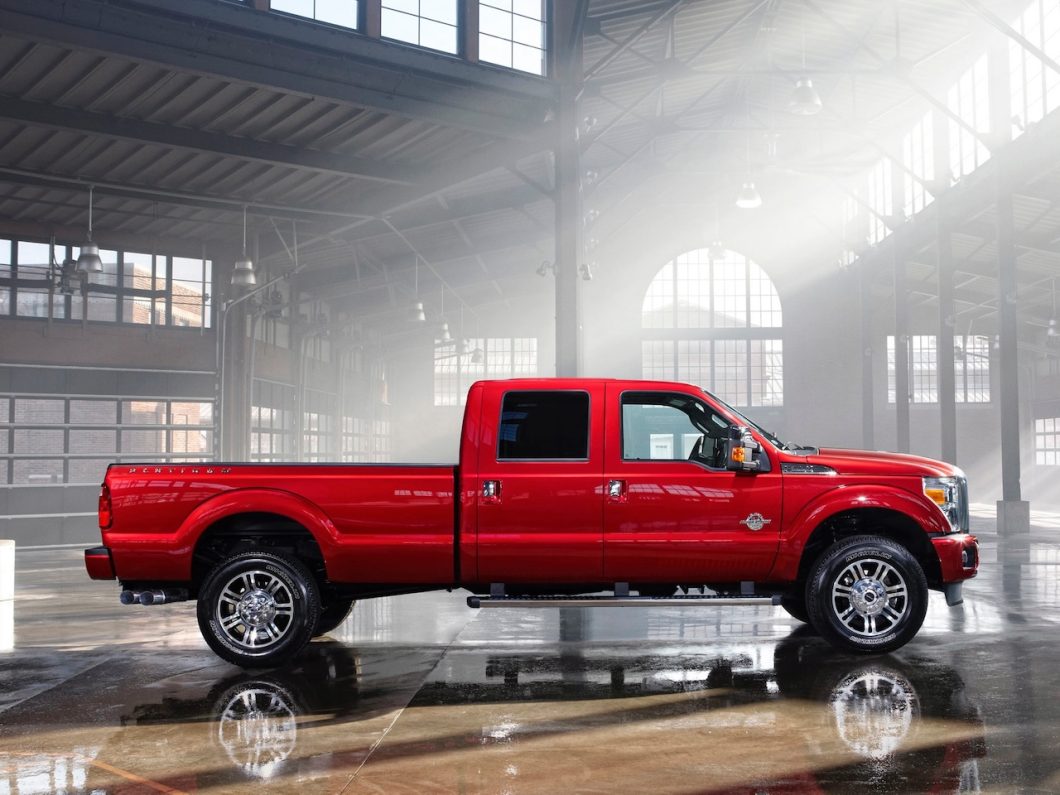
Light-To-Medium-Duty
- Includes several sedans, mini vans and light trucks that can tow trailers with weights up to 3,500 pounds gross
- Includes mostly single-axle trailers
- Vehicles in this category don’t just tow trailers but also make great daily drivers
- Includes SUVs like the Dodge Durango, trucks like the Ford F150, and crossovers like the Toyota RAV4
Medium-To-Heavy-Duty
- This category can be difficult as there is no exact weight but rather auto specifications. Gear ratio, engine and transmission all influence the towing capacity of the truck. So the same vehicle model with different engines and gear ratios can result at times in a difference of towing capacity by 3,000 pounds or better
- The medium-to-heavy-duty class of vehicle can typically tow 3,501-5,000 pounds (gross trailer weight)
- Includes tandem-axle or large single-axle trailers
- Examples include the Ford F250 and F350, and the Chevy 2500 and 3500
Extra-Heavy-Duty
- Capable of towing trailers with 5,001-10,000-pound gross weights
- This category includes larger trucks including those manufactured by Peterbilt and Volvo but do not exclude larger pickups in the “dually” style that are equipped for large towing
There is also an extra-heavy-duty class but should be entered into only by commercially trained drivers as the extra-heavy-duty vehicles are similar in style and drive to a “semi” or “big rig.”
As you can see, there is much to consider when purchasing a tow vehicle for your tiny house. So before you buy (if that is what you choose to do), make sure you know your trailer’s weight and take the time to shop around, asking as many questions as needed to ensure you get the tow vehicle that will best tow your trailer.
Written by Andrew Odom for Tiny House Magazine Issue 18
Great article! Choosing the right tow vehicle is crucial for tiny house owners. I appreciate the emphasis on understanding weight ratings and gear ratios. It’s easy to overlook these details, but they can make a huge difference in towing performance and safety. The tip about diesel engines lasting longer and offering better fuel economy is also valuable. I’ll definitely keep these factors in mind when selecting a tow vehicle for my tiny house.