
Cheap RV Living
Tramp, gypsy, vagabond, nomad. Do you want any of these words to describe you? Robert Wells has lived most of his life as a gypsy, vagabond and nomad in various forms of vans and RVs, and documents the tips and tricks he has learned over the years on his website Cheap RV Living. He offers some fun information from people who have taken the plunge and have become full-time nomads on the cheap.
His little “How-To Guide” focuses on how to live a cheaper, lighter existence while still being independent. He discusses van conversions, boondocking, workamping, financial freedom, traveling with pets and children, safety and cleanliness issues, how to choose a vehicle, overcoming your fears, living on a boat, homesteading and working while on the road. He also shows how living a life on a $500 to $1,000 a month budget is possible.
Some of his fellow nomads discuss how they took the leap:
On a fateful day in 2006, I was struck by an idea so powerful that I stood up from my desk, walked to the personnel department and resigned. I would sell my house, the extra cars, all that important “stuff” and live on a boat with my family, and travel the seas as a free man.
Captain Keith of the Kismet
After 22 years of working at the Post Office, I was tired of not being happy with my job or my life and knew I had to do something. I remembered those happy days traveling in the travel trailer and was sure I could be happy again. I already owned my 1983 VW Westphalia, so it was the obvious choice when I decided to downsize. I wasn’t sure exactly how I would do it, or how long I could stand living in a van, but I knew it had to be better than the life I was living. I am delighted to say it has been 2 years now and I have no desire to go back to a more conventional life.
Barb Cotton
Photos courtesy of Cheap RV Living
By Christina Nellemann for the [Tiny House Blog]
Sausalito Floating Homes
If you love houseboats or floating homes, you may want to make a walking tour of the famous Sausalito Floating Homes part of your next trip to the San Francisco Bay area. I thought I would profile these particular floating homes because the community is maintained by homeowners and individuals rather than city officials. This makes this waterside neighborhood unique in that the designs of these homes, that are docked in Richardson Bay, are up to the owners.
The famous Sausalito floating homes community has a history that stretches over a century. During the 1950s, ’60s and ’70s improvised floating homes made from scrap wood, old tugboats, elegant ships and even old Pullman cars were built by professional artists, and since the dock areas were so small, most of the floating homes stayed small. Some of these homes are now offered as vacation rentals and there are usually a few for sale. Some of the homes have names including the Taj Mahal, the Train Wreck and the Pirate. Continue Reading »
Trawlers
With summer on the way, the tiny house dream of some people might take the form of a boat. Instead of a sailboat or other sleek sailing craft, a trawler has all the amenities in a tough little package – with a loyal following.
A trawler or pilot house is a usually a boat used for fishing or for the military and the police, but pleasure versions of the them are built as well that have comfortable areas for living and cooking. These boats are called cruising trawlers or trawler yachts and they come in many styles and sizes. Since they don’t have a sail, they rely on fuel and have cruising speeds of around 14-20 knots.
Typical designs of trawlers include a raised pilothouse or offset deckhouse and a “portuguese bridge” which consists of a walkway behind the foredeck, in front and to the sides of, the pilothouse windows, separated from the foredeck by a (generally) waist-high bulwark. The purpose of the bridge is to deflect water from the foredeck up over the superstructure top rather than slamming against the forward windows of the pilothouse. It gives a semi-sheltered area outside the pilothouse while underway. A secondary benefit is that it provides a “safe area” or handhold when it is necessary to be on the foredeck in inclement weather. Continue Reading »
Water and Septic Systems Can Be Tricky in a Little House
Part I – Deciding on a Water System that Best Suits Your Needs
By Kerri Fivecoat-Campbell
Water systems and sewage disposal can be a tricky thing when you are building a tiny house in the country.
This has been an issue for us since we built our Little House over six years ago. First, we had to decide on the water system. During construction, we were running out of funds, so we first had a huge tank system and water was trucked in. That was expensive at $140 a load, (I’m not sure of the tank size, but it was huge). However, when we didn’t live here full time, it worked. I think we typically had to buy 2-4 tanks per year.

Photo Credit Kevin Pieper (Mother Earth News)
After we moved here full time, it just wasn’t economical. Even with trying to conserve water, we went through 1 tank every 2-4 weeks. Continue Reading »
Tiny House in a Landscape
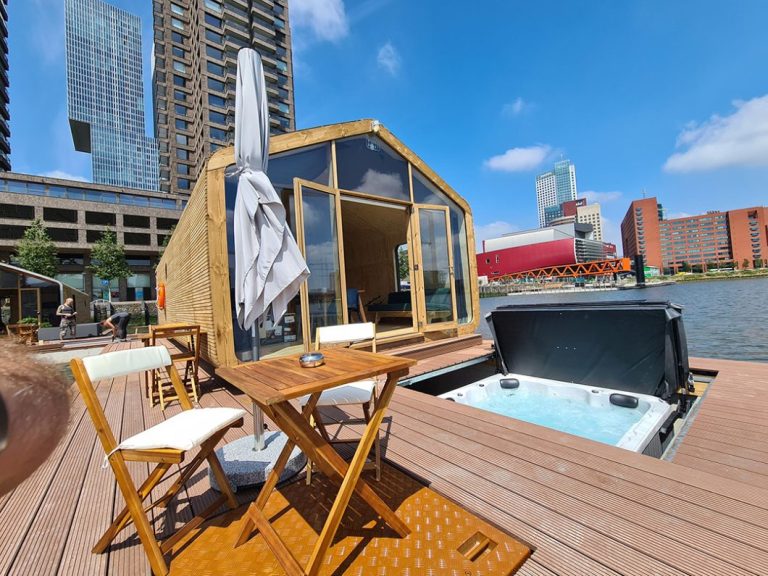
I am a sucker for aged wood on old houses and this one is on the water and the lighting could not be better, to show off the colors.
Unfortunately, I don’t know who the photographer is or where this picture was taken as one of our readers emailed the picture to me and didn’t know either.
So if any of you can track that information down, please let me know through the comment section below. I’ll than update the post so we all know. Enjoy!
Living on a Boat
I’m sure many people like me have had the romantic dream of living aboard a boat: being rocked to sleep by gentle waves and waking up to new neighbors in the marina, chatting with friends over drinks in your cockpit while cooking a freshly caught fish on a tiny stove. Having your home on the water can be both extremely rewarding and more work than you ever thought.
People who live on boats are probably the top experts on how to live in a small space and how to conserve limited water and power.
Living on a boat does take some adjustments to the way that you would live in a house. Space is a major factor when living on a boat and every inch needs to be used effectively. While most boats are built with an eye on efficient storage, you will have to downsize your possessions quite a bit to get things to pack neatly into the boat.
Life Lessons: Moving onto a Boat
Living on a boat is also different from living in a small house. Water and weather is a constant threat to the integrity of your home and your comfort. While many newer boats have everything you need for comfort, some older, less expensive boats may need constant upkeep and maintenance. The ability to know your boat inside and out, and be able to make repairs yourself can save you big headaches and bills.
Once you do have a boat, if you are not cruising, you will need to find a marina or dock you can rent or buy. Prices for docks vary for different areas. They are usually priced by the foot or the yard. However, not all marinas are liveaboard friendly. Many marinas consider someone who lives on their boat as a transient. On the other hand, you can find a few marinas that offer showers, storage, laundry facilities, electricity and cable TV to liveaboards.
If you are able to create your own power (many boats come with solar panels), haul your own water and wastewater and be as self-sufficient as possible, you may be able to live very cheaply on anchor or on a mooring ball.
Dock Search is a database of docks and marinas around the world for rent and for sale. Some offer liveaboard options. Marinas.com shows aerial and map views of marinas around the world.
Mark Nicholas, who lives on a sailboat, has written the book, The Essentials of Living Aboard A Boat, and also has some interviews with liveaboards that are available as video podcasts. His blog also has loads of information and links about how to be a successful liveaboard.
I found some additional excellent blogs, videos and websites about living aboard a boat and each covers the issues of space, boat problems and maintenance, cruising, cooking and docking.
Living On A Boat: One Woman’s Transition to Living Onboard A Boat
Toast Floats: A Family of Five Living on a Catamaran
Sleeping with Oars: Living on a 47 foot Hans Christian Traditional
We Live On a Boat: Family of Four Living on a 40 foot River Queen
On the Boat Where She Lives
Hillary Johnson is a writer who lives on her 35 foot sloop, Surprise in Ventura County, Calif.
So You Want to Buy a Boat: Liveaboards in the UK
Bumfuzzle
Although they no longer live on their boat, Bumfuzzle, Patrick and Ali Schulte have an excellent blog about their travels aboard the 35 foot catamaran.
They now live and travel happily in their VW panel van. But that’s another story.
If you enjoyed this post, subscribe to our feed


