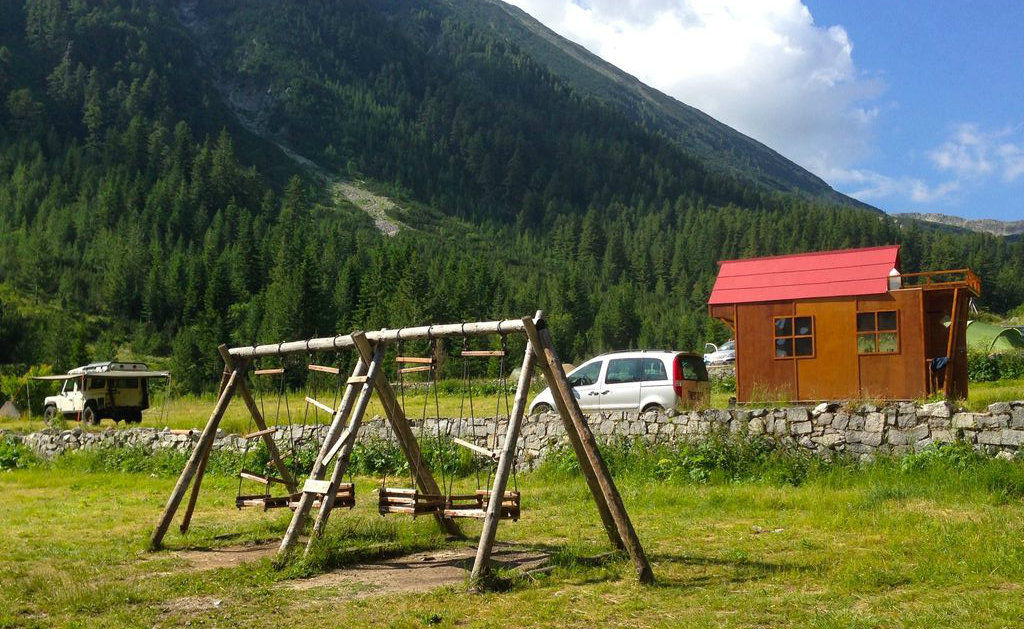
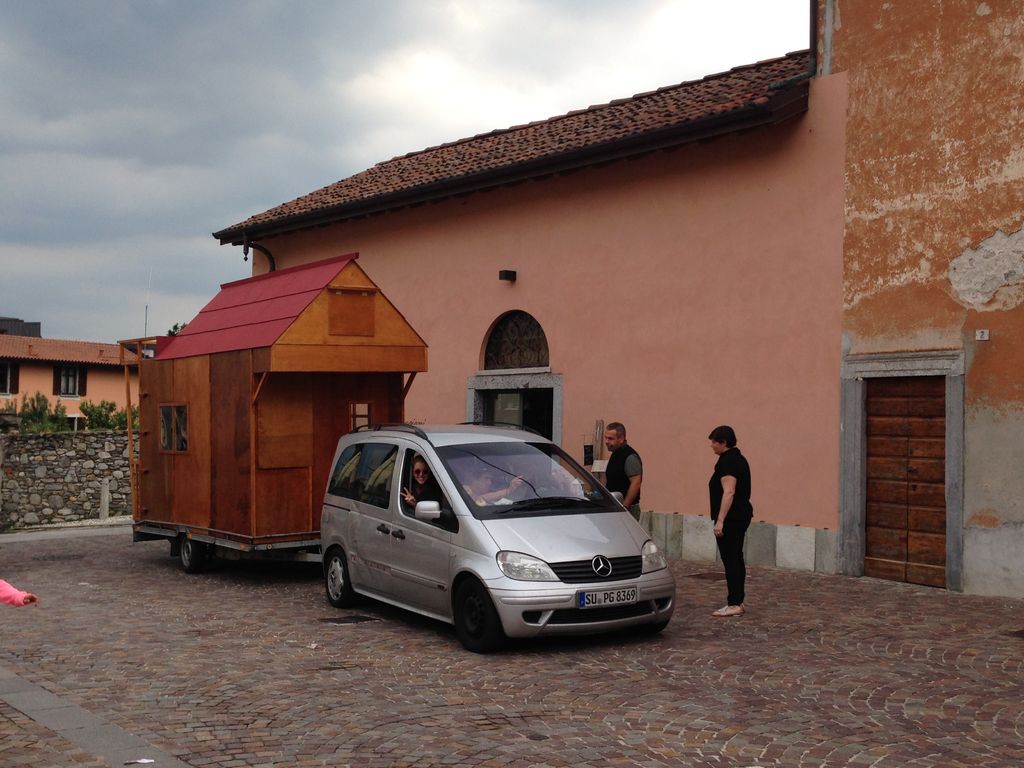
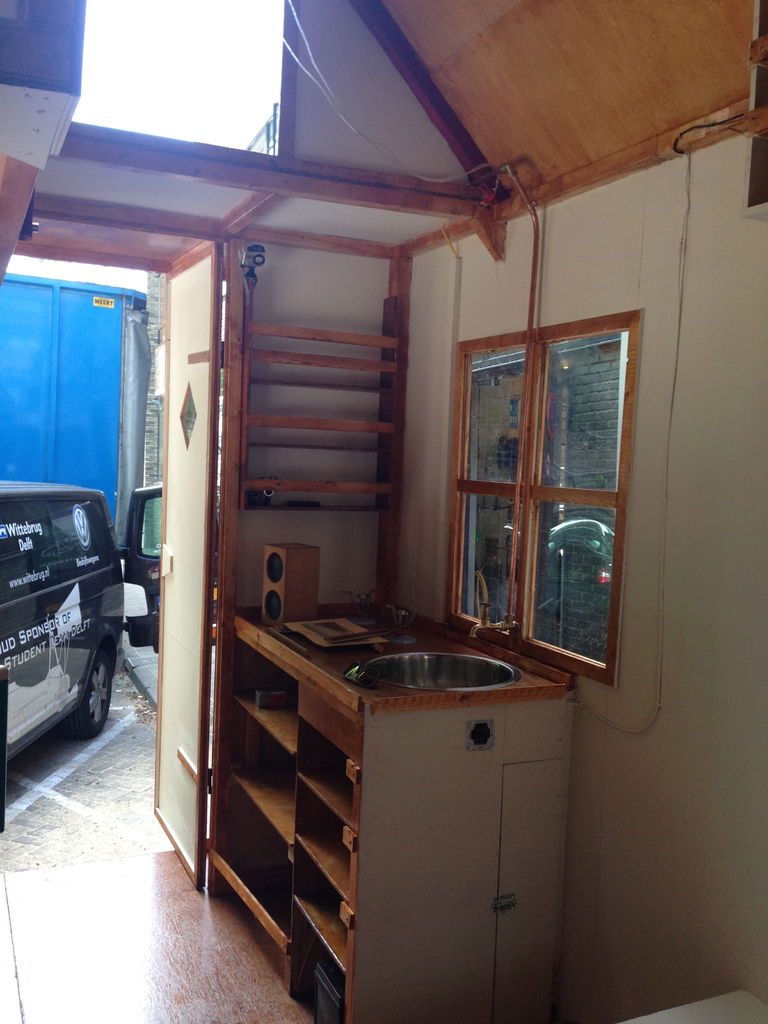
This ultra light and mobile tiny house was built by several engineers and scientists in Delft, Holland and then towed through several European countries on its way to Turkey. Stefan, Michelle and James only spent about 75 hours building their traveling companion on wheels and the build process can be seen on YouTube.
Europe
Eagle Log Cabins
Eagle Log Cabins seems to have more cabin designs than you can shake a stick at. The company, which has been in the cabin manufacturing business for 75 year, builds and sells their various cabin designs in both Europe and the U.S. and will deliver and install their buildings anywhere in North America.
The company sells larger residential cabins, but their smaller collections including the Cabana, Alpine, Sequoia, Clockhouse and the beautiful Peace Pod are making waves. The company even have their tiny Trailer Cabin on wheels that made its debut at the Portland Home and Garden Show. Eagle Log Cabins sells cabins from nine to over 20 feet wide in various configurations including backyard offices, personal sanctuaries and custom designs.
Tiny House UK
The burgeoning tiny house on wheels movement has officially made its way over the pond in style. Mark Burton’s Tiny House UK company in Surrey is creating spacious, modern and beautiful designs that he is currently marketing to the United Kingdom which is also suffering from a housing crisis. One … Read more
Fab Lab House
A house designed to act like a tree has recently won the Solar Decathlon Europe people’s choice award. The Fab Lab House, created by the Institute for Advanced Architecture of Catalonia (IAAC) was visited by over 20,000 people during the event in Madrid, Spain. The Fab Lab House uses the sun, water and wind to create a micro climate that passively optimizes the basic conditions of habitability within the home.
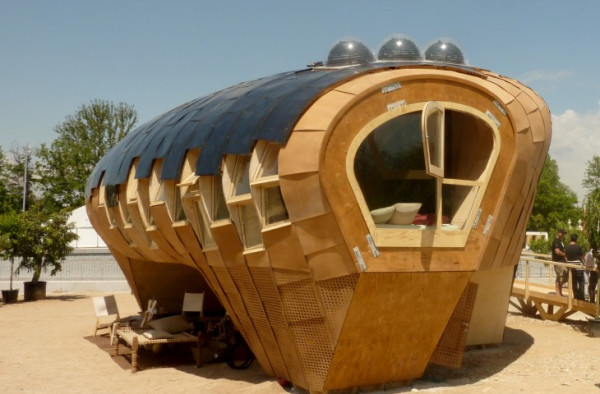
The house was designed to act like a tree that captures energy with its solar “leaves” and sends it down to its roots, where is stored, shared, or returned to the house to produce the fruit of electricity. The house contains a “domestic metabolism” that provides a detailed real-time monitoring of its behavior and its interaction with the environment, creating historical profiles and sharing them socially.
The design of the Fab Lab house has been compared to both a boat and a peanut and has been called a “cinnamon submarine,” “forest zeppelin” and a “whale belly”. The house has also introduced significant technological innovations such as the world’s most efficient flexible solar panels, made with both Spanish and American technology. The project involved architects and experts from 20 countries as well as experts from MIT.
Rintala Eggertsson Architects
This architectural and design firm in Oslo, Norway has designed everything from bridges to nature observation towers, from swinging platforms to art pieces that release wooden birds or are set on fire. However, Rintala Eggertsson Architects have also designed a few tiny houses…or potential tiny houses.
Sami Rintala and Dagur Eggertsson’s work has been featured all over the world and they pride themselves on designing with a balance between man and nature. Many of their designs incorporate nature as a major element, but also have a modern, industrial feel to them. Their tiny homes in Norway, Italy and Thailand use nature as part of the design.
Shelter House
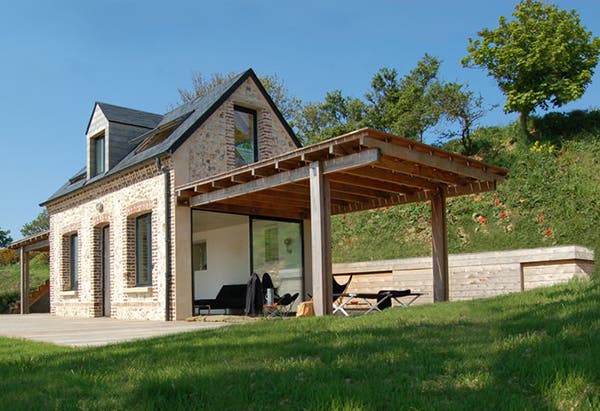
While this eco-friendly and beautiful home is not really tiny, elements of the interesting “wing” design can be taken into consideration for a tiny house design. The Shelter House by Franklin Azzi Architecture is located in Yport, near Normandy, France. The two expansions which protrude on opposite sides of the house, resemble wings with covered patios and rooftop terraces.
This modern, sustainable home is constructed mainly of wood with a rustic masonry face, and features a rainwater-recycling system, geothermal energy, and solar panels that keep this house off the grid. The building materials are recyclable and locally sourced from within 100 km of the home’s location, and then assembled on-site. Vegetable fibers are used for walls and insulation, heating comes via wood-burning stove, and cooling and ventilation are passive. In addition, all the equipment providing hot water facilities have been placed outside the home, in a gallery 30 meters long, which is dug into the hillside. A final system supplies the toilets from the recovery of rainwater, stored in a 200 liter underground tank.