Tiny Arizona Casita
When architect Lila Cohen and designer Teina Manu purchased a lot with a bungalow in Arizona, they decided not to live in the bungalow, but to make it their architectural office. Their home then became the 450 square foot shed at the back of the property. According to Lila and Teina, the shed was most likely built around 1916 and they wanted to retain the original style by re-purposing many of the items and materials found in the little structure.
Manu, who is a designer who creates custom furniture, wanted the home to be eco-friendly as well.
“Little and low-priced to me is green,” he said to Arizona Central.
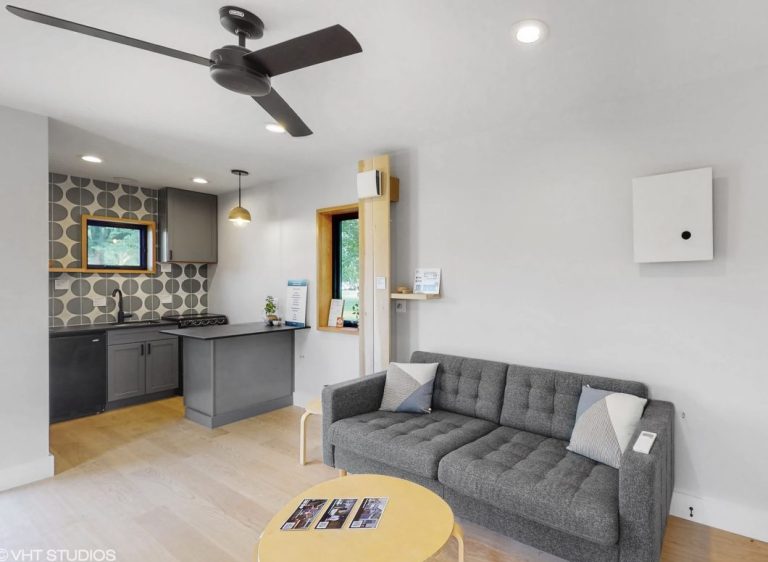
The tiny house contains a small kitchen/dining area, a living room, one bedroom with a walk-in closet and a bathroom with a sunken tub. From the front door of the house, every room is visible except the bathroom. A full size washer and dryer are inside a closet and a tiny office area utilizes a vintage sewing-machine cabinet as a desk. In the kitchen the appliances are smaller than average and the eating area is a steel breakfast bar. The couple had a stove custom made and they use Japanese shoji screens to separate the bedroom and living/cooking area. In fact, every door in the house is a sliding screen door. Continue Reading »
A Tiny House for College Students
Nearly 85% of college graduates move back home after they finish school. George Hemminger, who runs the YouTube channel Survive and Thrive in the New Economy, has a small solution for these “boomerang kids”: build a tiny house.
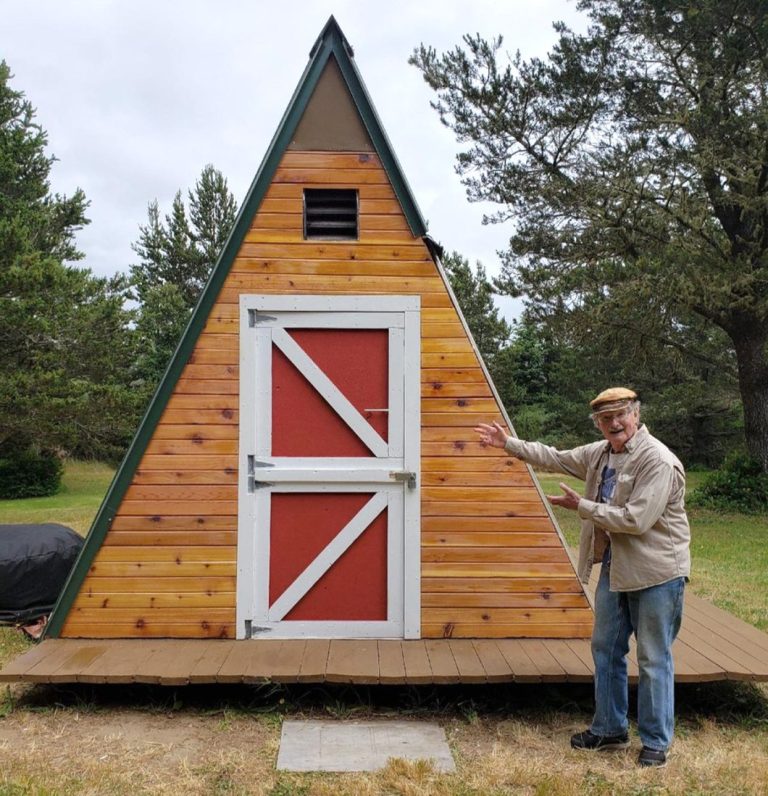
George built a small house, inspired by storage sheds he had seen at Home Depot and Lowes, for only $1,200. It is partially off the grid and the windows were about $100 each. He used styrofoam insulation and basic off-the-rack supplies. He feels that most young people out of college can build what is essentially a box in a backyard and live cheaply while getting their first jobs and paying off school debt.
George has other videos on issues facing the traditional American including unemployment, the economy, suburban flight and living off-grid.
Sick of Living at Home? Build a Small House.
Photo and video courtesy of Survive and Thrive in the New Economy
By Christina Nellemann for the [Tiny House Blog]
Backyard Box
These small, well-designed little backyard houses are actually much better looking and more detail oriented than a basic box, without forsaking the modern, prefab style. Backyard Box, a company based in Seattle, designs and builds small prefab houses that can be used in many ways: as a rental income property, guest house, home office, mother-in-law apartment or a tiny house.
The smallest design is the MatchBox, a studio that packs a kitchen, living room and bath into 400 square feet. It can fit into a lot that is 17 by 27 feet and starts at $79,500. A larger design is the SandBox, a one story backyard cottage with kitchen, living room, bathroom and one bedroom. It is 600 square feet and is designed for simple and minimalist living on one level, and will fit on most city lots at just 17 by 37 feet. The SandBox starts at $86,500. Each of these houses are custom architect-designed and you can choose from three finish levels. Continue Reading »
Cabana Village Kits
Last year I did a small post on Cabana Village Garden Buildings, and since then their tiny cabin kit gallery has grown. I thought the Tiny House readers would get a kick out of some of Cabana Village’s latest designs. Their website also features an interactive design center so you can customize your cabin kit.
Cabana Village builds cabin kits and cottage bunkies to be used as weekenders, lakeside cottages, starter cabins or backyard retreats. They also build pool houses, sheds, garden studios and garage kits. The cabins, cottages and bunkies feature cedar doors, windows and trim and are available in cedar or maintenance-free Canexel siding. All their cabanas have 1/2″ plywood roof sheathing and 2×4 SPF framing. With their sturdy construction and use of quality materials, extensive pre-fabrication, ease of assembly, and attractive design, their possible uses are only limited by your imagination. Continue Reading »
Sheep Wagons
While living in an area populated by people from the Basque region, some residents around the Reno/Lake Tahoe area will sometimes catch a glimpse of a sheepherder, his sheep and his home in the high desert: a small trailer or sheep wagon.
My post on the gypsy caravans was popular, so I thought I would do a post on the classic (and contemporary) sheep wagon.
Sheep wagons are usually about 7 to 8 feet wide and about 12 to 16 feet long. Inside the wagon is usually room for one bed or bunks, a small stove, sink and cooking area, storage for clothes and an eating area. Most sheep wagons do not have bathrooms or showers.
Sheep wagons are more of an American West style and the gypsy caravan is more of a European style. The sheep wagon has a curved roof supported by hoops and looks more like a covered wagon. The roof can be made from heavy duty cloth or wood. I have even seen a few with tin or corregated metal roofs.
Several companies in the U.S. convert old wagons or build new wagons for vacation homes and retreats or backyard offices and country cabins. There are also a few books with great photos and information on sheep wagons including Portable Houses by Irene Rawlings and Mary Abel and Retreats by G. Lawson Drinkard III.
Stay in a Shepherd’s Wagon in Point Reyes
Story from Mother Earth News on living in a sheep wagon
If you enjoyed this post, subscribe to our feed
WoodManor Playhouses
Children are lucky in many ways, but I just found a group of tiny play houses that make them even luckier.
WoodManor Playhouses offers plans, pre-cut kits and fully built playhouses for about 13 different styles ranging from Queen Anne to Condo. The largest is around 23 ft wide, 13 feet long and 14 feet high. What I liked about these homes were the details that were put into the interior which includes inside walls and staircases.
I thought these were some of the most beautiful playhouses I have ever seen. Maybe a tiny house enthusiast can take one of these samples and make it just a little bit larger for an adult.


Modern-Shed
The Studio Shed by Modern-Shed was recently featured in Dwell magazine and I was impressed that these stylish dwellings with their clean lines and Japanese design do not look like your typical backyard shed.
Modern-Shed is simply about storage, fun, space, architecture in your backyard. It gives you the chance to have an office away from home, a small art studio, guest or rental quarters, or to free up room in the garage.


The Modern Shed buildings are available in five styles: Basic, Studio, Designer, Dwelling and Play. The goal for all Modern-Shed sheds is to be able to be assembled quickly and with few tools. All models are packed flat with all the panels pre-built and finished. The Studio Shed comes with pre-insulated walls and roof panels.
For tiny house lovers who want a little more space, the Dwelling Shed may be what you are looking for. The Dwelling Shed comes in multiple configurations, is shipped with pre-painted parts, insulation in the roof, walls and floor, tongue and groove wood ceiling, and a metal roof. However, the kitchen and bathroom fixtures are not included and the plumbing and electrical will need to be installed on site.
Modern-Shed builds their sheds under one roof, which cuts down on waste and travel time and fuel. The company purchases their supplies from local manufacturers in the Seattle area. They also offer a variety of exterior and interior materials and colors and some eco-friendly options such as:
- Denim wall insulation
- Cork floor tiles
- Linoleum Floor Tiles
- Tex Decking
- Structurally Insulated panels (SIPS)
- Sustainable wood
- Green roofs
The Dwelling Shed starts at $39,900 for the 475 square foot model and $69,900 for the 750 square foot model. Each model comes with exterior french doors and wall-mounted sliding interior doors.
Re-visit their site for upcoming photos and information on the very cool looking Designer Shed.


If you enjoyed this post, subscribe to our feed