Whether you’re letting a builder build your tiny home or building it yourself, chances are your beloved house will need to be moved at least once. Seeing your house barreling down the freeway at 60 mph is unnerving. But this guide will ease your mind and will also help you tow safely and legally.

1. Know your Trailer
Your trailer is the foundation of your home. It’s important to know that your trailer can acclimate the weight of your tiny house and all of your belongings inside. There are a few key terms you should know about your trailer before planning on your first tow:
Gross Trailer Weight
This is the weight of your tiny house on wheels, including all of your possessions inside of it. This includes your appliances, mattress, silverware, the whole shebang.
Gross Trailer Weight Rating (GTWR)
This is the total weight your trailer can safely and legally handle. You calculate by adding the weight capacity of your axels together. If you have two axels rated at 5,000 lb. each, then your GTWR is 10,000 lb.
Tongue Weight
This is the amount of weight that is bearing down on your truck from the front of the trailer. On a ball and hitch trailer this measurement needs to be between 10 to 15 percent of your total weight. Gooseneck trailers are more forgiving, you can put 15 to 30 percent of the total weight of the trailer on the hitch.
Not sure how to find your tongue weight or if it’s safe for your trailer? We created a tool to help you easily find your tongue weight and make sure it’s safe for your tiny house.
Be careful when building your house to stay within the safe range for the tongue of your trailer. If you don’t you may have to modify your house or add another axel to stay in range. It’s a lot easier to add weight to the tongue than it is to take weight off.
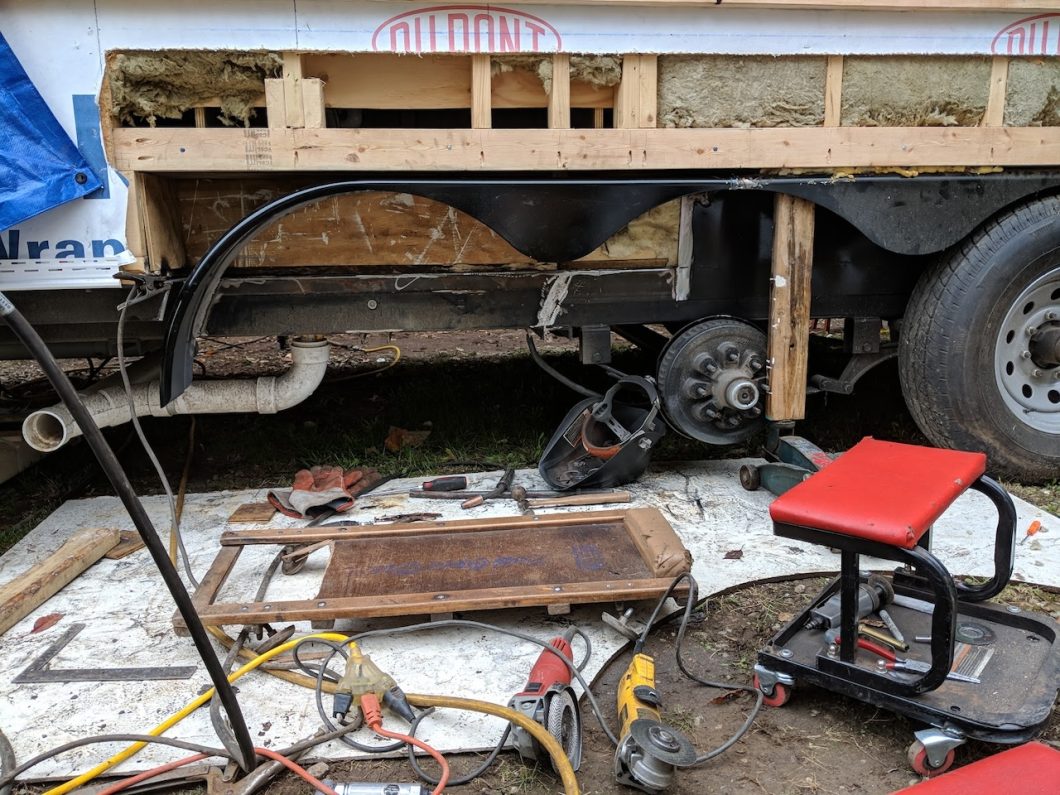
We were willfully ignorant of this advice and it cost us. We needed to add a third axel to our house to bring our tongue weight down from 22 percent. Any seasoned mechanic or professional hauler will tell you 22 percent of 14,000 lb. is a hefty load even for the biggest of dually trucks.
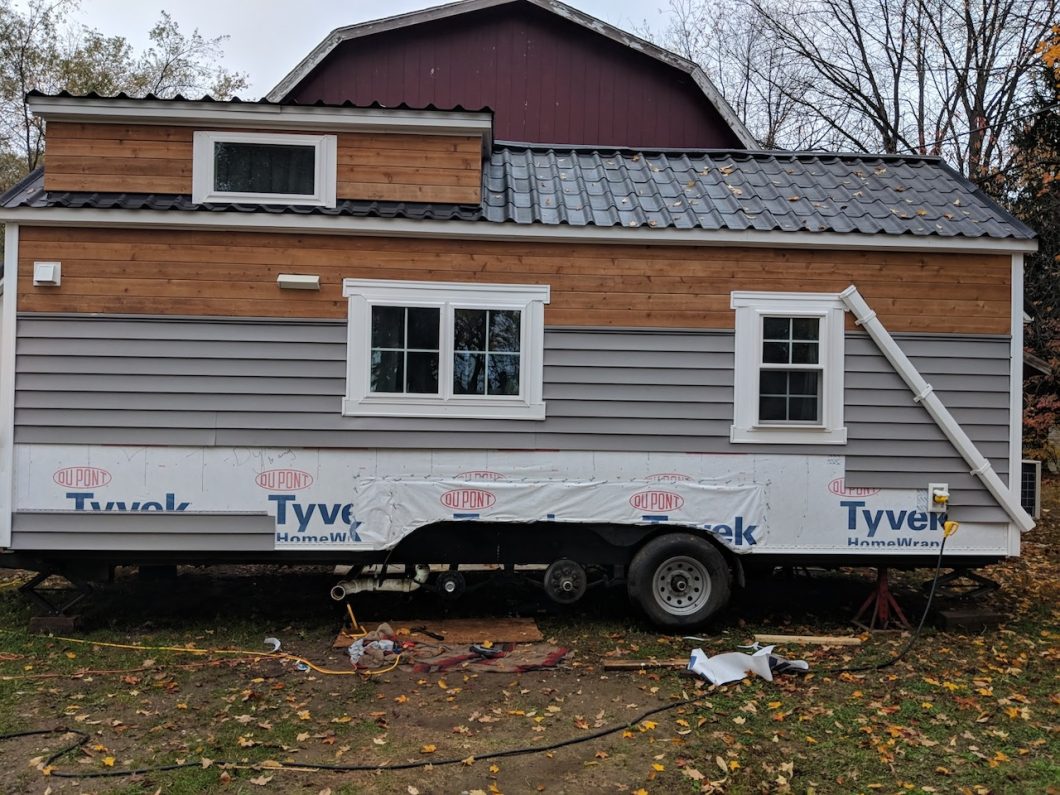
As a result, we had to gut our kitchen sink plumbing and replace our fridge with a smaller one to make room for the bigger wheel well. In total it cost us another eight weeks of construction and another $1,500 when it was all said and done. But the benefits were immediate. Our house now levels itself without needing to mess with the front jack. Our first tow was 900 miles and we arrived without a hitch (no pun intended).

2. Know your Truck
Should I hire a professional tow truck driver or buy my own truck?
Of course, it all depends. But we have moved our tiny house three times in the past three months and we don’t own our own truck. We calculated that if we were to move cross country in a year, we’d still end up paying a third of the upfront cost of buying the full ton truck we’d need to tow our house.
In our case, hiring a owner-operator tower to tow our house for us. If you’re moving very frequently with your tiny house, you may want to consider buying your own truck. To help make an educated decision, use our trip planner to figure out how much it would cost to tow your tiny house on one or multiple trips with an owner/operator.
When it comes to vehicles there are a few key specifications you should know:
Gross Combined Vehicle Weight Rating (GCVWR)
This is the total weight the vehicle can support, including the tongue weight of the trailer. Note: you’re only calculating the tongue weight of your trailer, because that’s the only weight that’s actually being applied to your truck.
Towing Capacity
This is the ultimate towing capacity of your truck. You should consult your manufacturer’s specifications for this number. But remember to read the fine print. A stock F-350’s towing capacity may be very different than the towing capacity number listed on their website.
Tiny Houses are similar to RVs in many ways, except for the building materials that go into them. For example, our 24’ tiny house on wheels weighs roughly the same as of our neighbor’s 39’ fifth wheel travel trailer. Using conventional building materials like wood studs, double paned windows and full appliances like washer/dryer combos quickly add up weight in your tiny house.
Depending on the weight of your tiny house, the truck needed to tow it may end up costing more than your house itself!
Looking to find a truck to tow your house? Use our tiny house worthy truck finding tool to find the trucks that can handle your home.
Also keep in mind that trucks require maintenance and care. If you’re towing your house frequently, expect accelerated wear and tear on your truck. Any time your truck spends in the shop means you can’t tow your house.
3. Know the Laws
Whether or not you plan on towing your own house, you will need to know at what point whoever is driving the towing truck will require a Commercial Drivers License (CDL) to legally tow your house. To make matters more complicated, there are three different types of CDL licenses. One may or may not cover your tiny house and truck.
In general here are the rules you need to know:
- If the weight of your house and your truck is greater than 26,000 lb.
- OR if the weight of your house by itself is over 10,000 lb.
If either of these specifications are exceeded, then you must obtain a CDL to drive your house.
In addition, regardless of if your house and truck fall under the CDL limits your house must be:
- Less than or equal to 13’ 6” tall
- Less than or equal to 8’ 6” wide
Also, we need to mention that these laws vary state to state. You should check your state’s DOT rules to know for certain you’re towing legally. Don’t forget, if your tiny house is being towed across multiple states, you need to know the regulations of each. You may require an oversized permit for some states.
What’s the worst that could happen if I don’t follow these rules?
DOT officials are starting to catch onto the weight of tiny houses. Not only could they slap you with a fine, they could also force you to park until a legal tower can tow your house. This is a tower’s chance to charge you a premium because you’re in a stuck situation.
And that’s just the legal risks. Most of the time the dangers of towing unsafely aren’t because your truck can’t tow the load, it’s the danger of your truck not being able to stop the load.
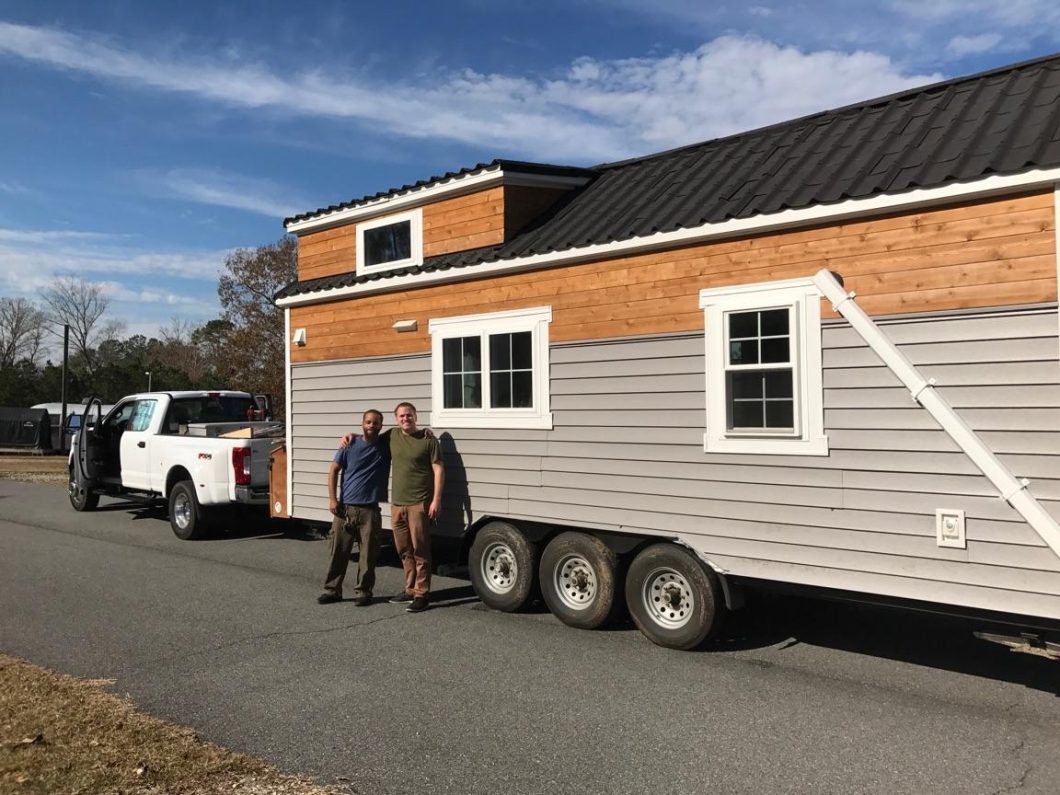
4. Know your Tiny House Tower
So you’ve decided that you’d like to keep your commuter car and hire a professional to tow your house. Smart move. Unless you’re moving your house across the country twice a year, chances are you’ll save money and hassle owning a large diesel truck.
Things to know while shopping for a tower to haul your precious cargo:
- Verify that they are “Insured and Bonded”
- Do not take just “yes I’m insured” as an answer!
- You should get a certificate that states you’re covered under the towing company’s insurance
- Ask for evidence of the Appropriate License and DOT Registration
- Specifically ask which CDL class license they have
- Call the DOT with the DOT license number the tower gave you and verify that the number belongs to them and is still valid.
- Tower should have prior experience with towing tiny houses. Tiny Houses are not RVs. They’re usually double the weight, and driving through changing terrain like mountains can be especially challenging.
What’s the worst that could happen if the tower isn’t operating 100 percent legally? An unlicensed tower has no incentive to continue to tow your trailer if something goes wrong. In the industry we call this a “cut and tow”. This happens when the load in tow gets into an accident or otherwise gets damaged.
And uninsured and unlicensed hauler is on the hook to be sued or worse. Sometimes the hauler realizes this and instead of trying to settle after the tow, they will cut your license plate off of their load and run from the scene.
There’s a lot of knowing to learn about towing. We make it easy. Tell us about your tiny house and where it needs to go and we’ll give you a free no commitment quote for your tow.


5. Buckle down all the things
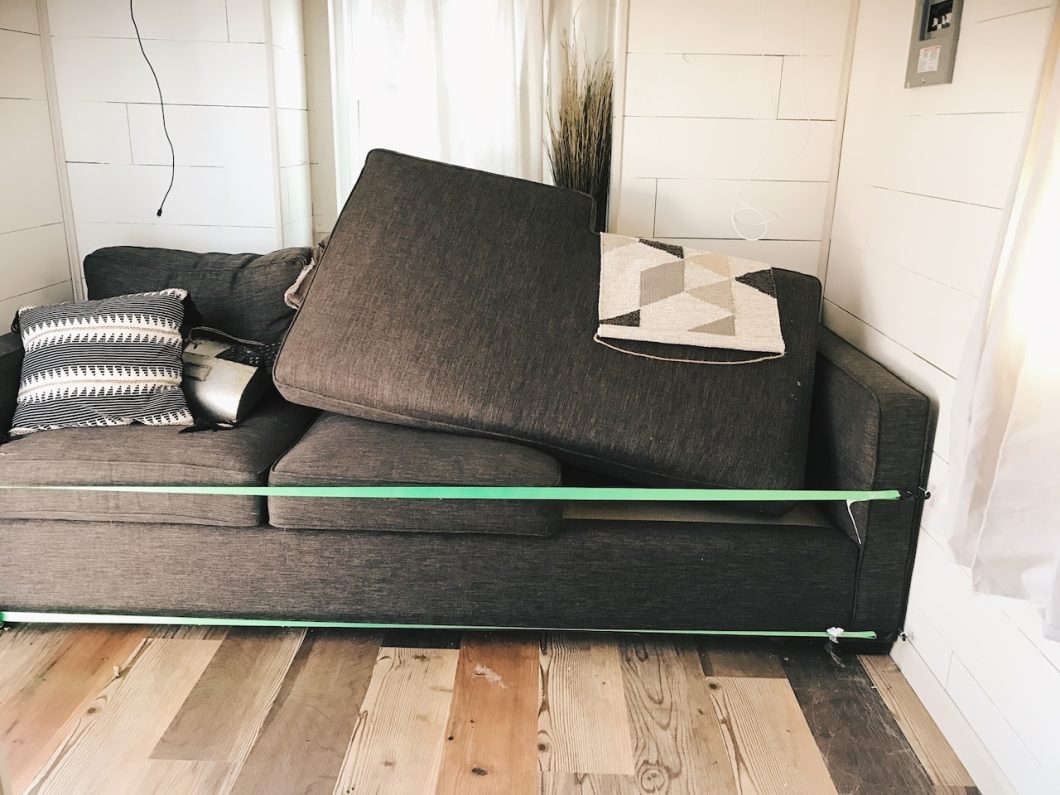
Count on everything moving! Your house will be moving very quickly and things will shift around. Bungie cords, ratchet straps and command hooks are a tiny dweller’s best friend. Take a look of what the inside of a tiny house really looks and sounds like even when it’s just being pulled at less than 10 miles per house.
Learn from our mistake; during our first move our couch moved several feet forward. We didn’t realize it until we reached our destination, but we were blocked outside of our own house!
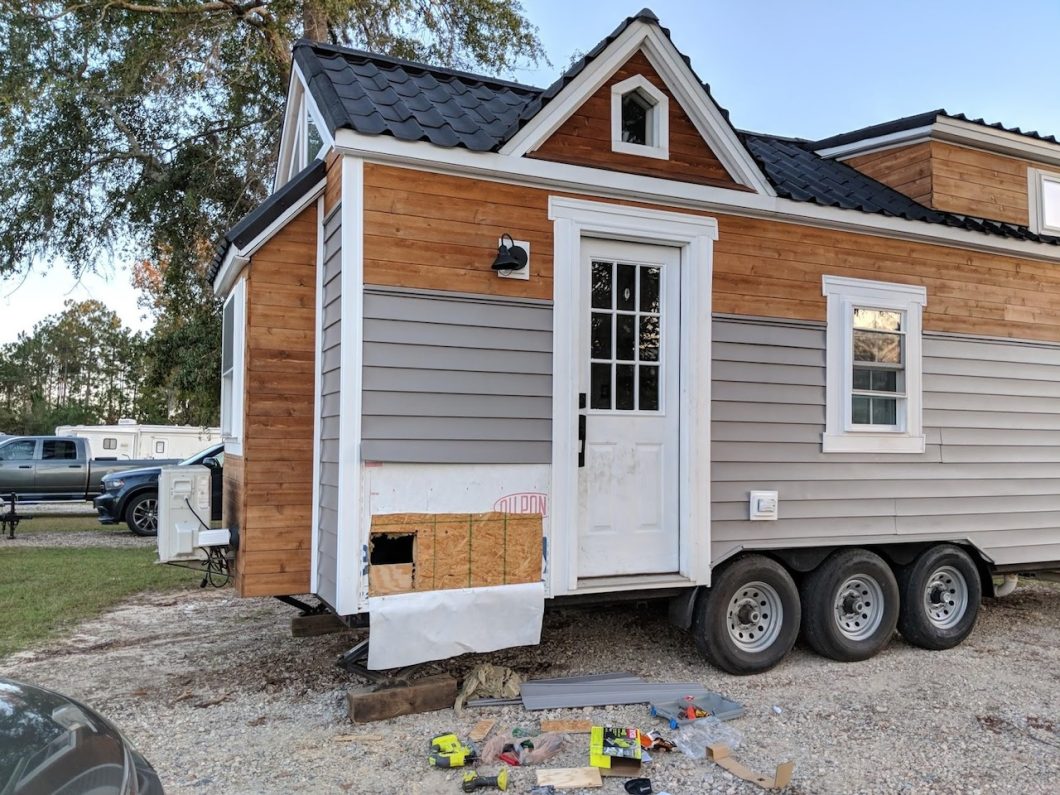
To get inside we had to break a hole into the wall and move the couch out of the way.
We’ve since learned and have added eye hooks, bungee cords and ratchet straps to hold everything down.
Later we patched the wall so it was good as new.

But that leads me to my last piece of advice:
Leave at least one window unlocked!
Just in case something blocks your door while you travel, leave at least one window unlocked so you don’t have to be stuck outside like we were.
Written By: Dylan Pierce for Tiny House Magazine Issue 51.