


As long as I can remember the question has been posed on Facebook pages, in FB groups, on blogs, in real-time conversations, and in workshops.
If a tiny house community existed would you want to live there? What do you think of living in community?
The answers of course, as varied as the people responding with them. Overall though I feel as if I have seen more people align with the notion of living on their own slice of Earth than living in community. And allow me – as has become tradition – to note that the phrase “tiny house” does not necessarily denote a tiny house trailer in the style of a Tumbleweed Fencl, but rather any sort of non-conventional, small space, established as a domicile.
When my wife and I first established residency in rural eastern North Carolina we did so knowing it was a bit of an isolated environment. Afterall, we had collectively lived in 9 countries and 16 or so states including Paris, Kona, Israel, etc. We had even both lived on the road as well out of backpacks of 3000 cubic inches. Part of the allure of the countryside though was for the “breathing room” we felt we had been missing. We also wanted to do a little homesteading and micro-farming. By about the third month in NC though I began to realize there was a huge difference between the aforementioned “breathing room” and utter isolation. Sometimes days would pass where we would see only each other. At the time we hadn’t established our legal address on the land so we didn’t even have the benefit of seeing a postal carrier. If it weren’t for the Interwebs we may have been little more than exiles in a foreign land. To have interaction with even family members we typically had to travel by car a minimum of 17 miles one way. That inability to connect quickly led to doubt, boredom, concern, mild depression, and even resentment and then manifest itself in weight gain, stress headaches, short tempers, and complacency. By the sixth month I was realizing how utterly important community and interaction is to the human experience. Anthony J. D’Angelo – teacher, leader, and curriculum developer – is quoted as saying “Without a sense of caring, there can be no sense of community.” I had ceased to care and therefore I had ceased to search for a sense of community.
In order to escape the funk I realized something had to give so I dug in deep to researching the notion of community. I was wanting answers to the tough (and perhaps unanswerable questions) of:
- What is a community?
- Who comprises the community?
- What is the history of the community?
- What are the needs of a community?
- What are the relationships within the community?
After what seemed like a combination of books, articles, blogs posts, and the like I was still stuck on the primary question.
WHAT IS A COMMUNITY?
While we traditionally think of a community as the people in a given geographical location, the word can really refer to any group sharing something in common. This might refer to smaller geographic areas — a neighborhood, a housing project or development, a rural area — or to a number of other possible communities within a larger, geographically-defined community. Community can be established by race or ethnicity, professional associations, religious beliefs, cultural notions, and even shared backgrounds. In fact, if you are reading this post and following this blog chances are you feel connected to the tiny house community. You have daily exchanges with others in the community. Personally I identify most with the Christian community, the tiny house community, the RV and fulltime family community, and the Florida State Alumni community. Those are the groups I find myself wanting to spend time and energy with and around. Community doesn’t have to be insulatory though. Various communities can certainly overlap.
An African-American, Catholic, art teacher, for example, might see himself (or be seen by others) as a member of the black, arts, and/or education communities, as well as of a particular faith community. An Italian woman may become an intensely involved member of the ethnic and cultural community of her Jewish husband. I don’t think a person belongs to just one community when observed under the microscope. And a person should not feel the pressure to do so.
In those first months of tiny house living I was missing the larger picture. I was trying to desperately to take my whole existence and make others accept it. I was making little to no attempt to become part of my new “life.” The result was I didn’t seem to fit in anywhere. I was removed from my interest communities and my geographic one. I was a square peg trying to force myself into a round hole. I was missing an understanding of the community I had moved to and how the new relationship could be mutually beneficial.
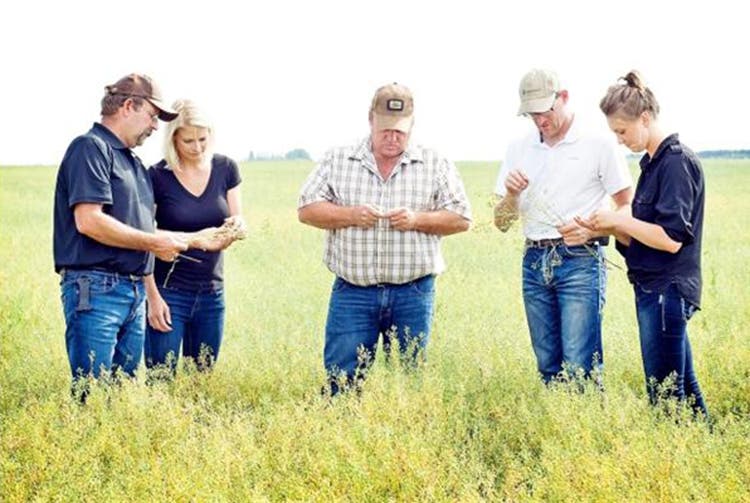
My new home was – and still is – a unique place along the eastern seaboard mixing the farming world with the beach world. Jeans are formal wear. Flip flops are sacred. Wal-mart is the community meeting hall and the most predominant landmark for travel. Johnny Cash is on par with the 4th Beatle and the 13th disciple. My community is full of folks who can put their hands in the dirt and tell you what will grow and what won’t, what the pH level is, and how to improve it all. My people can make a feast of cornmeal and anything that once had a pulse and can find fresh fish in a puddle leftover from an afternoon shower. They are kind but like most groups, stick to their own kind. Understanding this was paramount to understanding community. Once I began to embrace them they began to embrace me and we quickly formed a friendship. I had found community and again found peace.
What about you? Do you value community? How have you found community in your environment?
Next week I hope to talk about 5 Effective Ways to Become Part of a Community. Y’all come back now, ya hear?
By Andrew M. Odom for the [Tiny House Blog]