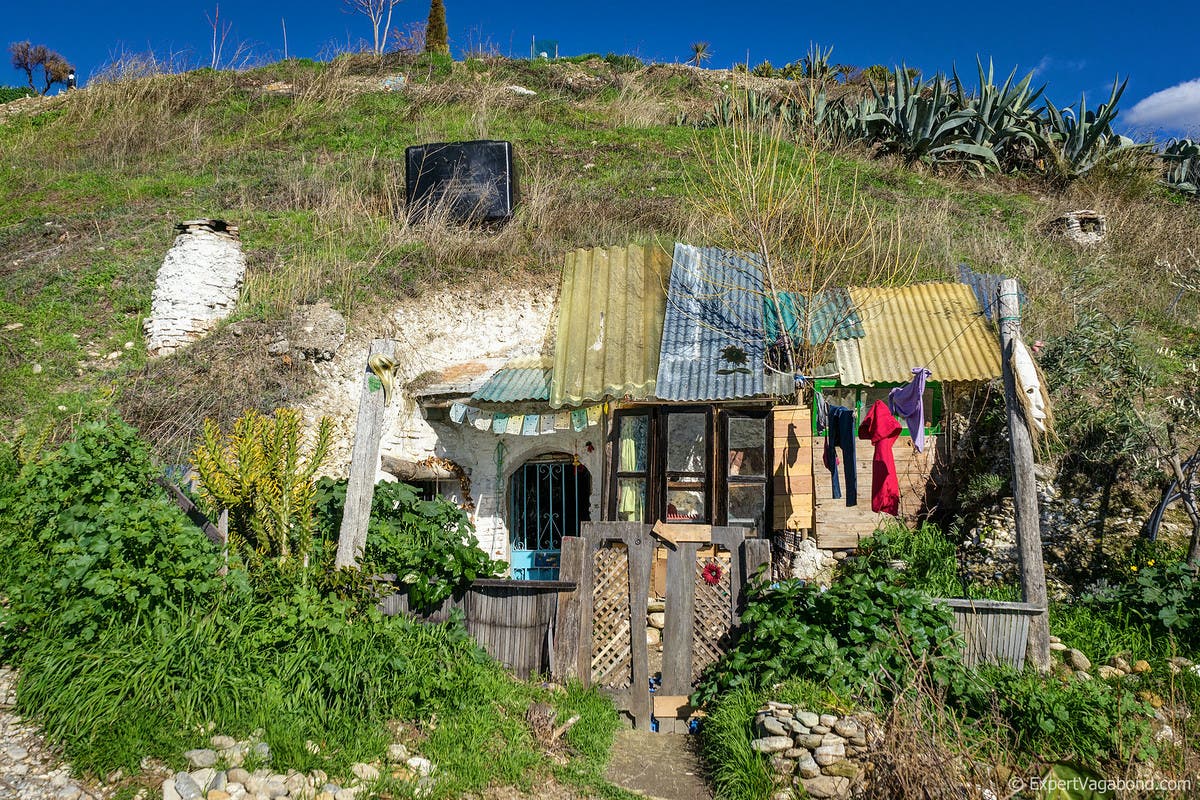
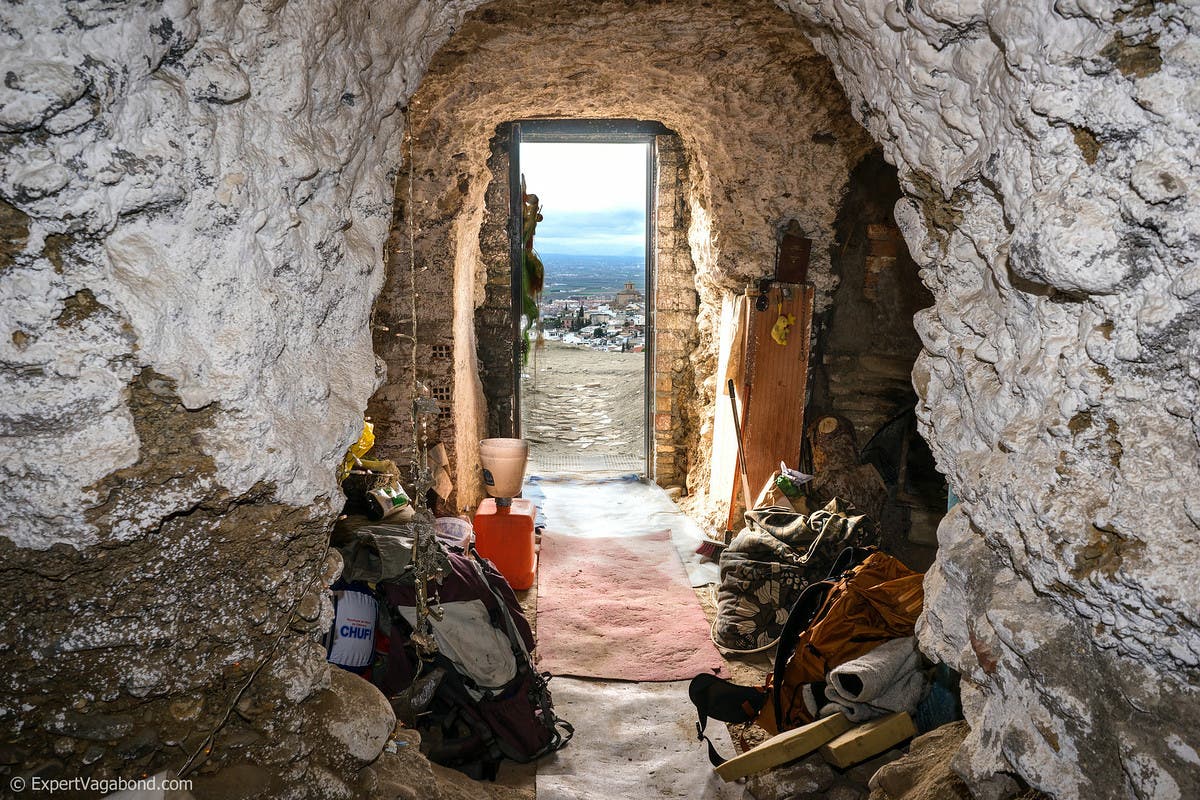
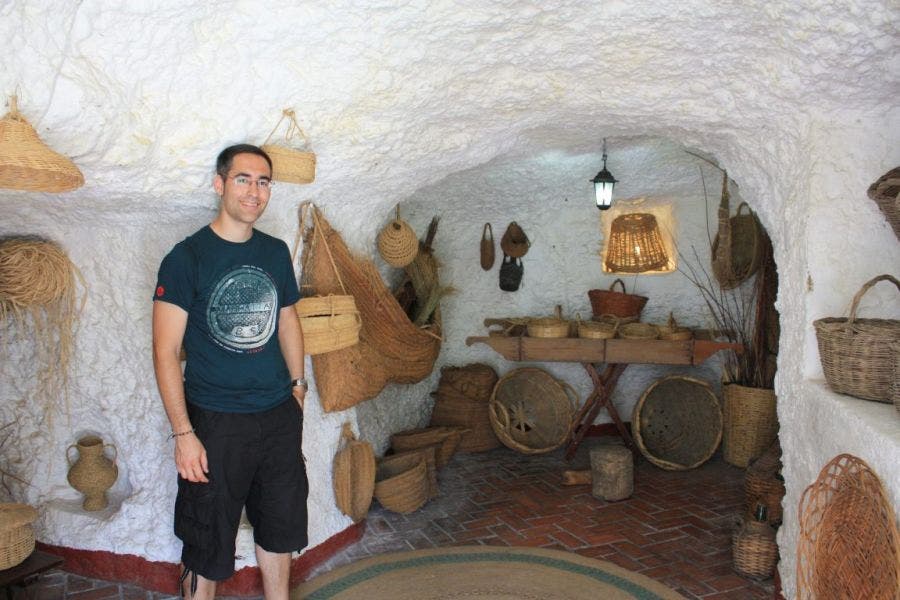
Continuing down from the land of the hórreos in Asturias, the southern region of Andalucía has its own rustic shelters that—instead of sheltering corn and hay—have become homes for modern nomads. The Sacromonte neighborhood of Granada has a series of caves that were once inexpensive homes for the city’s Roma community in the late 19th century, but are now utilized by the city’s artistic dwellers. Most visitors come to Granada for the UNESCO world heritage site, the Alhambra, and the funky Albaicín neighborhood. The Sacromonte area lies just above the city along a hillside and once contained over 3,600 inhabited caves. A flood in the 1960s wiped out many of the homes and what was left is now occupied by approximately 30-50 nomad residents from all over the world. Many are just passing through, hoping to extend their travels by selling their art in the city plazas, while some of the ancient caves are occupied full time. Essentially, most of the people living in the caves are squatters overlooked by the local government. Their Bohemian looks and local art including jewelry, baskets, pottery and weavings can be seen in the local plazas. Traditinal flamenco music and dances can be seen in theaters and restaurants in the Albaicín. The living conditions in the caves are basic. Most of the caves have electricity from local power lines or solar panels. Plumbing and toilets are sometimes shared between several residents. However, the caves do stay cool during Granada’s hot summers and you really can’t beat the view.