Guest Post by Craig MacDonald
I have been a follower of the Tiny House Blog for a few years and was really intrigued by what it might be like to live in a small home. My wife and I searched for land for a few years, but could never find the right piece of ground. She was convinced that she wanted a place on the water and I was convinced that the only piece of land that we could afford near water would be the size of a postage stamp.
We finally found the perfect spot while exploring a part of our state that we had never seen before. While it is only 85 miles as the crow flies from our home in the city, and about 150 miles by road, it feels like we are in another country. It turns out we didn’t by land near water, but found 30 acres of heaven on earth of highland pasture.


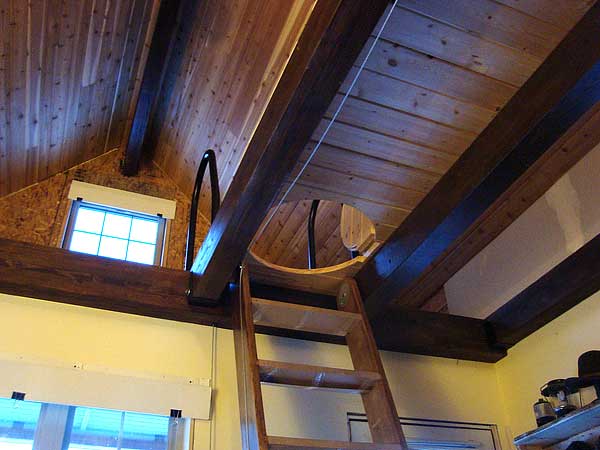
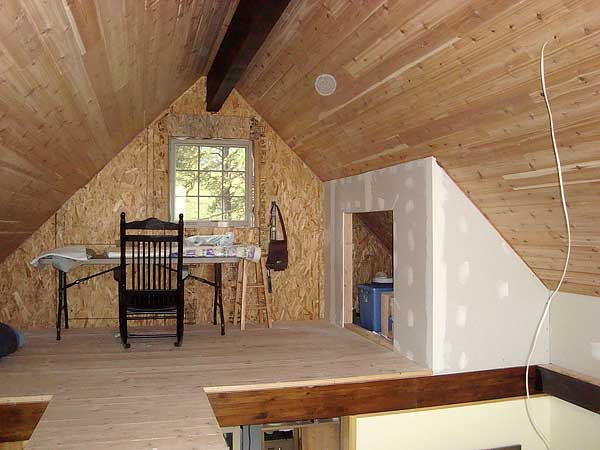
I was at first determined that I wanted to build a tiny house like the Tumbleweed, but was convinced (coerced) by my wife and daughter that 100 square feet just wasn’t going to keep us all happy. I’m glad that I listened! We also bought property in a “development” which requires that homes be a minimum of 500 square feet. With some creative math we were just able to sneak over the 500 square foot threshold. The main part of the cabin is 320 square feet with a 100 square foot bedroom on the back of the cabin. We have two lofts which are connected by a “catwalk” which adds about another 100 square feet. We use a ladder to get up to the lofts and when not in use the ladder retracts into the bottom of the catwalk to give the main cabin more room.
We are totally off grid and use solar as our main source of electricity. In this part of the country we have about 300 days of sun a year so the solar keeps the batteries charged pretty well. We have a 2000W inverter which can run just about anything we need and use a 3500W generator to back up the batteries on those days which are either foggy or cloudy. We don’t have a well (yet) but have access to a well nearby.

We have two 550 gallon water tanks in the unfinished part of the basement, which serves as a mechanical/storage area. We refill the tanks by hauling water in a 210 gallon tank which fits on a small flatbed trailer we have. The cabin is mainly used on the weekends and an occasional long week and we find that the 1100 gallons of water gets us through our cold winters with no problems.
We currently heat the cabin using a free standing propane fireplace which is regulated by a thermostat. We also use propane for cooking, refrigeration and hot water. We have a 500 gallon propane tank on the property. In addition we also have a small bathroom with a shower with hot water and a flush toilet that is connected to a septic system.
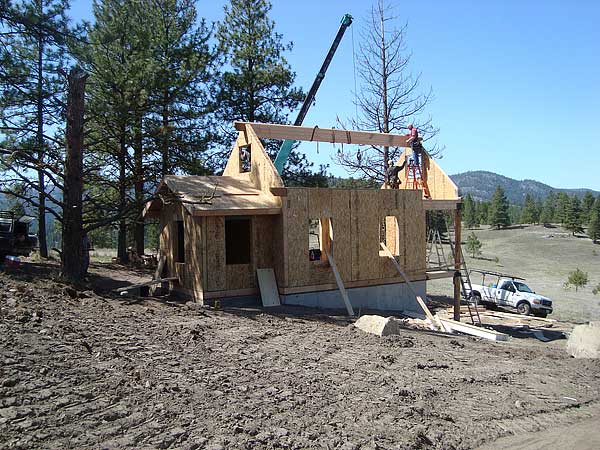
I designed the cabin and spent much of one winter finalizing the drawings and making scaled models to make sure that the space would be adequate and that the placement of the windows and roof lines seemed appropriate. Because the space was relatively small I decided to make the sidewalls 10′ tall instead of the traditional 8′. This gives the cabin an added sense of dimension and gives more than adequate headroom in the loft area. In addition, the loft does not cover the entire second floor and the space over the living room is open to the 12/12 pitched roof about 18′ above the floor. Once we were happy with the design we had IB Panels out of Jerome, Idaho manufacture the cabin using SIP’s. Eric Lott and his crew did a great job and were extremely helpful through the entire process. The cabin arrived in pieces on one flat bed truck and it took a crew of about six people and about six days to erect the cabin. At the end of those six days we had the roof on and the windows in and were ready to move in. While the cabin was far from done at that point we decided that we would camp in it and finish it as we had time.
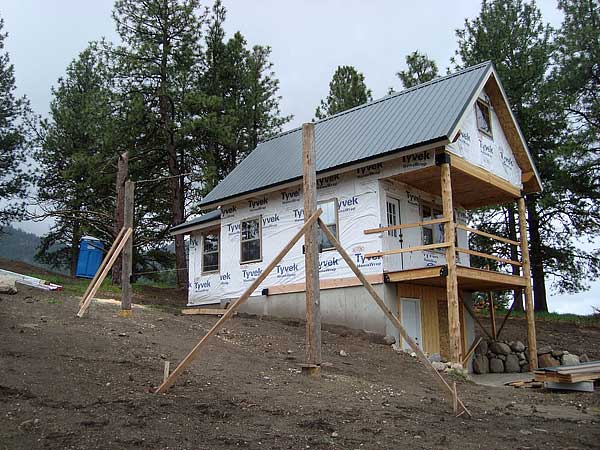
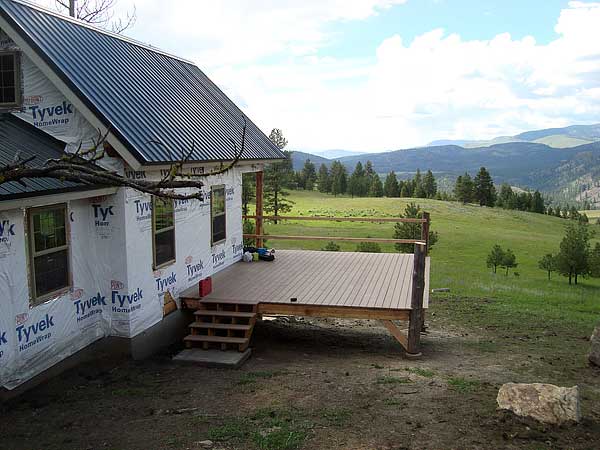
Today the cabin is about 90% complete with almost all of the exterior completed and a good part of the interior finished. We sided the exterior of the cabin with a product made in Colville, WA by a company called Weathertite Log Siding. It is made to resemble hand hewn log siding and was very easy to install and I think added a lot to the cabin. There are a couple things I would do differently, but they are minor and I think that all of the pre-planning really ensured that the finished product was something that we would be happy with.