Opportunity Village Eugene and the Conestoga Hut
by Andrew Heban
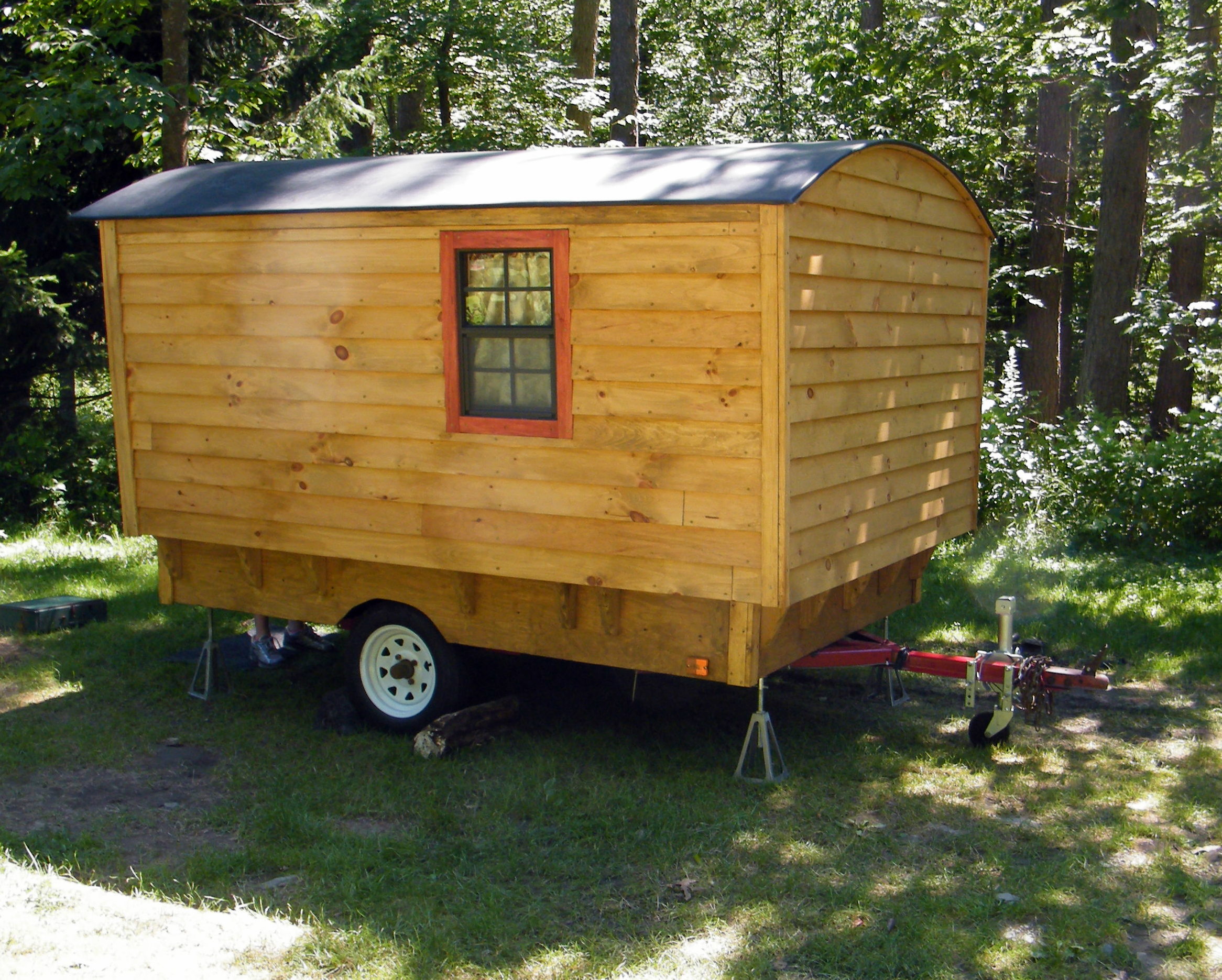
I am with the non-profit Opportunity Village Eugene and thought you might be interested in posting about our newly developed 60 sq. ft. Conestoga Hut here in Eugene, Oregon.
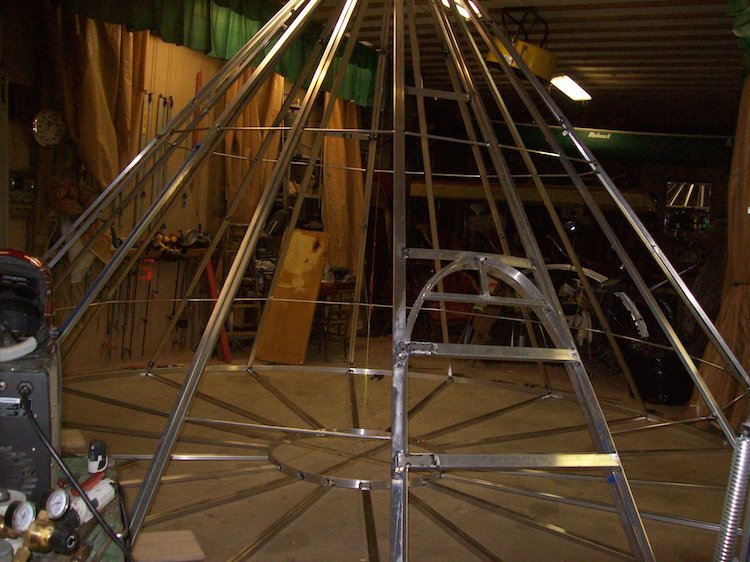
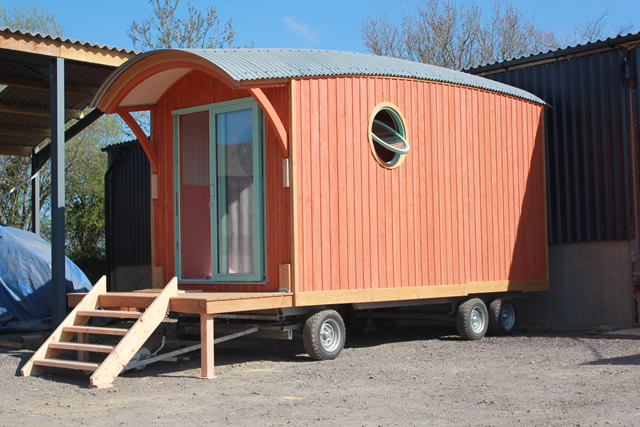
The Conestoga hut is 6 by 10 foot shelter that can be built for between $250 and $500 depending on the utilization of re-used or donated materials. While this price is similar to a quality tent, the Conestoga makes significant improvements upon the tent – most notably an insulated and lockable space – while minimizing the cost, skill and labor required by a more conventional, four-walled structure.

There are four components to a Conestoga hut: a basic 6 by 10 foot insulated floor, two solid, insulated walls that line the short sides of the flooring, and a metal wire roof that is curved to connect to the long sides of the floor. The roofing frame is then covered with insulation and outdoor vinyl that is attached to the base of the structure.
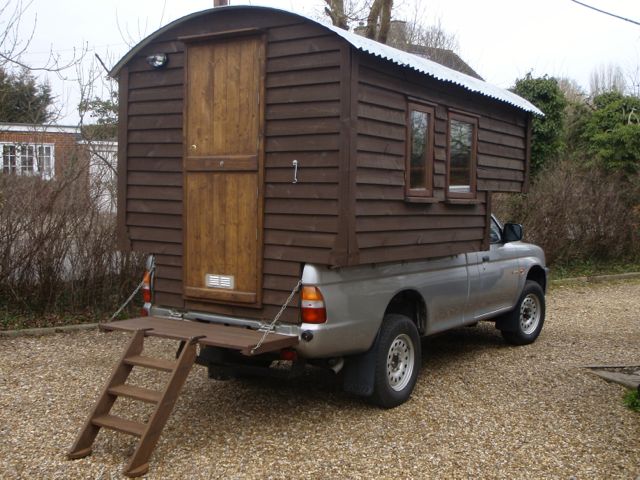
The result is a structure that resembles the Conestoga wagons used during early American westward expansion. The components of the shelter can then be easily assembled or disassembled on site, drawing a reference to the rugged individualism again linked with the Conestoga wagon. Continue Reading »
Kootenay Lake Gypsy Wagon
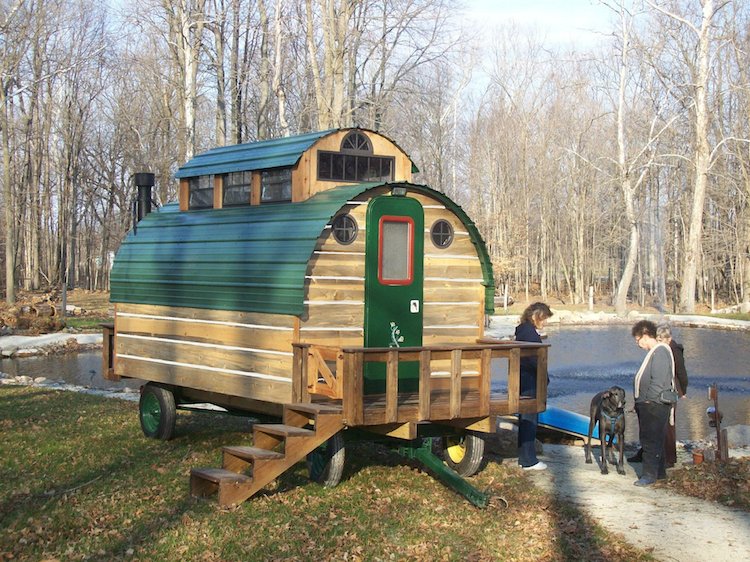
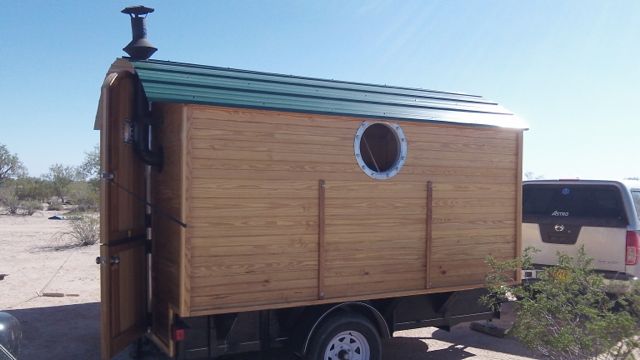
Inhabitat (one of my favorite sites) recently featured this rustic, but beautiful gypsy wagon (one of my favorite tiny houses) which sits in the forest near Kootenay Lake in British Columbia. The 8 foot by 20 foot wagon was built on a $100 salvaged 5 ton chassis, with 2×4 construction and curved rafters. It cost about $8,000 to build and took several years.
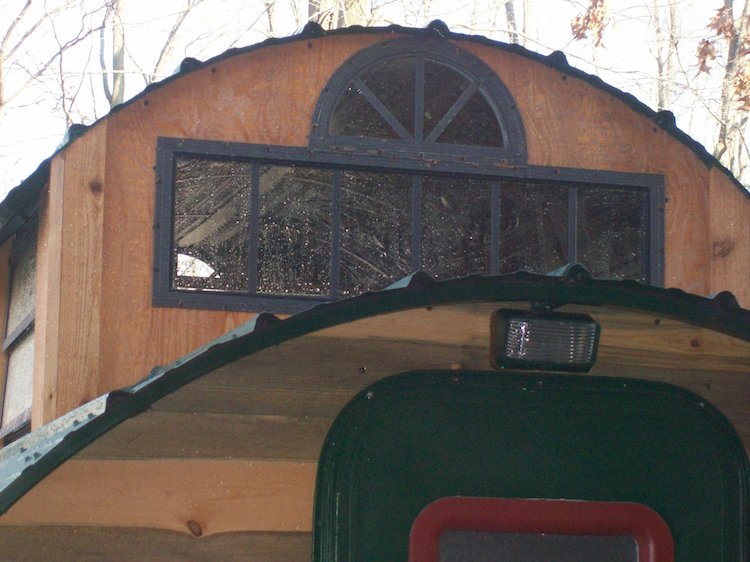
Most of the building materials for the wagon were recycled. The floor is locally milled hemlock tongue and groove and the windows were second hand finds from the local classifieds. The exterior shingles were cedar “seconds” split with a hatchet. The round window was ingeniously made from a 1970′s picnic table and is framed with rope for a natty, nautical style. The curved roof is covered with flexible metal sheeting and has two, curved Lexan skylights. The interior of the wagon is covered with stretched canvas, stapled into place and painted with white wash. Under the wagon is space for the storage of supplies and firewood. Continue Reading »
Lorna’s 1930s Shepherd’s Wagon
Over the course of two summers starting in 1945, Lorna Benedict lived in a shepherd’s wagon on a large ranch in Wyoming. During her stint as a shepherd she watched over a herd of sheep, chopped her own firewood, shot and skinned local wildlife and fished the rivers for her food. Every few weeks, when the sheep moved on to feed, horses would be hooked up to the wagon so she and her home could continue the process. When asked what she liked about the lifestyle, she said “Nothing!”

“Well…at that age, it wasn’t what I wanted to do,” Lorna added. “But now that I look back on it, it was really amazing to be out in nature with those mountains in Wyoming. I sure did read a lot.
Continue Reading »
“Pee-Wee’s” Gypsy Wagon for Sale
This beautiful gypsy wagon, which was used as a prop in the 1988 movie “Big Top Pee-Wee” has been available for sale since the middle of last year. The wagon, restored by Gary Votapka, was originally purchased for his land in Montana, but it is still sitting in a California neighborhood waiting for its next owner.
The vardo was in terrible shape when Gary purchased it for $10,000 and towed it from Barstow to his home in Fallbrook, Calif. The wagon had been sitting in the sun for over 20 years and gallons of desert dust and sand had settled onto the floor. Since the wagon had also been used as a prop in a movie with Pee-Wee Herman and Valeria Golino, none of the drawers opened and the cabinets were facades. Over the course of four years, Gary, his wife and son restored the gypsy wagon (by using a DVD of the movie) to its original colorful state and added a few workable cabinets and a comfortable bed. Continue Reading »
ClickClackGorilla
The exciting tale of the ClickClackGorilla begins with a daring escape from a cubicle life in the U.S. and ends with a life of traveling with a band, Dumpster diving, and living in a rescued caravan in a wagenplatz in Germany. The Gorilla is Nicolette Stewart, an ex-pat writer, proud gleaner and soon-to-be mother who blogs about her unconventional life while trying to live that life with more freedom and environmental consciousness.
Her home in Germany (which she shares with her partner, “The Beard”, who also has his own trailer) is a caravan which was formerly parked on a farm. The 60-year-old wooden wagon, known as a Bauwagen in German, was on the farm for at least 20 years and the owners of the farm gave it to Nicolette for free if she hauled it out herself.
She proceeded to fix and decorate the wagon over a the course of a year with about 900 Euros and many trips to the Dumpster for furniture, lighting, kitchenware, bedding and even food. Her wagon, affectionately called the trash house, is parked in a wagenplatz, an intentional community in which people live together on a piece of land in a variety of wheeled dwellings. Continue Reading »
Joseph’s Gypsy Wagons
Joseph Crowell has been building buses and vans for many years, but was recently inspired to build his first gypsy wagon by Sunny Baba, an activist and spiritualist who has built dozens of gypsy wagons. Joseph, who is in the Ashland, Ore. area, built this gypsy wagon with about 80 percent recycled materials. He gets a lot of his supplies from Dumpsters or from the side of the road. He uses manzanita tree branches as exquisite details in his design.
“If I see an old piece of furniture laying around, and it looks like it can still be used, I’ll saw it up,” Joseph said. “It makes the whole ‘find is and use it’ process more enjoyable.”
Joseph initially designed and built the stained glass window in the gypsy wagon, but he thinks he might look for a local stained glass artist to do the window in his next wagon. The wagon weighs about 1,500 pounds and can be towed by a small truck. It was recently sold for about $8,500 and Joseph plans on keeping his next design’s price to below $10,000.
If you are interested in one of Joseph’s gypsy wagons, email him at jsph.crowell (at) gmail.com.
Photos courtesy of Joseph Crowell
By Christina Nellemann for the [Tiny House Blog]