A Shed with Shade
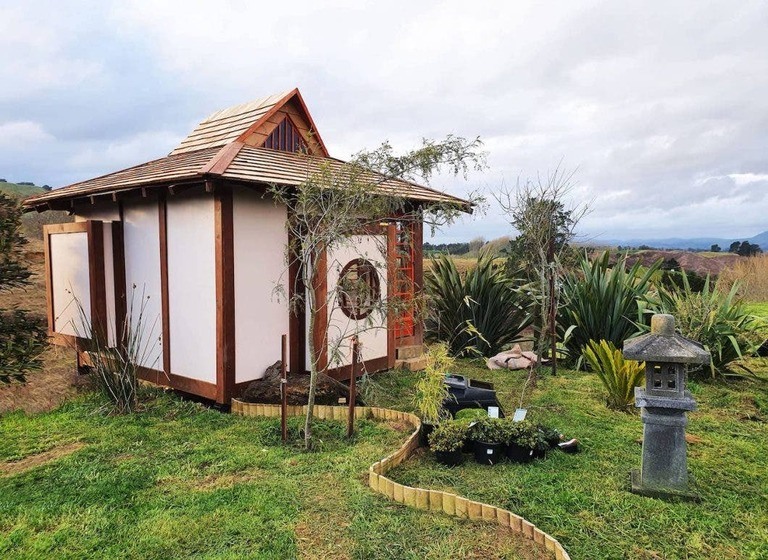
The latest issue of The Family Handyman has a beautiful house on the front cover that happens to be step-by-step plans on how to build an Arts & Crafts style shed with a front porch. I think with a little tweaking, and the installation of electrical and plumbing, it could make a very nice tiny house.
This particular shed is 8×16 feet with a large sliding door on the back that runs on a track, three windows that let in plenty of light and a front door with a wonderful front porch that brings the total area of the shed to 16×16 feet. The structure can be built in four or five weekends with the help of a few people. The cost (not including the concrete slab) is about $3,800, and the skill level needed is intermediate. Experience with framing is helpful, but not necessary. Because of the sliding door (that opens up the living area) this structure will probably work best in warmer or milder climates.
Tiny House Builders
Many tiny house dreamers want to build their own tiny house, but may be deterred by their lack of construction skills. In addition, fully customized tiny homes can be more than many people’s budgets. Tiny House Builders builds and sells simple, fully completed, mobile tiny houses that allow the owner/builder to customize the house to whatever style they want at an affordable price. The company accomplishes this with three levels of each of their products. Level One is a complete set of building plans instructional narrative, and step by step instructional photos. Level Two consists of a complete modular building “kit”. It arrives at your door with the completed floor system mounted on its own mobile chassis and the building shell in “panelized” form. Level Three is a complete building shell that can be further customized by the owner.
The first product sold by the company is the Wallowa. This tiny house is 8 feet by 12 feet and includes 2×4 framing, a standard home size entry door, two windows, double wall construction, cedar lap siding with cedar trim, and metal roofing guaranteed for 35 years. The interior clear ceiling height is 6 feet 8 inches, and the interior loft height at the peak is slightly over 3 feet 8 inches. The overall height with the building on its mobile chassis is 13 feet 5 inches, just under the legal limitation. Level One ($429) includes a complete set of detailed building plans, actual photos of construction and an instructional video. Level Two ($9,850) and Level Three ($15,975) allow the owner to design and build their own interior including wall covering, floor covering, plumbing, electrical, appliances and cabinetry. Continue Reading »
Cozy Home Plans
Kevin Harrington, a licensed realtor and home remodel expert in Colorado has created a nice selection of tiny and small home plans called Cozy Home Plans. The homes range from 288 square feet to 781 square feet and his plans cost between $99 to just under $700. Kevin also runs a blog where he posts articles on home construction and DIY tips. He has posted about how to mix concrete, installing electricity, useful household tools and tiny house Feng Shui.
A few years ago, Kevin downsized from a 2,700 square foot home, got rid of about 90 percent of his possessions and moved into a 280 square foot 5th wheel trailer. He was in the process of researching alternative building techniques and stumbled onto the tiny house movement. He decided to start a website and blog to showcase his small home plan ideas.
“This tiny lifestyle I was living gave me back serenity,” Kevin said. “This was something that had been sorely missing in my life for a very long time. I just wanted to share my experiences.”
His goal with Cozy Home Plans was to add a few more feet onto tiny homes to make them more livable.
“Can a person live in 100 square feet? Absolutely, but can they share it with guests or a partner full-time? How about a larger kitchen, washer/dryer capabilities and storage for extra stuff in such a small space? Answering “Yes” to these questions became more difficult in such a tiny space,” Kevin said. “My solution was to add a few more feet to each house.”
Tiny r(E)volution on GardenFork
The Tiny House Blog’s how-to writer, Andrew Odom, was recently interviewed about his future tiny home and his Tiny r(E)volution website on Eric Rochow’s GardenFork Radio podcast. The interview includes Andrew’s stance on the mortgage crisis and sustainability as well as decluttering and making space for a new baby. While Eric does not live in a tiny house, he does advocate what most tiny house fans are enthusiastic about: buying local, growing your own food, and living more simply. GardenFork covers everything from how to build a raised garden bed and make pizza to how to raise bees and replace a damaged fender on your car. Check out his video on how to safely use a chainsaw. It’s hilarious.
GardenFork puts the fun back into chores. Eric’s unabridged and friendly style of presentation shows all aspects of a project, including the mistakes. Frozen hoop frames, seized chocolate, and getting whacked in the head by a homemade tomato cage all make the cut. Eric’s opinion is that done is better than perfect.
Eric is accompanied in his DIY projects by his tomato-stealing, ball-crazy, pond-swimming Labradors, and his “camera operator” spouse whose funny off camera comments are just as delightful as her husband’s on camera sangfroid.
The GardenFork name includes a TV show, a blog, a forum, the GardenFork Radio podcast, and the Real World Green videos.
Photo courtesy of GardenFork
By Christina Nellemann for the [Tiny House Blog]
Butler Projects
Paul Butler of Butler Projects offers several tiny and small house plans for amateur and first time builders. According to Paul, his designs have been simplified about as much as is possible, in terms of shape and add-on modules, and can be made very energy efficient. The houses are designed around a main module which can be equipped with power and plumbing and the options can be added on as time or budget allow. He does encourage modification and customization to fit the builder’s needs.
Paul’s plans have been featured in several magazines including Workbench, Outdoor Life and Popular Science. He also offers plans for wooden hot tubs, small boats, truck campers and barns.
Sauna Cabin
One of the most popular plans is the Sauna Cabin, a Scandinavian dream come true. The wood paneling is really beautiful. Butler customers have built this house mostly for a second home, studio, workshop, and often as a primary residence.
Its about 250 square feet, and the pier and beam foundation can be dug and poured in one day, requiring little but a shovel and a wheelbarrow for mixing cement.
Originally published in Workbench magazine as the “Utility Cabin”, it became popular in many variations including a guest cabin, storage, studio and workshop shape. Designed specially for utilizing rough terrain, the four rebar-reinforced legs elevate the cabin above grade, and deep snow, providing a simple and adaptable foundation system. The hip roof for the small 16 x 16 cabin, with a large skylight in the center, provided an interesting and open interior, which was paneled and trimmed with cedar.
The original Sauna Cabin was equipped with a large traditional Finnish sauna in one corner. It also contained a full bathroom with tub and shower and a solo cedar therapy tub. A greenhouse window facing east provided indoor plant space and welcomed in the morning sun. The large centrally located skylight overhead provided interior light over the 256 square feet of floorspace. A sound system completed the package, making for pleasant early morning workouts.
One of Butler’s customers, Arlen Hoskins, had this to say about his Sauna Cabin:
“This is way too good to waste on just a sauna cabin…I’m living in it! It makes a cool bachelor pad on my 5 acres. I put my little wood stove right in the middle and stuck the stove pipe out where you had the big skylite (sic), and there’s room to keep my canoe and kayaks underneath. Mostly boulders and rocks on my Oregon property anyway so the pier and beam design went up fast and cost a fraction of a traditional perimeter foundation, and I like how it’s designed to use full sheets of plywood. I sided my cabin with rough sawn cedar planks lapped one over the other and it looks like it grew right out of the hillside.”
Grand Cabin
The Grand Cabin cabin is about 140 square feet and can be moved around your property on skid beams with a tractor or truck. The small portable shelter makes a unique hunting camp or a cozy weekend vacation cabin. The basic cabin has also been adapted for refugee housing, back yard studios, storage shed and guest houses. Multiple modules of the cabin have been joined together for basic accommodation for fly-in hunting in the Alaskan bush.
For about $1000, a first class version can be built, and about half that amount for an economy version. It can be built to take-apart if necessary, constructed in a back yard and re-assembled on site in the woods. The 8′ by 12′ floorplan plus sleeping/storage loft overhead provide about 140 square feet of usable space. Hollow plywood skid-beams provide structural support and also elevate the cabin above snow, or can be propped level about rough ground. Roof overhangs provide cover for stacked wood, boats, etc.
Interior layout, door and window placement are optional. Optional insulation and a small wood stove provide winter comfort, or if an extension cord will reach the smallest 110 volt heaters will keep the cabin toasty.
Building plans include a step-by-step building manual and blueprints, all written for amateur builders. The plans for the Sauna Cabin and the Grand Cabin cost $45.
Butler Projects also sells two larger home plans that start at about 800 square feet for a two story main module which contains all the wiring and plumbing necessary for civilized living. The DIY plywood beams and floor joists were among the most popular features of those cabins.
Plywood Cabin
The Plywood Cabin is designed as a modular owner-built home with a core module around which could be added any number of options including bedrooms, garage, sunrooms, workshops, etc.
Affordable House
The core module of the Affordable House is 20 by 24 feet providing a total 960 square feet in the two floors. It has an optional sunroom and bedrooms, garages and other spaces can be added to the core as needed. Paul built this house for his family and they lived in it for two years.
The larger home plans cost around $90-$95.
I was impressed with the thought and design that went into each house to keep the size and expense minimal. Paul even has a free plan on his website for a boat table for tiny interiors!
Paul is in the process of updating his website with new photos and information. Check back on his site and the Tiny House Blog for updates on Butler Projects.
If you enjoyed this post, subscribe to our feed
Nicola Cabin
I think that some of the best cabin kits are coming from the Wilderness Cabin Company and Greystokes International. The Wilderness Cabin Company sells cabin kits to customers in Canada and Greystokes International sells the same kits to customers in the U.S.
A few years ago I started following the building process of Chris and Alyssa Thompson’s cabin. This is the first beginning to end documentation of a Wilderness/Greystokes cabin construction that I have seen on the web and the couple has posted some great photos of their Nicola cabin.
The Thompsons ordered their cabin and blueprints through Greystokes, and the supplies arrived on a semi truck about one week after their building permits were issued. The shipment included basically everything needed to build the exterior shell of the cabin, including the doors, windows and decking. The exterior wood even came stained with the colors the couple had selected. The Thompsons provided the labor and the flooring, plumbing, electrical, insulation and drywall.
The planning and building process took more than five years, while the Thompsons dealt with the Ventura County permit process. They finished the house in 2005.
What I liked best about the Thompson’s Nicola cabin is that they personalized it with their own creative tile work and warm colors. The kitchen is cozy and utilizes the small area very well.
The cable channel, DIY, did a show on their cabin project called “Assembly Required” and included footage from the couple’s trip to the Wilderness Cabin/Greystokes company.
Wilderness Cabin Company and Greystokes International offers cabin kits in sizes ranging from 588 to over 2,000 square feet. Smaller cabins ranging from 192 to over 700 square feet are available, but only in groups of four or more and are called Resort Cabins. The Nicola cabin is 629 square feet.
If you enjoyed this post, subscribe to our feed