The Freeman – Tiny Cob House Plans
Advertisement
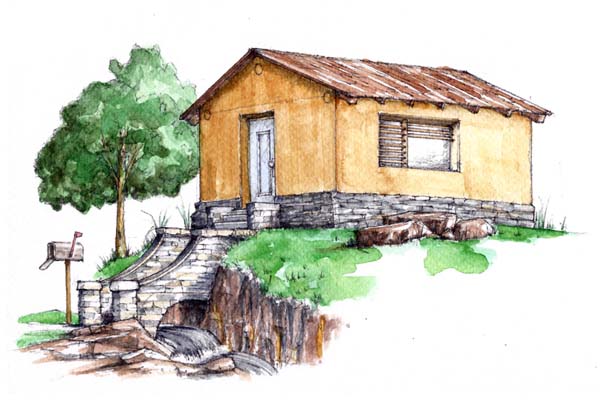
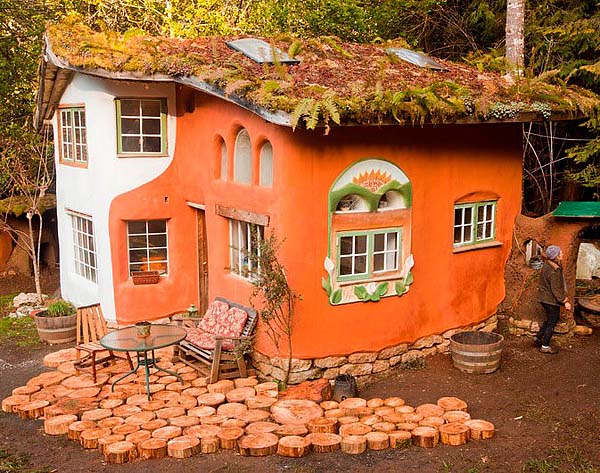
The Freeman is a 120 square foot tiny home model made out of cob. Cob is a mixture of clay, sand, straw, and water. This tiny home model stands on the principles of being economical and sustainable. Almost all of the materials needed to build the house can be found in a local natural environment.
This tiny cob home can have many purposes. It’s great for tiny house enthusiasts, homesteaders, preppers, business people, or anyone who just wants a little cob house. It can be used for many different types of accommodations too. The Freeman can be used as a home, an art studio, a shed, a backyard office, or whatever else you can imagine. It can also be used as a temporary home while building a larger home.

The total cost to build The Freeman model will depend on how resourceful and frugal you are. The cost could vary quite dramatically depending on how you want to build the home and range anywhere from $500 to $5000.
The home features an open cathedral ceiling which helps to make the building feel more open and roomy, and there is a built-in cob bench in front of the large south-facing window. There is also an upstairs loft with enough room for a queen size bed and storage. At its peak, the loft height is 4 ft. 5.5 in. and there is a small window on the eastern wall to let in the morning light.

Underneath the loft, there is plenty of space to make an office area. The eastern wall beneath the loft has a large window to illuminate the space as well as the light from the open living room. There is 7 feet of standing room underneath the loft so you will not have to bend over, and you can still put all of your normal office furniture underneath.
What sets this tiny house apart from others is that it is made out of cob. Cob offers many great benefits such as its thermal mass and ability to store and re-radiate heat. With its passive solar design and cob’s thermal mass the home stays naturally cool in the summer and warm in the winter. To learn more, read about these 14 benefits of building with cob.
This premium design package includes more than 15 pages of construction plans. You will get: floor plans, electrical plans, transverse sections, dimensional diagrams, foundation plans, roof plans, loft plans, a materials list, and a tools list.
The Freeman tiny cob house is perfect for do-it-yourself builders, and its size falls within most building codes for no permit being required. If you want to create a living space that is efficient and beautiful inside and out then The Freeman might be right for you!
Purchase the plans for just $97 at This Cob House.


Happy Thanksgiving Day 2012
I would like to wish all our North American readers a Happy Thanksgiving Day! I thought this house fit the mood of the day and I hope you enjoy it.
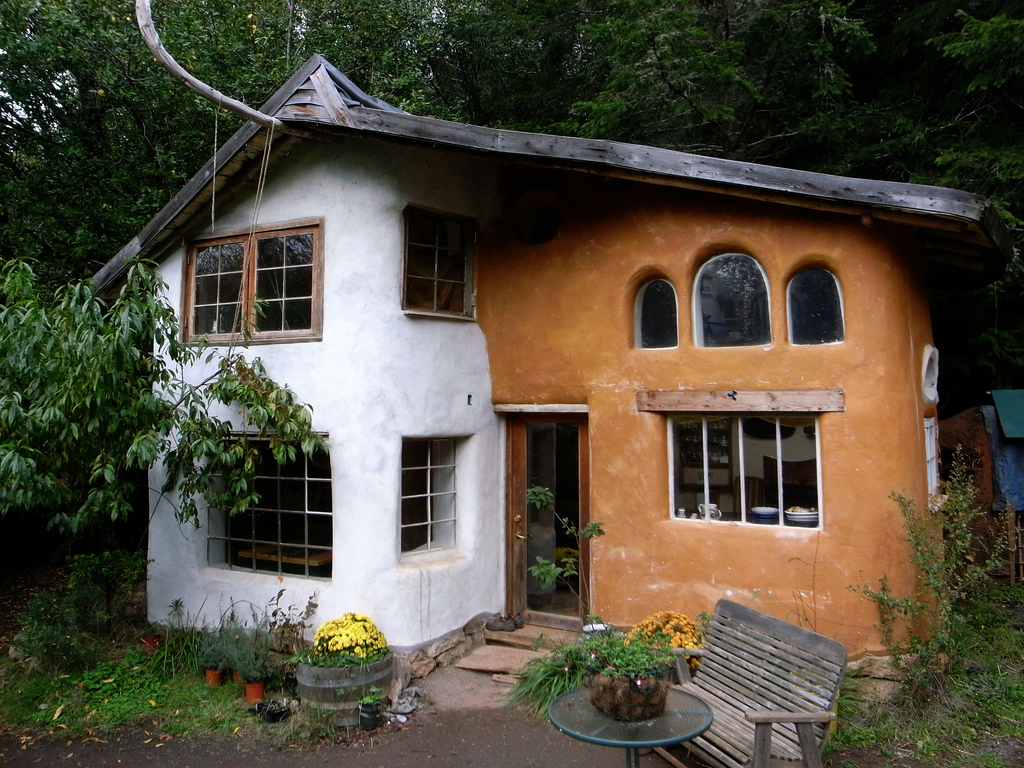
This is the Laughing House sculpted by Linda Smiley and Ianto Evans out of cob, clay, sand, and straw. Dug locally right from the ground. They live in the temperate climate of the Pacific Northwest, so high thermal mass (non-insulating) walls work in their climate.
This photo is from their websitte: http://www.cobcottage.com/laughing-house

Cob Building Workshop
Learn Natural Building with SunDog School of Natural Building
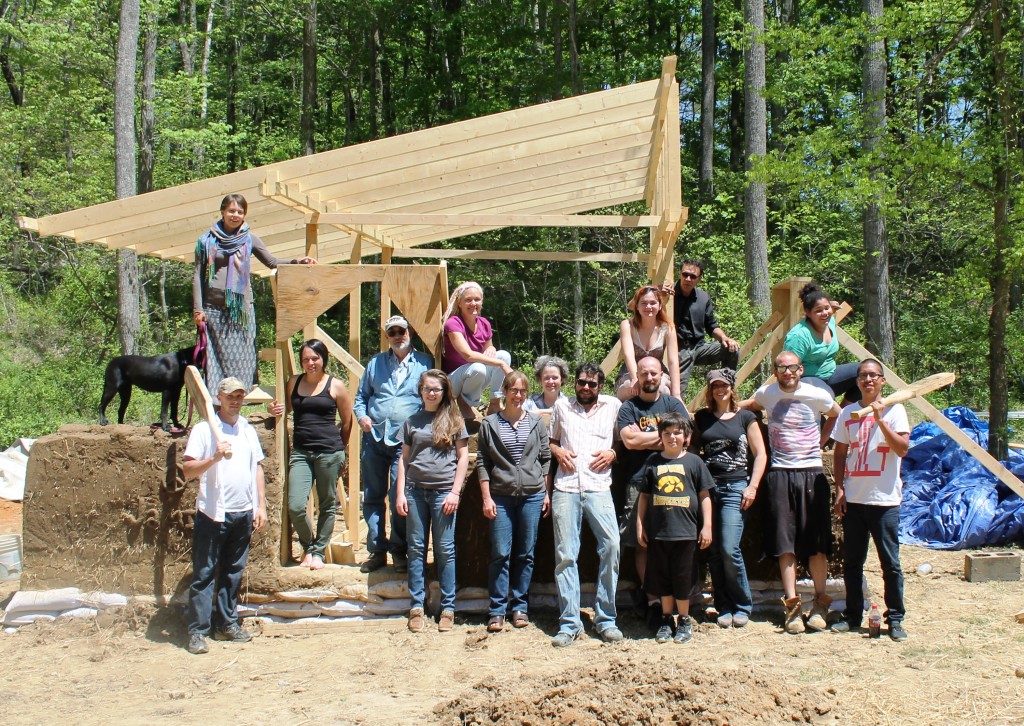
The SunDog nine day workshop is designed to teach ordinary people the skills to build their own cob cottages, from the foundation to the roof. Our projects are small, most are under 200 square feet, and geared towards attaining a high level of completion in a short amount of time.
We’ll take you through an intensive, step by step, beginning to end, instructional course on how to: site/design, excavate, build a foundation, build the walls AND get the roof assembled on a small cob cottage.
This course, created by Bryan and Kirk, is the result of several years of experience teaching the “$1000 House” course at Cob Cottage Company.
“We’ve taken 3 weeks of instruction and condensed it into 9-days.”
- Complete Cob Cottage in 9 Days
- August 17-26 Point Arena, CA. Price $880
Get the full details at the SunDog Builders website and view more pictures of previous workshops.


Taproot Farm Cob Workshop
Review by Kasey March
About two months ago my boyfriend, Shane, sent me an odd text, “Can you take off from work July 8 – 11?”
“I think so, why?”
“We’re going on vacation.”
And so began the Super Secret Vacation saga. For weeks I guessed where we might be going and worried about what to pack.
“Are we camping?”
“Maybe.”
“Ok, we’re camping. We can’t be going South – it’s too hot. Are we hiking?”
“Maybe”
“Do I need a bathing suit?”
“Yes.”
And on it went until July 8th when we got into the car. All I knew was that we were camping in West Virginia. But what on Earth was in West Virginia?
When we pulled into Taproot Farm (taprootfarm.info) I thought we were lost and asking for directions to a nearby state park. Then I met Beth Reese, a gracious and friendly woman who greeted us as if we were old friends – not strangers who had just pulled down her long drive way, uninvited, to ask for directions. She and Shane were chatting away when I saw Sigi Koko’s green VW bug with Build Naturally scrawled across the back bumper. It clicked.

Querencia
Cob Building – Off the Treadmill
This movie is entitled “Off The Treadmill” and is about getting out of mortgage debt by using the very ground we stand on to build our own homes. “It’s dirt cheap”, says Ianto Evans, master cob builder and architect at Cob Cottage in Southern Oregon. This film was created by Chris Tilt.
Earth is still the world’s most common building material. The word cob comes from an old English root meaning a lump or rounded mass. Cob building requires the use of hands and feet to form lumps of earth mixed with sand and straw. This is a sensory and aesthetic experience similar to sculpting with clay. Cob construction is easy to learn and is inexpensive to build. Because there are no forms, ramming, cement or rectilinear bricks, cob lends itself to organic shapes: curved walls, arches and niches. Earth homes are cool in summer, warm in winter. Cob’s resistance to rain and cold make it ideally suited to cold climates like the Pacific Northwest, and to desert conditions.

That Roundhouse
This roundhouse, built of cordwood, cob, straw and recycled windows, is located in southwest Wales and owned by Tony Wrench. It’s not only a low impact, natural dwelling built with what was on hand, but it’s become a symbol for the rights of natural builders within the United Kingdom.
The house was built in 1997 by Tony and featured solar power, a wind turbine, composting toilet and reed beds for gray water. Tony based this house on American Indian designs he had seen in history books. In the past, he had had experience building “wacky structures” and wanted to live as close to the land as possible. Even though he built it inside Pembrokeshire Coast National Park, with agreement from the owners of the land, he never got permission for the structure from the local planning board. After several court appearances, he and his partner, Jane, decided to demolish it in 2004, but changed their minds after public demonstrations persuaded them not to. The Pembrokeshire Coast National Park Authority attempted to get a court injunction to force Tony to demolish it, but were persuaded to allow it to stay up until July 2006, when they could re-apply under the new Low Impact Policy. In 2008, the committee voted to give Tony a conditional for three years. So – the roundhouse still stands. Continue Reading »