Tiny House in a Landscape
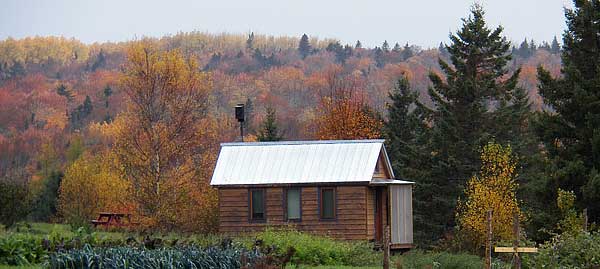
Andy Hawkins submitted today’s Tiny House in a Landscape and shares the following:
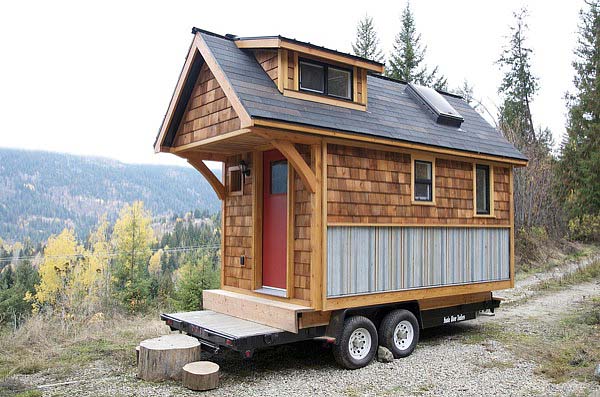
The picture I have attached is of a Tumbleweed Tarleton built in British Columbia and moved out to its new home at Windy Hill Farm in New Brunswick by its builder and owner Will Pedersen. The house now plays home to the volunteers that spend the year at the organic farm helping with their thriving CSA of which I am a member. Information on Wills build and the trip from British Columbia to New Brunswick can be found here http://tinyhousejournal.com/wills-tarleton/.

1970 Caravan
By Devorah Peterson
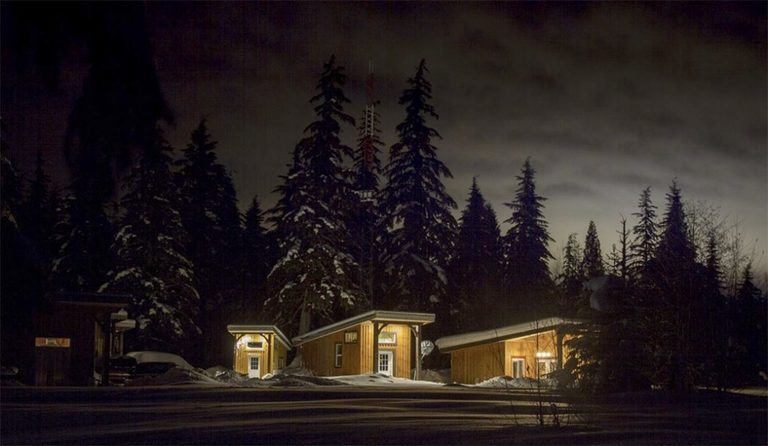
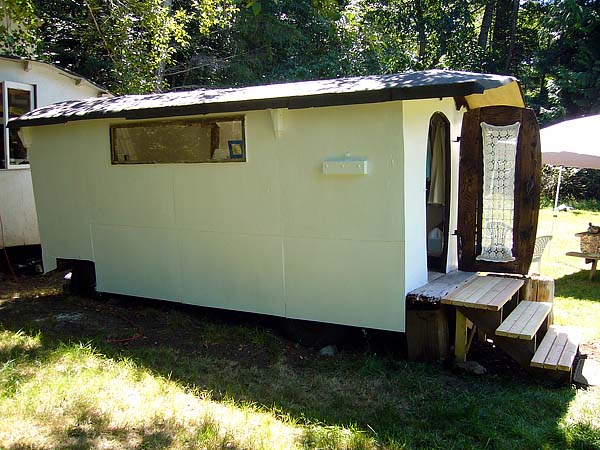
In 1973, the year she met her future husband, a friend of mine bought a three year old caravan, an early project of Lloyd House. Since then, this treasure has been sitting in a forest clearing on an island of British Columbia. As there is no kitchen or bathroom, other small structures were built alongside.
I fell in love with the rustic 17 foot caravan in the nineties when I first visited the remote property. Perhaps more than any other “tiny house,” it has inspired me to write about them and (hopefully) build one of my own eventually.

Though the exterior is plainer than many hand built caravans, I kind of like that about it. One would never suspect that inside is a world that’s magic. Continue Reading »
Kootenay Lake Gypsy Wagon
Inhabitat (one of my favorite sites) recently featured this rustic, but beautiful gypsy wagon (one of my favorite tiny houses) which sits in the forest near Kootenay Lake in British Columbia. The 8 foot by 20 foot wagon was built on a $100 salvaged 5 ton chassis, with 2×4 construction and curved rafters. It cost about $8,000 to build and took several years.
Most of the building materials for the wagon were recycled. The floor is locally milled hemlock tongue and groove and the windows were second hand finds from the local classifieds. The exterior shingles were cedar “seconds” split with a hatchet. The round window was ingeniously made from a 1970′s picnic table and is framed with rope for a natty, nautical style. The curved roof is covered with flexible metal sheeting and has two, curved Lexan skylights. The interior of the wagon is covered with stretched canvas, stapled into place and painted with white wash. Under the wagon is space for the storage of supplies and firewood. Continue Reading »
Tiny House in a Landscape
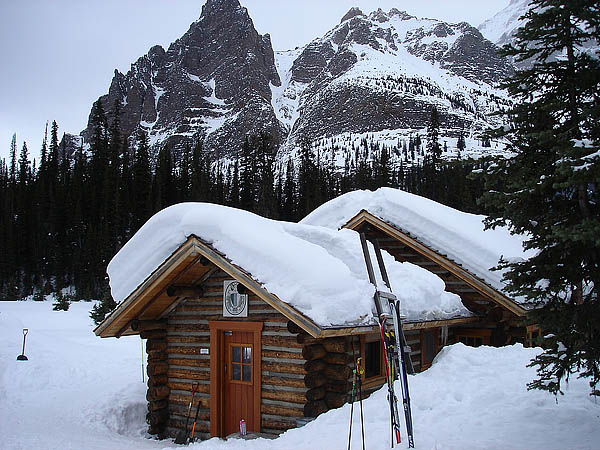
Robert VanderLee sent me a couple of photos he took in 2007 of the Elizabeth Parker Hut in Yoho National Park, British Columbia. This hut is one the most popular in the area each winter. It can be easily reached via cross country skis.
The main cabin is very spacious and has a propane system for cooking and lighting. It also has an efficient wood stove to keep it cozy and warm. You can learn more about the facility here: http://www.alpineclubofcanada.ca/facility/ep.html
Thank you Robert for sharing these wonderful photos. It looks like a great place to visit and stay.


Photo Credits Robert VanderLee
Tony’s Hornby Island Caravan
Guest Post by Michelle Wilson
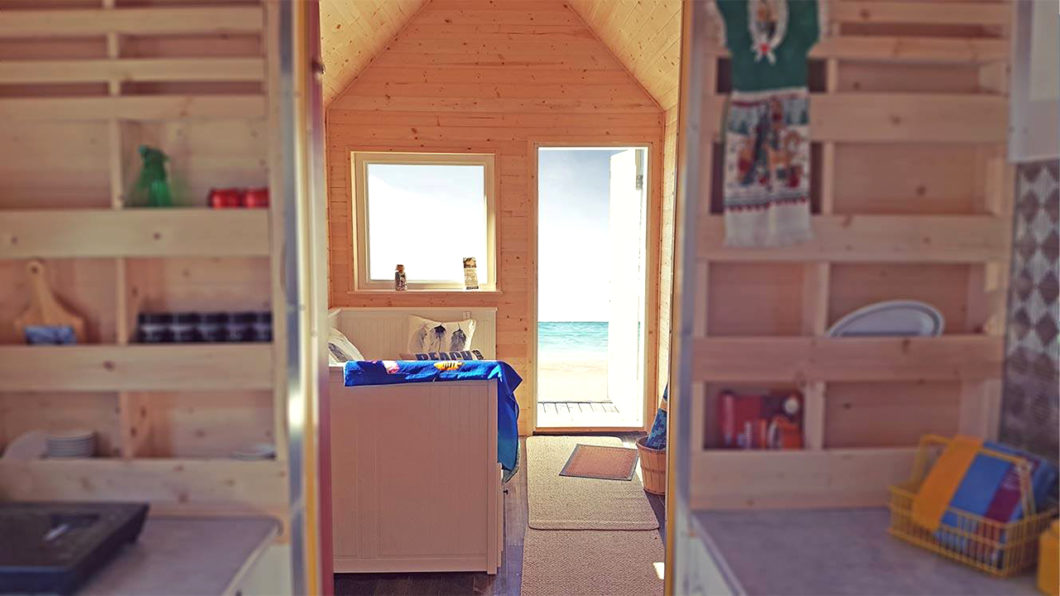
We’ve recently finished our latest caravan here at Hornby Island Caravans – it’s our first year round dwelling which is hugely exciting for us! This is a 10 ft. by 26 ft. caravan- the usual width for road regulations is 8″5″ but you can get a pretty inexpensive over width permit, I think it was something like $15 a day here in British Columbia and you don’t have to do the big pilot car and lights production. In my previous caravans I’ve built the side walls so they slant outward toward the top and we did consider starting with a standard width trailer frame of about 8′ and slanting the walls out to 10′, but in the end our client Tony decided that he’d rather have straight walls and have the maximum amount of floor space possible, so we had to have a wider custom trailer built. Having the extra width seems to have made quite a big difference in the feel of the place-almost everyone that has come by has remarked on how spacious it feels inside.
Photo Credits: Hornby Island Caravans

We’ve also pushed the road height limits which are 13′.6″ from the ground to the top of the roof, so the top of the ceiling is a bit over 9′. I wouldn’t make a caravan this tall if it were meant to be towed around regularly, in fact there are many things I would have done differently if that were the case, but since this is not likely to move for many years, being aerodynamic and light wasn’t as important. Tony’s reasons for choosing a caravan rather than a house were more about flexibility and having a less permanent footprint rather than moving often.
Tiny House in a Landscape
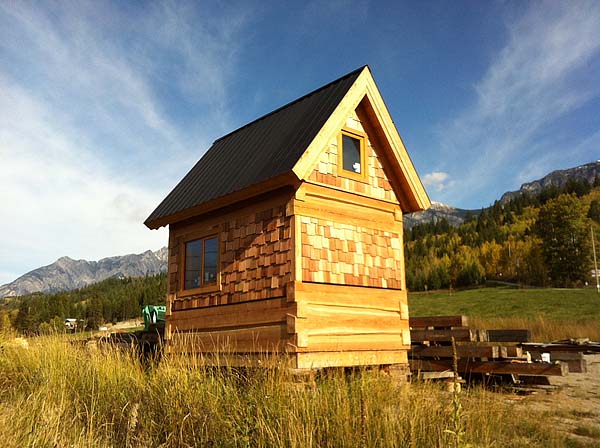
This week’s Tiny House in a Landscape is a little different. It is a tiny house under construction in a landscape. The photograph was taken by Dave Stonehouse of StoneHouse Woodworks in the Rockies of British Columbia, Canaada. Dave says: I live in Golden, British Columbia in the Rocky Mountains. The picture of the cabin under construction is actually in my back yard. We have a couple of acres. My company is Stonehouse Woodworks. I build log and timber cabins, do finishing carpentry, and build furniture (pretty much anything with wood).
You have to wear a few hats to stay busy in a small town, but I’ve always managed to.
Thank you Dave. I plan to feature this cabin again when it is completed, so, readers stay tuned.
Photo Credits: Dave Stonehouse


