House in a Box Revisited

by Kent Griswold on April 18th, 2013. 6 Comments

by Nick Nydegger

Unknown to us at the time, we were pleasantly surprised by an article posted on the Tiny House Blog back in January and the positive response from its followers. So many questions were asked by the 20,000 visitors to our website that we thought maybe a condensed introduction as to what we offer and why would be a helpful follow up.

Sorry if this sounds overly commercial but it’s the most direct way to get the word out to those that are interested or to those that have been hurt in the collapse of the housing market. Provided by HIAB (House in a Box) or others, we just want folks to know that there are great alternatives available to accomplish the dream of home ownership.

house in a box 1

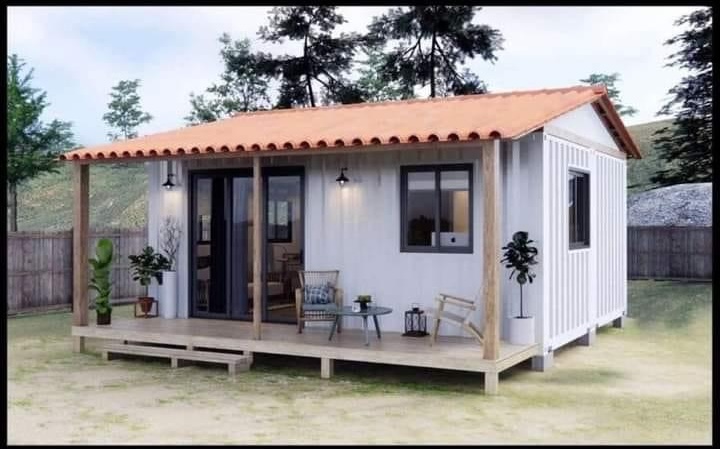
If you are intrigued by the thought of more efficient spaces designed for non- subdivision living, Houseinabox.com has created and assembled a versatile line of cottages suited to a variety of uses. We have incorporated efficient and functional floor plans with lots of glass and volume to gain a living experience that is unique while compact. Dialing down the use of unnecessary spaces, HIAB has pared back the use of hallways and formal living and dining areas while adding soaring two story ceilings and exterior features that include integral porches.

The goal was to rearrange conventional spatial floor plan relationships to achieve a new living dynamic designed into a smaller envelope. This reduces cost while maintaining livability. The cottage selections and designs lend themselves to personalization by material modifications, interior customizing or through incremental building (linking additional units together over time.) While creativity is encouraged by material or floor plan changes, our clients are also utilizing space saving furniture to maximize and enhance livability. Participating architects include industry leaders, Allison-Ramsey Architects from Beaufort, SC, Sugarhouse Architects from Salt Lake City and C. Allen Brown from Cashiers, NC.

With a one bedroom cottage measuring 317 square feet, the designers at House in a Box believe that graceful living spaces can be created in small packages without sacrificing quality or comfort. Other units include a one bedroom cottage with loft at 555 sq. ft. and larger units up to 1,790 sq. ft. All homes can be personalized with a variety of available elevations and finishes. By using the online Quote Builder calculator, a purchaser can actually make selections on the interactive website for specific units and receive a Price Quote estimate immediately for the Sugarhouse designs. For Allison – Ramsey Architects and C. Allen Brown designs, a Materials List take off is optional when purchasing a set of plans. These take off’s allow for greater ability to customize materials when assembling house package pricing.

house in a box 2

“We require from buildings two kinds of goodness: First …. doing their practical duty well : then that they be graceful and pleasing in doing it.” John Ruskin, English poet (1819 – 1900)

Purchase a set of construction drawings and the House in a Box Building

Consultant will assist you every step of the way to project completion. Once plans have been purchased a PDF will be sent immediately and may be reproduced. Plan purchases do not obligate our clients to a material purchase. However, in collaboration with 84 Lumber Stores, our materials packages are distributed from over 250 of their national locations. Perfect for construction professionals, do-it-yourselfers, or those who prefer complete turnkey installation. Visit the website at www.houseinabox.com and browse the available plans and learn more about our “Process.” House in a Box believes that small spaces should live large.

house in a box 3

Yestermorrow Experimental Tiny House

by Kent Griswold on April 17th, 2013. 17 Comments

This week’s episode of SPACEStv’s “OffBeat Spaces” brings us inside an experimental 228 sq-ft home in Vermont designed to solve issues of sustainability while maintaining a sleek modern design.

Built by a group of students at the Yestermorrow Design/Build School, this tiny home features salvaged pipeline lighting, a rot resistant multi-purpose bathroom, a charred cedar board exterior and a heating-compost composed of hay, sawdust and manure all designed to solve issues of space and plumbing.

220 square foot home

Continue Reading »

Lynda’s Guest House

by Kent Griswold on April 16th, 2013. 16 Comments

Guest Post by Linda

Living in a tiny house is not for all because society has embedded pride to our subconscious that you have to live big to be successful but, building a tiny house was the best decision we ever made. Being enslaved by 30 – year mortgage was out of the question. “Less is More” so they say.

It is easy to live in a tiny house, space is limited but our house has endless possibilities and it meets our needs. The fact that we are not bound by the monthly pressures of paying the bills is our advantage over today’s bigger living options.

two cabins

I am sharing our tiny house located in Upstate New York. We decide to leave the increasing cost of living in Long Island, New York and New Jersey behind and settled in a quiet town of Upstate New York. The house might be small, but the surroundings are vast and after a while you won’t notice the house’s small size. Continue Reading »

Rise Over Run Backyard House

by Christina Nellemann on April 15th, 2013. 48 Comments

An 11×14 foot former vegetable patch eventually became the home for this tiny backyard house designed and built by sustainable building advisor Megan Lea. Since her veggies were not getting enough sun, she decided to bite the bullet and build an environmentally friendly house out of salvage 100-year-old barn wood behind her main home in Portland, Ore.

riseoverrun-house8

Her 154 square foot retreat, which was built in less than six months, contains salvaged lumber from three barns in Oregon, a salvaged copper roof, natural plaster walls and a wood stove. The salvaged barn wood on the exterior is from Barnwood Naturals, a company that sells reclaimed vintage wood. The loft contains a comfy sectional sofa and the floor of the loft and its supports are exposed to show the structural elements. The little living room has seating for several people and a large sliding door. The building does not have a bathroom or kitchen. Continue Reading »

Clothesline Tiny Homes

by Christina Nellemann on April 1st, 2013. 31 Comments

When a custom home builder and an architectural designer decide to build a tiny house together, there is a guarantee that something special will be born. Shane and Carrie Caverly of Clothesline Tiny Homes are currently living in their new 144 square foot baby and are also available to design, consult and build custom homes for anyone looking for a simpler lifestyle. The married couple decided they were fed up with paying rent and mortgages and having nothing to show for it, so with their 30+ years of combined building skills they drew up their own design that is timeless, clean, and modern.

clothesline-tiny-home

So why the funny name?

“Shane thought of it!” Carrie said. ”I came up with about a hundred names, including Roadrunner Tiny Homes (which I still think is awesome) but none of them were sticking. We were out in the backyard at our former rental house, next to the clothesline, and Shane said ‘What about Clothesline Tiny Homes, because it’s so small you’re going to need a clothesline.’” Continue Reading »

Charles Finn’s Microhomes

by Christina Nellemann on March 25th, 2013. 26 Comments

Charles Finn might just be the ultimate tiny house Renaissance Man. He’s a self-taught woodworker, an author, freelance writer, editor of the High Desert Journal, a literary and fine arts magazine, and his custom microhomes also allotted a full color spread in Lloyd Kahn’s “Tiny Homes, Simple Shelter” book.

Finn

Charles is originally from Vermont, but lived in Japan for a few years and admired the Japanese tea house designs. He eventually found himself in British Columbia living in a 7×12 foot vardo made by a woodworker friend. The vardo had no electricity or plumbing, but did have a 3-burner propane stove, a Jøtul woodstove and a set of deep-cycle batteries to run his laptop. After his first experience in a tiny home, he built his first “microhome” in Potomac, Montana out of lumber dismantled from old barns. The 8×12 foot cabin with a five foot loft became known as the Potomac Cabin. Continue Reading »