Great Ideas
By Stew MacInnes
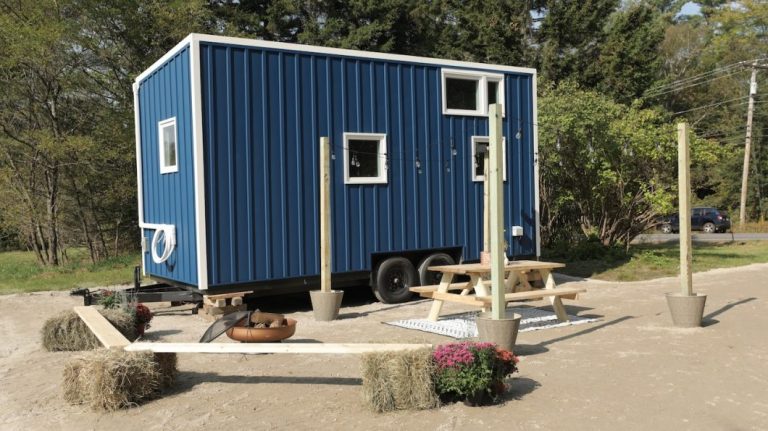
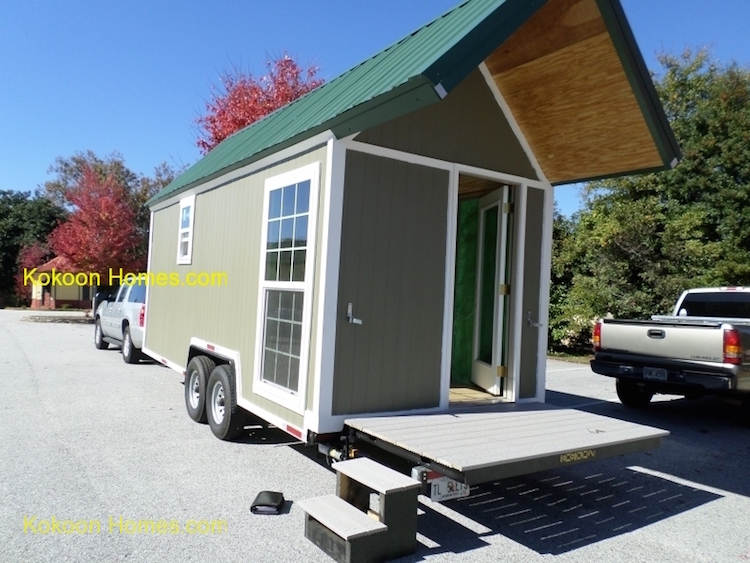
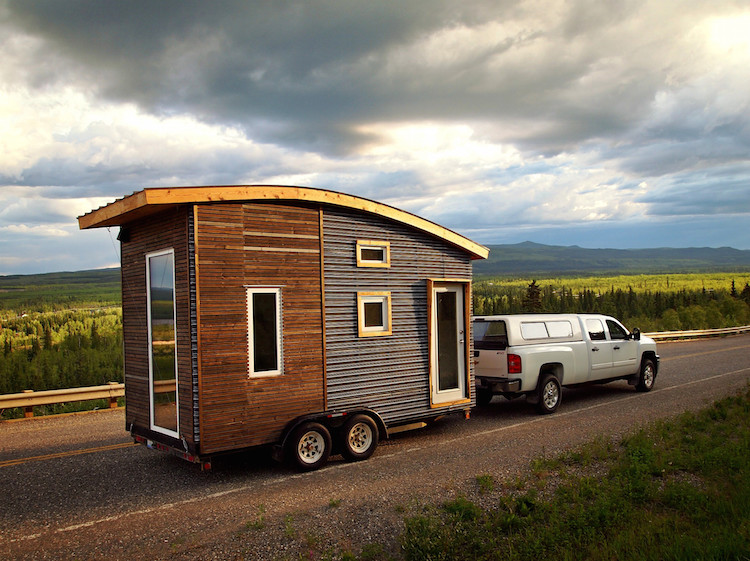
My name is Stew MacInnes, founder and CEO of Maximus Extreme Living Solutions. My company builds self-contained living units. Self-contained living units (as we see them) are tiny homes that are permanently affixed to a mobile steel platform and are designed to have the hell kicked out of them time and time again and keep coming back for more!

In all seriousness, we originally designed our homes to withstand the extreme rigors that are associated with the exploration and extraction of domestic energy. We designed our homes to withstand the weather conditions and terrain of the oil fields located in Alaska and North Dakota. We figured that if our homes could handle those conditions, then they could withstand a weekend jaunt to Yosemite. Continue Reading »
ClearSpace Modular Homes
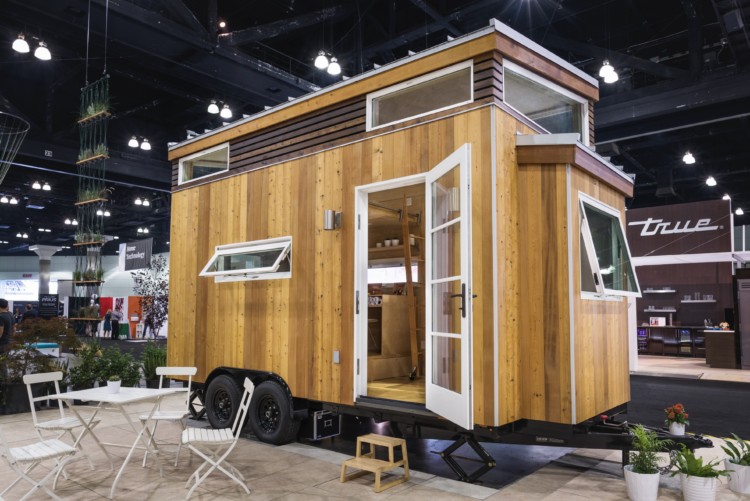
For lovers of clean, efficient, modern design with an eye toward outside living, ClearSpace Homes has come up with a few designs to appeal to people who want a tiny house. ClearSpace has been selling their prefab homes in the Austin, Texas area for several years and some parts of each design can be customized by the buyer. Their homes are offered in several colors and the interior can include reclaimed or new materials. A customized ClearSpace home will run about $125 per square foot which does not include site work, the foundation or shipping.
The first of their tiny homes is the ClearSpace Casita. This 432 square foot home includes a studio space that can accommodate a murphy bed/storage wall, work area, or built in display/book shelf. There is also space for a compact kitchen, a 3/4 bath and a generous sleeping/storage room. The best feature of the Casita is the protective enclosure that allows the owner to enjoy the outdoors. The interior space of the home has sliding glass doors which can be opened to allow for cross ventilation and there is a skylight above the loft. The base price of the Casita is $51,240.
Tiny SIP House
by Art Cormier
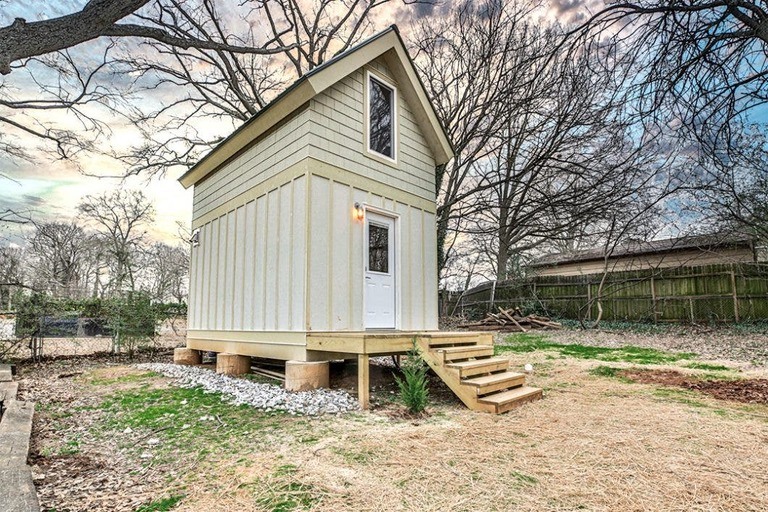
My name is Art Cormier and I decided to build a tiny house this last fall. I realized I had been living in large space, but only using a small portion of it. I began to research floor plans online and decided to start with the basic layout of Jay Shafer’s Walden (Tiny Tumbleweed Houses).
The thought of framing up such a small space and subjecting it to the stresses of transport on a trailer seemed daunting. S.I.P. (Structural Insulated Panels, SIPS.org) panels seemed like a good option.

With the panels each surface would be one piece, making the construction easy. S.I.P.s allow someone without extensive building skills to put together a sound structure. This was my first experience using S.I.P.s and there is much detail of the process on my blog, tinysiphouse.blogspot.com.
Starry Nights
Guest Post by Craig MacDonald
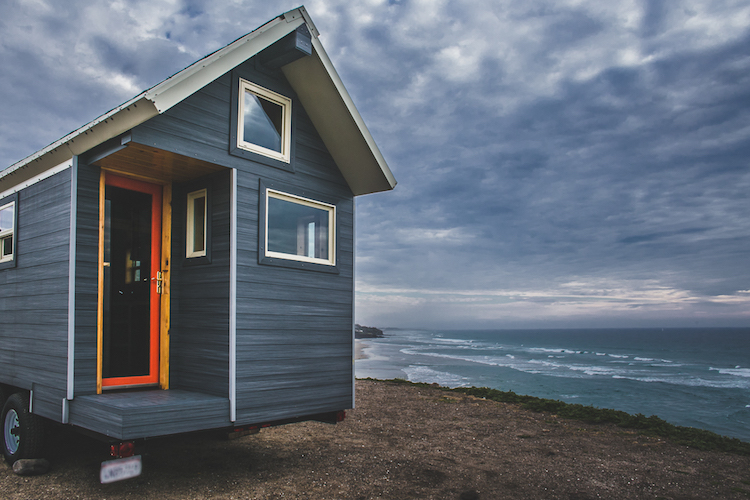
I have been a follower of the Tiny House Blog for a few years and was really intrigued by what it might be like to live in a small home. My wife and I searched for land for a few years, but could never find the right piece of ground. She was convinced that she wanted a place on the water and I was convinced that the only piece of land that we could afford near water would be the size of a postage stamp.
We finally found the perfect spot while exploring a part of our state that we had never seen before. While it is only 85 miles as the crow flies from our home in the city, and about 150 miles by road, it feels like we are in another country. It turns out we didn’t by land near water, but found 30 acres of heaven on earth of highland pasture.

I was at first determined that I wanted to build a tiny house like the Tumbleweed, but was convinced (coerced) by my wife and daughter that 100 square feet just wasn’t going to keep us all happy. I’m glad that I listened! We also bought property in a “development” which requires that homes be a minimum of 500 square feet. With some creative math we were just able to sneak over the 500 square foot threshold. The main part of the cabin is 320 square feet with a 100 square foot bedroom on the back of the cabin. We have two lofts which are connected by a “catwalk” which adds about another 100 square feet. We use a ladder to get up to the lofts and when not in use the ladder retracts into the bottom of the catwalk to give the main cabin more room. Continue Reading »
LEAP Adaptive Hummingbird
LEAP Adaptive sells modern, green home plans online and they have recently designed their smallest home plan and are making it available to owners, contractors and architects. The Hummingbird is a 480-square-foot home that is energy efficient and utilizes a passive photovoltaic framework, low-VOC materials and the latest in green technology.

The Hummingbird has a living and kitchen area with a fire-ribbon fireplace (which requires no venting) and a large, covered deck which LEAP calls a “chill” space. A small bedroom and bathroom suite are also included. Plans for the hummingbird are priced at $995, the building kit is around $55,000 and an on-site built Hummingbird is about $80,000 which does not include the general contractor fee, building or permit fees.
Other green options included in the Hummingbird are:
- Cement board or teak siding
- Trex recycled content-engineered deck planking
- Low-mass Structural Insulated Panels
- Multi-unit sliding glass doors with dual-pane Low-E glass
- Simpson “Strong-Wall” seismic resisting brace-frames
- Low-flow plumbing fixtures
- EnergyStar rated Heat-pump HVAC system, lighting and on-demand water heater
LEAP Adaptive is a home design group in San Diego, California. Design director Brian Darnell has spent the last 22 years designing multi-million-dollar residential estates, but realized that “the lust for size and granduer has given way to the realization that the economics and ecology of our flattening world can no longer support such extravagance.” LEAP seeks to create environmental designs that are easier on the owner’s wallet as well as on the earth.
Image Courtesy of LEAP Adaptive
By Christina Nellemann for the [Tiny House Blog]
The Crib
I showed off the Crib a couple of weeks back in the newsletter, and it has been featured on a couple of the other tiny house blogs, but I feel it is a very worthy design and worth sharing as a post here on the Tiny House Blog.
Great for a weekend cabin, backyard office, studio or guest house. The Crib, takes its basic form from a traditional American corn cribs which were common farm buildings that served to store and dry corn as well as protect it.

The Full Crib starts as a well insulated base building that provides approximately 250 square feet of enclosed space, and an additional 125 square feet of exterior deck space. Various components can be added to the package to create the shelter that fits your needs. Continue Reading »